


Historical Background
This island, six times smaller than Belarus in area, located near mainland China and for most of its history far from the central events of the region, is not very remarkable — all major affairs took place on the continent.
The Dutch somehow sailed to Taiwan, and some Chinese colonizers or refugees, who mingled with the indigenous population, linguistically close to Australian aborigines, sought refuge there.
In 1895, the island was ceded to the then-terrorist of the region — Japan, but the Taiwanese were very lucky.
The Japanese occupation of China or Korea is a painful topic for these peoples, full of suffering and humiliation.
Usually, the metropolis treats occupied regions as a raw material base, but with Taiwan, an exception occurred: resources were not taken from there because there were none, but on the contrary, investments were made to make the then-wild island suitable for the existence of the Japanese fleet and civilians. In Taiwan, the Japanese built schools, roads, bridges, and factories.

View of the metropolis disappearing beyond the horizon, from the roof of Taipei 101 — a half-kilometer-high skyscraper that was the tallest building in the world before the construction of Burj Khalifa.
The health problem was particularly acute: the Japanese, accustomed to a colder climate, were dying en masse from tropical diseases. This forced them to invest in building hospitals, send their best medical staff, a significant portion of whom remained there forever and became the foundation from which the local medical school later grew.

Internal logistics problems are solved by elevated overpasses and railways
The Japanese ruled the island until their defeat in World War II. After 1945, the Japanized island, where Chinese was already being forgotten, was left to itself again while the struggle for China was ongoing on the mainland.
The island received a new lease on life in 1949, when Chiang Kai-shek evacuated millions of his supporters to Taiwan after the Kuomintang's defeat by the communists.
A parallel Chinese civilization emerged on the island, hostile to the ideas of communism. Later, democracy grew out of it.
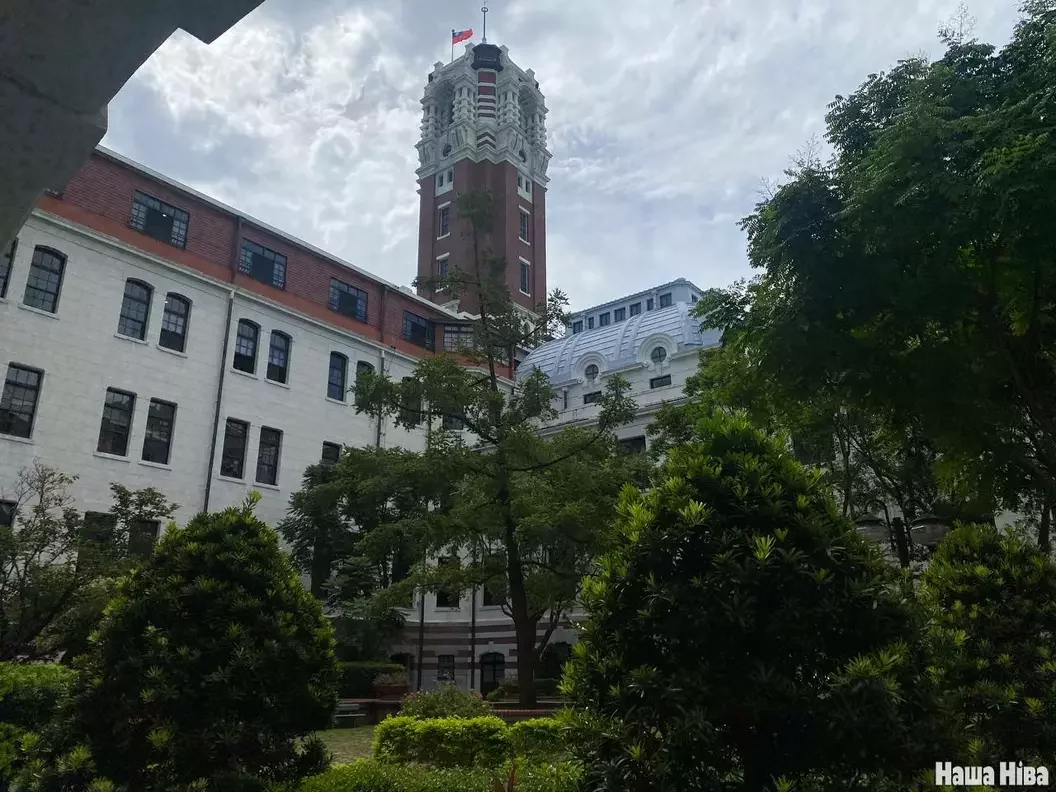
There is little old traditional Chinese architecture or elaborate pagodas on the island. Little of this was built here in the past, and the Japanese and Chiang Kai-shek had their own ideas about beauty.
The first decades of Kuomintang rule were bloody, and like mainland China, the people of Taiwan lived in an atmosphere of terror. It is called "white terror" here.

Taiwanese 'Akrestsina' (detention center), modern view — now a museum of totalitarianism and memory of victims of repression.
Dissent was forbidden, people were massively tortured in Taiwanese 'Akrestsina' (detention centers), some simply 'disappeared'. Now the prison is a museum of totalitarianism and memory of victims of repression.

The director of the human rights museum — 74-year-old Fred Chin Hsin-san was a political prisoner for 12 years.
The 74-year-old director of the human rights museum, Fred Chin Hsin-san, served 12 years and now tells about it in the hall where he was tried.
Taiwanese "Gubazik-style" officers (a reference to Belarusian special police unit) somehow allowed him to snatch a pistol between tortures. When he decided to end his suffering and shot himself, there was no bullet, and the "Gubazik-style" officers laughed, saying that this was exactly what they wanted to drive him to — there was no way out.
Chiang Kai-shek's son, Chiang Ching-kuo, who by the way was married to a Belarusian from Orsha, Faina Ipatievna Vakhreva — in Taiwan she took the name Jiang Fangliang — loosened the screws and allowed the opposition and free media to grow.
One of the daughters of our Faina and Chiang Kai-shek's son is still alive. Who knows what role the Belarusian softness of Chiang Ching-kuo's wife played in Taiwan's subsequent democratization? In Taiwan, Faina is loved; she is a kind of humane local Princess Diana.

First Lady of the Republic of China Faina Vakhreva with her husband and children. Photo: Wikimedia Commons
Chiang Ching-kuo lifted martial law in Taiwan in 1987, allowed political competition and elections, and became one of the pioneers of the economic miracle that transformed a poor island under a dictator's heel into a successful republic.
Americans played a big role in this success story, backing the Kuomintang as an opponent to the communists. Once the Americans dealt with eradicating the social base of communism in Japan and laid the foundation for a market economy, they turned their attention to Taiwan.

If you were brought blindfolded to any place in the metropolis on the west coast and the blindfold was removed, you would see roughly the same picture around you.
The economic reforms on the island were influenced by an Eastern European by origin, the Ukrainian Jew Wolf Ladejinsky, who pulled off the same trick on the island as in Japan: the state forcibly bought land from large landowners and sold it on a 30-year credit to peasants, killing two birds with one stone:
— guaranteeing the emergence of capital for former large owners, who could no longer earn from land and were forced to seek other areas;
— transforming yesterday's farmhands into small landowners, who began to learn to live with the thought that they were not slaves, but owned something and had something to develop.
Americans invested heavily in education on the island, shared programs, and sent their academic staff there. And then they invested money and opened their market.
The Kuomintang elite also understood that brains were the key to success. The example of Japan, which rapidly entered the era of electronics, was before their eyes.

Bits of industry from Japan came to Taiwan. But its own miracle could only happen when the population was still poor enough, its labor cost little, but it was already educated enough to do what was paid incomparably more for across the ocean or in Europe.

On the streets of Taipei. Locals appreciate German car industry.
What's here now?
Belarus's budget for education in 2023 is 1.64 billion Belarusian rubles. Taiwan has recently been allocating about 30 billion dollars annually from its budget for education. Knowing this difference will simplify the understanding of life on the island described below.

Taiwan's exports are approaching half a trillion (!) dollars annually.
The island's wealth is due to its intellectual and industrial power.
Taiwan occupies 60% of the chip and semiconductor market, with 90% of the most advanced chips produced in Taiwan, which shares its technologies with no one.
All high-tech items manufactured in the West depend on these chips. 80% of Tesla's brains are made in Taiwan, the famous HIMARS strikes precisely because its brains were made in Taiwan, the iPhone works because its brains were also made in Taiwan. And so on.
Of course, chips are also made in Japan or China, and in the States. But the main point of the chip war is their size. Taiwan already makes elements 2 nanometers in size, while competitors lag by factors, even tens of times. Now in Taiwan, there's talk of chips with 1-nanometer elements — that's what the Taiwanese have already approached.
Taiwan Semiconductor Manufacturing Company (TSMC) — this is Taiwan's sacred cow, the most advanced chip manufacturer in the world, controlling more than half of the global market. Journalists are not allowed into TSMC, official delegations are politely shown around corridors where nothing is visible.

Somewhere there, behind armored glass, people in white coats are creating the future. Photo from one of the science parks, which here represent billion-dollar research businesses.
Businesses spend up to 20% of their profits on scientific research; here, they invest in science, not ice palaces.
TSMC employees in Taiwan are like police officers or medics. They are almost civil servants; they are respected people in society.
The fate of the entire island largely depends on their work. A single TSMC earns over 36 billion dollars in net profit — that's more than half of Belarus's entire GDP under Lukashenka.
TSMC was founded immediately after the end of repression and the lifting of martial law in Taiwan.
But there are many other manufacturers here; TSMC is just the jewel at the top.
Acer, Asus, Mediatek, HTC, and other electronics manufacturers with billions in profits — these are all Taiwanese companies. The foundation of Taiwan's economy is numerous small and medium-sized enterprises.
Building a semiconductor factory requires as much investment as is needed for building a nuclear power plant.
Taiwan is also a major supplier of integrated systems (their export — 184 billion dollars), with main consumers including Intel, Nvidia, AMD, Apple, Sony, and so on.
Laser technologies are strong here — you can't cut a 2-nanometer semiconductor with a saw.

By the way, semiconductor industry employees here are prohibited from moving to work for competitors. Globally, you can change jobs, but not to competitors. You can move to a different sector.
Taiwan carefully guards its secrets. For industrial espionage, there's a minimum of 10 years in prison and severe disenfranchisement, including pension cancellation.
The Chinese, who have stolen a mass of technologies from all over the world, cannot make the same chips as the Taiwanese, even though they speak the same language and live next door.

Museum exhibits, which tourists are allowed to see — modern equipment will not be shown here.
But China had other successes here, for example, in stealing seeds — Taiwan has a strong plant breeding school, and agriculture in general is robotized. Water or fertilizers will be supplied automatically according to the analytics of soil sensors.

The dependence of Western countries on Taiwanese technologies gave birth to a security concept called the "silicon shield".
Having achieved a situation where the production of modern technology, primarily needed by the West, is impossible without Taiwanese products, Taipei forced major democracies to defend its sovereignty against the existential threat — communist China, which has already subjugated Hong Kong and Macao and dreams of Taiwan.
Taiwan's striving for world-recognized independence is a challenge for Beijing.
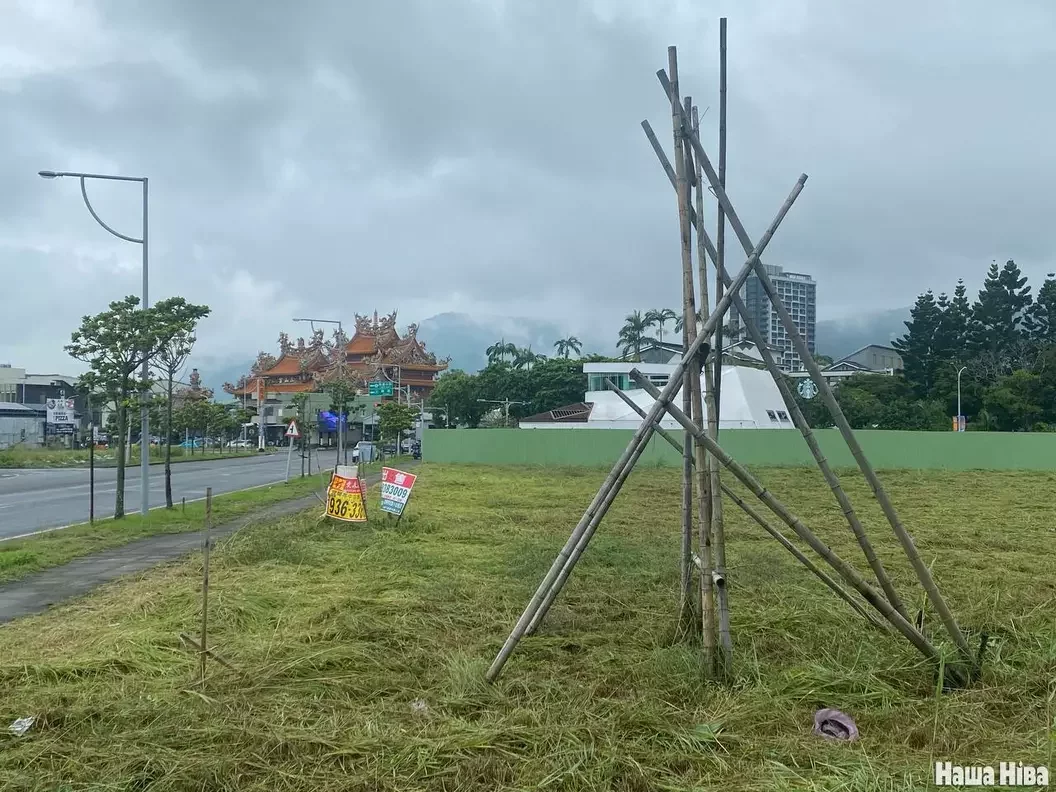
Somewhere in the rural area on the sparsely populated eastern coast of the island.
Taiwan does not want to share its technologies with the West, understanding that this erodes its silicon shield.
There are plans to build a semiconductor manufacturing plant in Arizona in case of war and destruction of factories in Taiwan. Construction is already underway, but it is unclear exactly which technologies Taiwan will transfer there. This process is being delayed.

On Taipei's Zybitskaya (a popular nightlife street in Minsk). Only slouching is bad, but drink as much and try to stand straight at 3 AM.
Now there is talk that in Arizona, only silicon crystals will be grown, while processing will still be done in Taiwan.
Today, Americans maintain troops near the island, transfer deterrence weapons to Taiwan, and publicly promise to defend it in case of war.
To give up Taiwan means to hand over control of the democratic world's advanced technologies into the hands of a monstrous communist dictatorship.
China's dictator Xi Jinping, in turn, publicly declares the necessity of "China's reunification" and commits military provocations around the island, sending warships, planes, and even missiles towards Taiwan.

The main mode of transport in the metropolis is scooters.
Can China capture Taiwan in case of war?
Attacking Taiwan, like Ukraine, with surprise tank columns will not succeed. The states are separated by a strait 150 kilometers wide.
The secret of Taiwan's defense is very simple — there are few wide beaches on this island, only 14. On the widest of them, no more than a battalion of soldiers can be landed. About fourteen battalions is the maximum that can come from the water onto mined sand.

The western part of the island is flat, further to the east begin the mountains.
Taiwan receives military aid from the USA, and also has its own strong army and missile program. Taiwan has missiles capable of reaching Beijing. If necessary, the country is ready to mobilize 12 million people. Of course, not all to the front.

Taiwanese missile engagement zones. The country, by the way, does not rely on Elon Musk's Starlink, but has its own space and satellite programs.
And the advanced Ukrainian Neptune missile, which sent the flagship of the Black Sea Fleet to its famous address, is old news for Taiwan. Their anti-ship missiles are better and more modern.

Taipei Metro. Seemingly a country of advanced technologies, but in terms of informatization, the situation here is worse than in Minsk: it's impossible to pay with a card at the entrance. You have to withdraw cash, then buy a token with cash. Belarusian IT specialists have somewhere to sell their solutions.
Taiwan is building tens of thousands of naval drones that are meant to prevent the Chinese fleet from approaching its shores and landing troops.
But, of course, the forces are unequal, at least from the perspective that Taiwan is an island that can be besieged, cut off from the world, even without a direct invasion.
Therefore, as local military analysts with whom it was possible to speak say, the main task is to hold out until allies arrive. Allies are understood to be not only Americans. Other allies of Taiwan and the USA in the region are Japan, South Korea, the Philippines, and Australia.
A war in that region would hit the world globally. More significantly than even the war in Ukraine is felt, which some countries altogether try to ignore.
The fact is that 80% of global maritime container trade passes through the Taiwan Strait, which would be ablaze in such an event.

Artery of world maritime trade. Sailing from continent to continent, ships pass through the narrow, calm Taiwan Strait.
Are the Taiwanese ready to fight? Rhetorically — yes.
The ruling party strives for independence. De facto, Taiwan is an independent state with its own passports, government bodies, and army. But de jure, few countries in the world recognize its independence, mainly island and African states that do so primarily in exchange for financial support.
Interestingly, the Kuomintang, which fought the communists, is now believed to be supported by the Communist Party of China because Beijing benefits from the Kuomintang's political program — reunification and the existence of one China.
Under democratic rule, of course, but this point doesn't bother Beijing; it laughs at this point.
The example of Ukraine inspires the Taiwanese in the sense that having a large and formidable army does not guarantee victory if the people are ready to die for their homeland.

Youth gathering somewhere far from the center of Taipei.
«We see them sending missiles towards the island. Neither I nor my acquaintances ignore this threat, but we also don't allow China to influence our lives. The construction market hasn't fallen, consumption on the island hasn't fallen. People continue to live; some study military courses and first aid courses. We are confident that we have enough strength and deterrent weapons so that Xi Jinping has no certainty about how his adventure will end. Putin was 100% sure he would win, and where is he now and his country? Xi cannot even be 50% sure that he will succeed in anything. But on the other hand, he can be 100% sure that failure will bring nothing good to his fate. I think the communists will continue to portray Taiwan as bad guys, but they won't dare to go to war,» — Swedish entrepreneur Elias Ek, who has lived on the island for 20 years, told me over a beer.
«When I go abroad, I say I am Taiwanese, and I don't say I am Chinese,» — said a 23-year-old girl in a store.

«Ukrainians have shown an example of courage; we all follow how they have already pushed back Russia and are advancing,» — said a local 25-year-old guy in a bar. And it's people like him who would be the first to die if anything happens.
What is the reason for Taiwan's success?
Many ask themselves: how, in forty years, did a small island transform from a poor dictatorship into an advanced society and economy that moves the world forward?
Economists and sociologists reflect, search for the secret of success, and argue. And I also won't answer this question.

Taipei, the capital of Taiwan, at night.
In Taiwan, Western creativity and Asian diligence, Athenian political values and Chinese discipline, have remarkably collided and blended.
On the one hand, you look at the surface of their life: buildings, infrastructure, economy, service sector — and it seems that in places, it's more Western than the West itself. But if you delve into society, a lot of Confucian tradition remains here: parents still have a great influence on their children's decisions: whom you will marry, where you will work.

Buddhist temple in Taipei. The scene is generally like in Minsk's cathedral at morning service — 90% pensioners, a couple of curious tourists.
«In this society, unlike in Sweden, for example, it is customary for children to live with their parents until marriage. What does this mean? It means that as long as you live with your parents, you are fed, clothed, you don't have to pay for an apartment, your salary needs are lower than those of a Swede who left home at 18. This means I can hire bilingual young specialists with brilliant technical education for a thousand dollars, who understand things better than me. That's the point here, that's why I do business here,» — Swedish Elias Ek told me.
The Swede, by the way, heads a consulting council on the island to help Western businessmen; you can write to him on LinkedIn — Elias Ek. He is the author of the book «How to start a business in Taiwan?».
Culture, books, films — here it's not swept away by Hollywood; there are local stars, local influencers.

Gates of one of the popular night markets here.
Funnily enough, at the height of COVID, Lukashenka would have been fined $100,000 in Taiwan — such was the penalty for disinformation regarding the illness.
Taiwan allowed neither an 'economic shutdown' nor catastrophic mortality and is considered a model in fighting the coronavirus. Doctors were given authority over all sectors of the economy, meaning the crisis viral center could make binding decisions depending on the situation in specific regions or communities.

A logical choice for a native of a landlocked country in a Taiwanese self-service restaurant.
Medical professionals were given access to border crossing databases to identify those arriving from dangerous regions. Soon, everyone returning to the island was sent to automatic quarantine.
Production was reoriented to the manufacture of necessary medical goods. Taiwan began producing 13 million masks per day.

For a whole fried squid or an octopus tentacle at the night market, they ask for 5 euros equivalent.
And a large-scale information campaign, daily reports on danger and current mortality, were also very important.
During the pandemic, 18,000 people died in 23-million, densely populated Taiwan — five times fewer than in 9-million Belarus.
Businesses did not stop, and the GDP drop was less than in other developed economies that chose a lockdown policy.

A wildly popular pastime among local youth is playing ball-drop arcade games, but not for money, but for plush gifts. Claw machines that retrieve toys are also popular. But it all looks like money laundering. Maybe I'm wrong.
Despite successes in the economy and approaches to societal organization, the country, of course, cannot solve all the problems accumulated over centuries of history in a historically short period, especially in not the most successful region of the planet.

Transvestite prostitute on the streets of Taipei. Probably, everything necessary to go to a temporary detention facility is in the bag nearby, just in case. Prostitution is forbidden here.
In Taiwan, there are also poor people, also people whom the chip revolution passed by and who have no connection to high technologies. From their hovels, they look up with envy at the lights of the world built by their smarter compatriots.

Illustration of one of Taipei's less affluent neighborhoods.
Meanwhile, the minimum wage for an employed worker in Taiwan is 856 dollars.
Taiwanese parents understand that education is a child's ticket to life.
Just like in Belarus, when mothers and fathers push their children into IT, believing it's their chance to make something of themselves, get their hands on money, see the world.

Street kitchen. Those who study poorly at school and university end up here.
In Taiwan, this takes extreme forms: children are constantly involved in extra classes, tutors, and opportunities are sought for them to study in the USA even at the school level.
Society here is open and safe. Both Taiwan and its capital Taipei have for years remained in the top 3 safest countries and cities in the world. Taiwan is safer than, say, Norway or Switzerland. Of course, in practice there is no difference, but a rating is a rating.

Local Kaoliang liquor at the night market — 58 degrees. Locals blush and get drunk much faster than Europeans.
The openness of society is facilitated by hostile China, which already plays more subtle propaganda games than even Russia is capable of. Every day, propaganda releases, lies, fakes, and manipulations appear, to which Taiwanese officials have to respond with refutations and comments.

How subtly China's propaganda works concerning Taiwan can be seen even in Belarusian media. Just recently, Onliner.by published a fantastically dramatic story by a Belarusian, Yaroslav, about life in Taiwan.

Screenshot from Onliner's website.
According to the legend, the so-called Yaroslav could not find a job in Belarus after college, and English "did not come easily to him," so he went to the Confucius Institute (an analogue of the Moscow House in Minsk, only Chinese — Ed.), where he learned Chinese, which "came easily to him".
Then, at their very second meeting in Russia, he married a Taiwanese woman and consequently moved to live on the island, where he encountered rats roaming the streets, people living in slums, and youth driving parents out of their homes, forcing them to walk among the stench of sewage on the street and beg passersby for a bottle of water.

Taipei's Kamennaya Horka (Stone Hill/Mountain, a common district name in Belarus).
And if you look at someone else's car "in one city" the wrong way, a gangster will emerge from it and start shooting at you, anonymously says the author of the horrific story.
Whether this Yaroslav actually exists is unknown. The few Belarusians and Ukrainians who have lived on the island for years perceive the horrors described in the Onliner material with irony. Such is an amusing story with Beijing ears (i.e., Chinese propaganda).

What kind of food is on the plate is hard to say. It smells like an ashtray, but doesn't taste too bad. A culinary creation of street chefs. It's actually impossible to get poisoned even in the most unappealing-looking eatery. The products are normal. And the most shocking exotic dish is fried cobra.
«Hot summers and humid winters are the downsides of living here, but you get used to it over the years. So the main downside, in my opinion, is that they drive like assholes here,» — one of the Belarusians I met here said about life in Taiwan.

Belarusians here, like most migrants from the West, are engaged in intellectual work. Researchers, programmers, engineers in scientific centers or commercial companies.
Does it make sense to discover this region?

On the right is caramelized pork offal. If you gave this to your grandfather to taste, he wouldn't recognize it as a traditional Belarusian product. Sold at night markets. Edible.
If you are set on doing a technology business or gaining experience in advanced companies — then definitely. Everything is fine with that.
Taiwan has strong banks, low-interest rates, acceptable income taxes, and for some categories of goods — duty-free access to US and EU markets.
Obtaining a visa and residence permit is relatively easy if you are an intellectual worker or entrepreneur.

White bread in Taiwan, equivalent price slightly more than a dollar.
In Taiwan, foreigners can own 100% of a company, unlike in some neighboring countries where you are obliged to include local citizens among the shareholders.
Now, Lithuania is betting on cooperation with Taiwan, which has led to a dispute with China after opening a Taiwanese representative office.
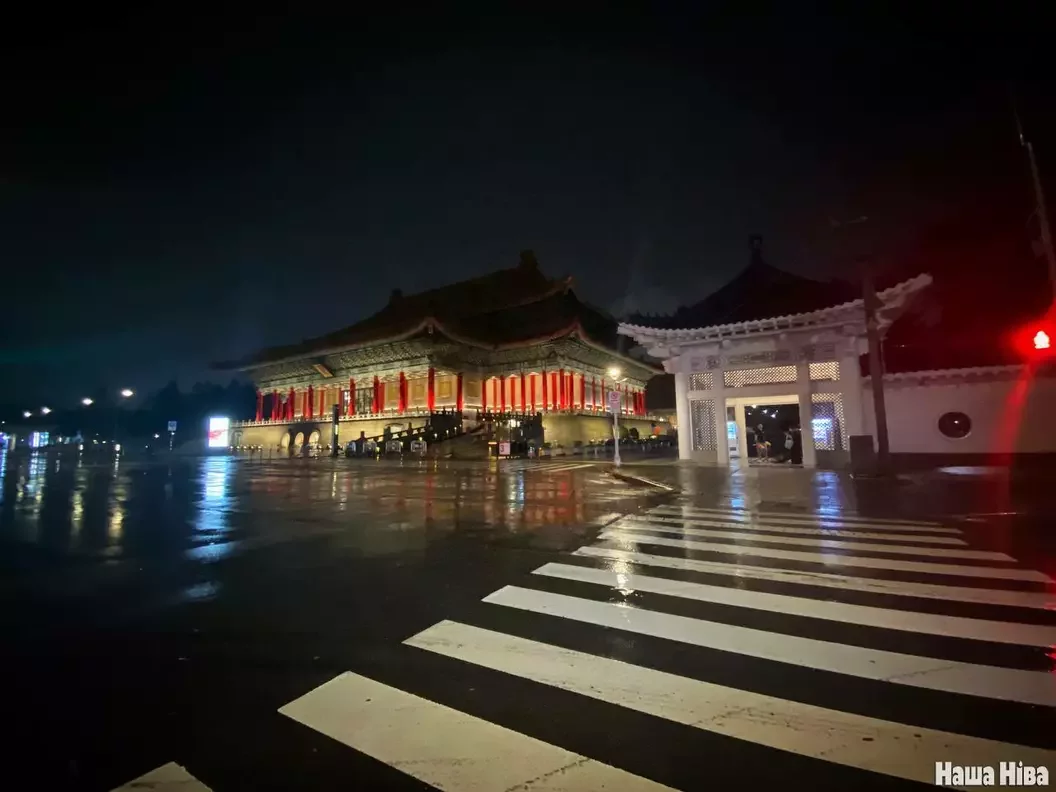
Taipei administrative center near Chiang Kai-shek's mausoleum.
In response to this gesture, Taiwan promises Lithuania investments and technologies; joint ventures are indeed opening. True, Taiwan does not give its most advanced technologies to anyone, but what it does give is already a lot.
Taiwan is a country in Asia where you can start operating with only English, because a significant part of the locals you encounter in government institutions or on the street speak English. To fully integrate into society, of course, you need to learn Chinese.

«I am indigenous» written on a T-shirt. Representatives of Taiwan's aboriginal peoples emphasize their origin.
Rent in Taipei can range from exorbitant thousands of dollars to a modest 250 — it all depends on the location, as everywhere. Downtown Taipei is expensive, but Europeans rent apartments at reasonable prices, between Minsk and Warsaw levels.
Food is cheap here; people rarely cook at home because needs can be met for a symbolic amount of money on the street, relative to European standards. Utility costs, thanks to nuclear energy, are lower than in European countries in winter.

Photo taken at 5 AM. By 5:30 AM, these eateries should already be serving a mass of fresh ready-made food, because at this time many Taiwanese, starting their day, come in for breakfast.
Belarusians can also take advantage of Taiwan's educational opportunities. Business representatives can apply for experience exchange seminars, potential students — for scholarships for technical specialties.
For this, you can study ICDF offers or contact Taiwan's representative office in Vilnius at [email protected] to learn about opportunities. Commercial proposals can also be addressed to the representative office.
By the way, I had the opportunity to meet with Taiwan's Minister of Foreign Affairs, Joseph Wu. I asked him how Taiwan views Alyaksandr Lukashenka, on the one hand, and Sviatlana Tsikhanouskaya, on the other. He replied that Taiwan helped Lithuania repel the migrant attack.

I presented Minister Wu with a white-red-white braided bracelet, explaining the value of the national colors for Belarusians. After listening, the minister put it on and had his photo taken. The photo made it into the selection of the Taiwanese Ministry of Foreign Affairs.
«Lithuanian friends came to us and told us that Belarus is using refugees as a weapon to attack the Lithuanian border. They asked us to understand this and to provide any possible assistance. We told them "yes",» — said Minister Wu.
«And secondly, after the start of the aggressive war, Belarus stands very close to Russia. We condemn Russia, we condemn the war it unleashed, we cannot allow Russia to receive any technological items from Taiwan that would help it wage this war, improve its weapons, and attack Ukraine. Belarus is in the same line. Therefore, we have no ties with these countries. Nevertheless, we understand that Lukashenka, along with Putin, suppresses society and freedom in Belarus. And we would be glad to have a chance to contribute to turning the situation in Belarus around, together with those who fight for its freedom,» — he added.
They do not maintain any relations with Tsikhanouskaya's Office at this moment.

Typical street of a metropolis. It will end in about 30 kilometers.
And a funny story at the end of the report-sketch. Last year, Taiwan collected a record amount of taxes, and the Kuomintang party used this against the current authorities, presenting the record collection as robbery of the people — the budget had to return some of it.
Is it expensive to fly to Taiwan? No, for 12,000 kilometers, it's not expensive. Those wishing to see the island with their own eyes can use the SecretFlying.com service — ticket prices from Europe start from 290 euros round trip. Choose in search from: Mainland Europe, to: Taiwan.

Example of search results.
Questions regarding the text and more can be sent to the author at [email protected]







Каментары
хай жмот вам лепш прэмію выпіша
цудоўны, як заўжды, матэрыял