


"The key rule is not to play the hero." A Belarusian woman polar plunges in the Polish Baltic Sea to cope with depression
Maria enters the Baltic Sea with a calm step. When the water reaches her chest, she takes a breath and plunges in. The Polish Baltic Sea seems too cold and capricious to many even in summer, but it doesn't scare the girl even in winter. Moreover, the Belarusian woman assures that polar plunging helps her cope with ADHD, depression, and other health problems. She told Most about her passion.
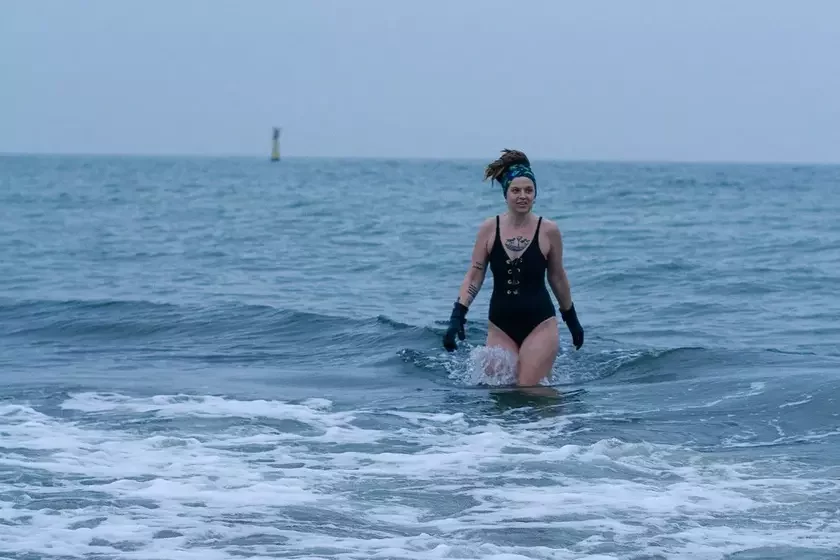
Maria. Photo from her archive
"I've never felt so at home as here"
Maria found herself in Poland against her will. She decided to leave urgently after being summoned by the KGB: the security forces became interested in her due to her active volunteer work in Baranavichy.
Maria spent several months in a refugee camp, and then ended up in Sopot. She admits that living by the sea had been her long-standing dream, but she never thought it would be the cold Baltic Sea.
Now the girl says that even in her hometown, she didn't have the same sense of calm that the sound of the surf gives her.
"I've never felt so at home as here," Maria admits.
Maria was officially diagnosed with ADHD — Attention Deficit Hyperactivity Disorder. She also struggles with the consequences of clinical depression.
While researching her condition, she found a study that showed that being in cold water increases dopamine levels by 200% — a hormone involved in many bodily processes, including those affecting memory, concentration, and mood.
When emotions are "below rock bottom," icy water provides sharp sensations that bring back the feeling of life, Maria assures.

Maria. Photo from her archive
The girl says that regular cold hardening has also helped her cope with other problems. For example, with reactive arthritis, which developed after a severe pneumonia — her knees would swell and ache badly. Now Maria is completely free from pain. Chronic problems with her elbow joint — so-called tennis elbow — which used to bother her at night, have also disappeared. The Belarusian woman says that in the last two years, she has practically stopped getting colds.
Five minutes at dawn
Maria prefers individual plunges, avoiding large groups. Her ideal time is dawn, when the beach is deserted and she can be alone with nature. The plunge itself lasts an average of 5 minutes.
Maria walks into the water with a calm step, and when the water reaches her chest, she takes a breath and plunges in. She notes that staying in the water for longer than 7-10 minutes is not advisable — it can cause a severe headache.
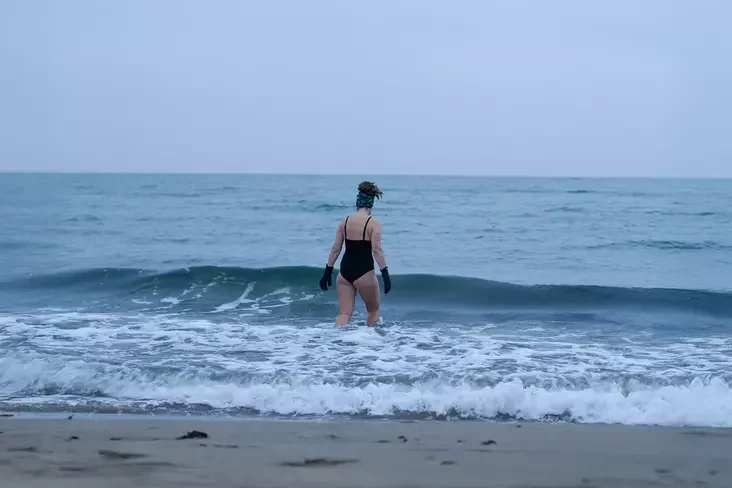
Maria. Photo from her archive
Her "walrus kit" includes everything necessary for a safe and comfortable immersion in cold water. First and foremost, these are neoprene socks and gloves: hands and feet freeze the fastest, as they almost lack a fatty layer.
Essential gear includes a hat or headband. It is not recommended to wet the head to reduce the risk of vascular spasms.

Maria. Photo from her archive
In addition, Maria uses quick-change gear: a poncho towel, a mat for her feet, and a warm jumpsuit that can be put on literally in one motion immediately after exiting the water.
"The key rule is to listen to your own feelings and not try to play the hero," she explains.
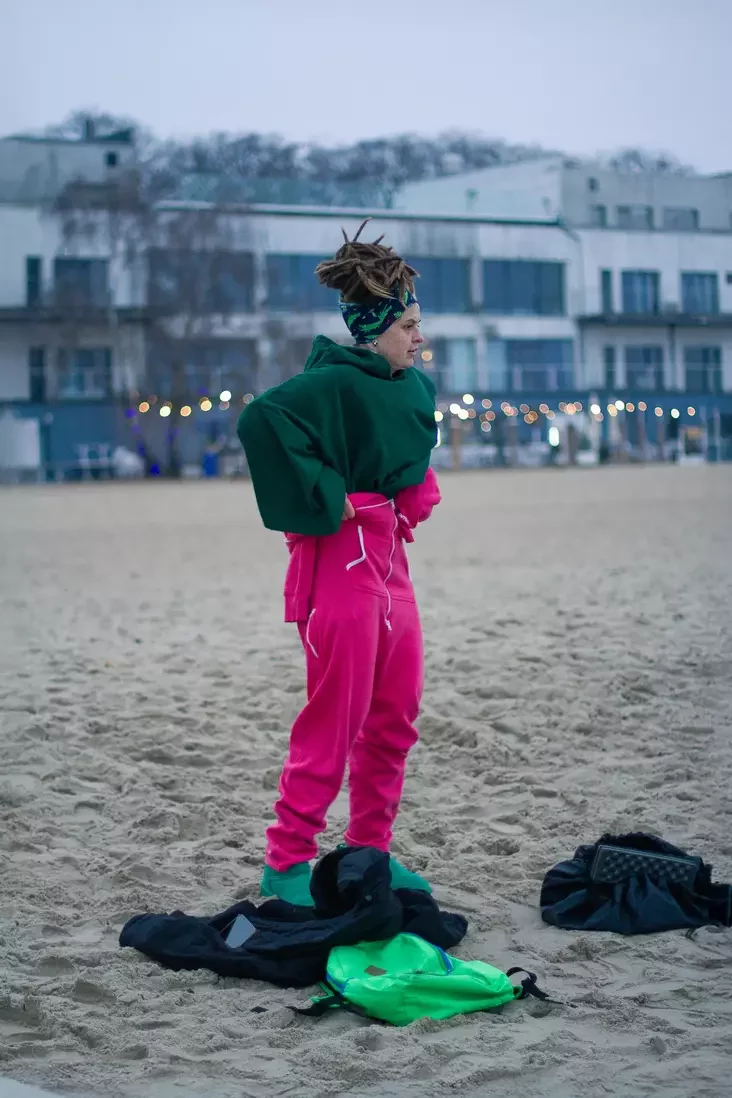
Maria. Photo from her archive
Start in summer, give up alcohol
For those who are just considering cold bathing, she advises starting in the summer and not stopping swimming when autumn arrives — this way the body has time to gradually adapt to the decreasing water temperature.
For the first swims, she recommends choosing calm weather so that exiting the water does not become an additional stress for the body.
Special attention should be paid to head protection: beginners are not recommended to plunge headfirst into icy water.
Maria recommends giving up alcohol completely before plunging: alcohol can provoke vascular spasms and increase risks, so it's much safer to bring a thermos with hot tea.
-
Pinsk—Minsk train stopped near Dzyarzhynsk without heating. After arriving in the capital, passengers were picked up by people from social networks and driven home
-
The final episode of "Life-Raspberry" by Mikita Mielkazióraŭ has been released
-
Dashkevich, Dzyadok and Sevyarynets published a joint PHOTO
Now reading








Pinsk—Minsk train stopped near Dzyarzhynsk without heating. After arriving in the capital, passengers were picked up by people from social networks and driven home





























Comments
І добра яшчэ, калі хоць сінонім адпаведны беларускі наўзамен падбяруць, а не прыцягнуць у мову замест свайго слова паланізм ці ўкраінізм.