


"You start to groan, to talk all sorts of nonsense" — philosopher Matskevich lectured blogger Piatrukhin
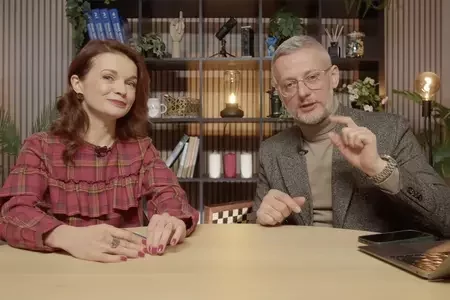
Sergei Piatrukhin published a recording of his conversation with philosopher Uladzimir Matskevich on the YouTube channel "Narodny Repartyor" (People's Reporter). At times it was very emotional. We present the most striking moments.
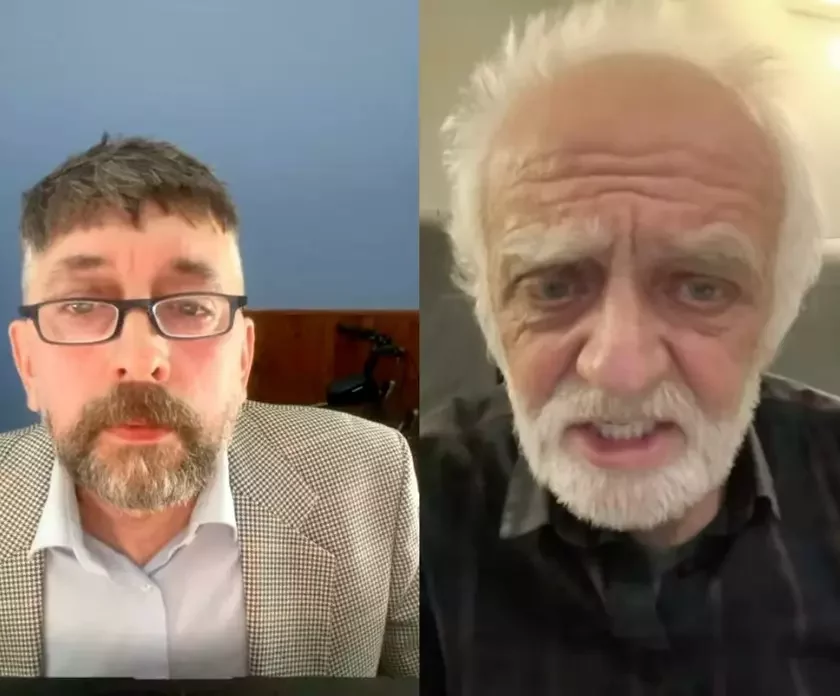
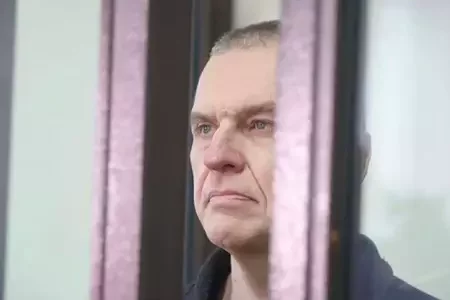
A moment from the conversation between Sergei Piatrukhin (left) and Uladzimir Matskevich. Video screenshot: narodnireporter / YouTube
"Where are the documents?"
One of the topics of conversation was Piatrukhin's story about how he demanded that the delegates of the Coordination Council express their personal attitude towards businessman Aliaksandr Mashenski.
Sergei Piatrukhin: "So, the meeting opens. We vote that every member of the Coordination Council expresses their opinion on Mashenski: whether he is an accomplice of the Lukashenka regime. Shows their personal attitude. 'Yes' or 'no' — that's it!"
Uladzimir Matskevich (very emotionally): "Why? Why show a personal attitude?! If it's a representative body... Well, it's not really one today, I'm talking about an ideal composition there, so that it would be normally organized, then it would be a representative body, today it's not. But even if it's not, the people who are part of it still take a political position.
They have no right to a personal opinion caused by feelings, memories, dances! Either there are documents, and then based on them you can say: this is a criminal.
Sergei Piatrukhin (emotionally): Of course there are! Of course there are!
Uladzimir Matskevich (raising his voice and emphasizing individual words with both sound and gestures): Then present them! What's the problem? (...) You know, if there are suspicions in political structures — that's one thing, suspicions can be discussed. Or if there is evidence — and then the person who has it simply must, is obliged, to present the evidence. And present it in such a way that it can be shown in a court, in the prosecutor's office of a democratic state, like Poland. Or it's nonsense and slander. Do you understand me?
Sergei Piatrukhin: Uh, I understand you.
Uladzimir Matskevich (very emotionally and with a hint of aggression in his voice):
Well, then let's stop, damn it, this whining, these complaints, gossip, this foolishness. Badmouthing each other. Why? If there are documents, then let's expose it. If not — let's stop these old wives' tales, this bazaar.
"Grant-suckers" and independent media
The interlocutors also discussed the topic of grant distribution and the influence of various political forces on democratic media.
Uladzimir Matskevich (very emotionally): When I hear slander: "Franak [Viachorka] is like that, Franak controls this and that" ... — show me. Well, show me the documents. When I hear whining about "grant-suckers" stealing... I know what kind of audit each fund that issues grants undergoes. And it's very difficult to steal there, unless you arrange it with the fund through kickbacks. Probably, such cases also exist.
I won't exclude that it happens. But to just talk about it in general — well, damn it, only market women do that. Why are you doing this?
Sergei Piatrukhin: Do we have independent media, what do you think?
Uladzimir Matskevich (emotionally): I think so... I can't imagine how Franak could control "Radio Svaboda". Well, I can't imagine! "Radio Svaboda" is funded by the American government. I don't understand how "Deutsche Welle" can depend on Franak. I also don't understand how "Belsat" can depend on Franak.
Sergei Piatrukhin: "Nasha Niva"?
Uladzimir Matskevich: "Nasha Niva" might. "Zerkalo" might. But I also have no evidence of this.
Sergei Piatrukhin: My main question to our independent media is: if they are independent, they should cover both sides, right? The side where they criticize Lukashenka, and [the side] where they talk about the problems of the opposition, Sviatlana Tsikhanouskaya, the Cabinet, all of that...
Uladzimir Matskevich (more calmly): Then let's — and I say it again — let's put gossip, rumors, tales aside. If there are documents — let's go to the prosecutor's office of Lithuania, Poland. As for the Belarusian opposition in emigration, in exile, I am ready to discuss this issue seriously. And it concerns me greatly.
I am also dissatisfied with the state of the Belarusian opposition, the state of those structures that today do not necessarily carry, but have taken on a certain mission and responsibility. And I am very dissatisfied with how they are fulfilling it.
But I am used to talking about it rationally, without this womanly... Well, forgive me feminists, in this case I don't know how else to call it, so as not to simply clutter things with verbosity.
That is, unfair, let's say, claims, not supported by any evidence, but only crying, moaning. If we are to discuss this, we need to discuss it rationally, pragmatically, with an understanding of what can be done under certain conditions, in which this or that structure finds itself, and what cannot be done. (...)
People invited you, saying we are fighting here. You came, met other people who said: "It's a mess here." Right? Well, then you decide: did you come to fight, or did you come to participate in this mess.
Sergei Piatrukhin: And I have decided. I chose not the grant-suckers, I chose the people who ask me questions, who have a hard time here, who are not given help, who are not given medicine, although they are also political prisoners.
"What exactly is nonsense?"
After some time, the interlocutors returned to the topic of media.
Uladzimir Matskevich: You start to groan, to talk all sorts of nonsense...
Sergei Piatrukhin: What exactly? What exactly is nonsense, Mr. Uladzimir? What exactly are you saying I'm talking nonsense about? I'm curious.
Uladzimir Matskevich (more calmly): About the unconfirmed, by documentation, verification, audit, dependence of our independent media. Well, so-called independent, let's say. They all depend on someone. Radio Svaboda on Americans, Deutsche Welle on Germans, Belsat, probably, on Poles. They depend, but since they depend on different structures, by reading both, one can draw a certain conclusion.
There cannot be a schizophrenic media that presents information equally from one side, from the other side, and so on. If we talk about the democratic nature of the media, then let different media argue from different positions. And they cannot be accused of taking a position. A normal editorial board should have a position.

















Comments