


"Go f*** yourselves, you and your "Father", p***ies!" Drunken escapades made Armenian Yervand a political prisoner. Now he's struggling with problems in Poland
Yervand sits in a room at a Polish refugee camp, having just arrived from a hospital where he was "on a drip" for several days. He doesn't look like the political prisoners usually seen in the media. Yervand is a recidivist thief with an alcohol addiction, who by fate became a political prisoner. His story resembles a criminal drama with no heroes, but rather a kaleidoscope of prisons, conflicts with law enforcement, and " разобраться по понятиям" (settling scores according to criminal code). But his example clearly shows how the Belarusian system has worked since 2020: it doesn't care who it grinds up.

Yervand Martirosyan
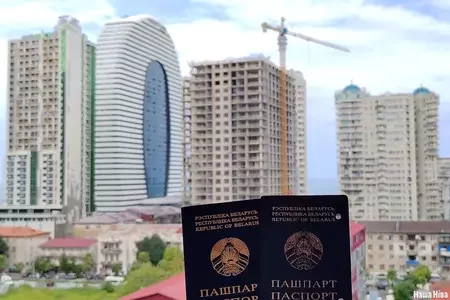
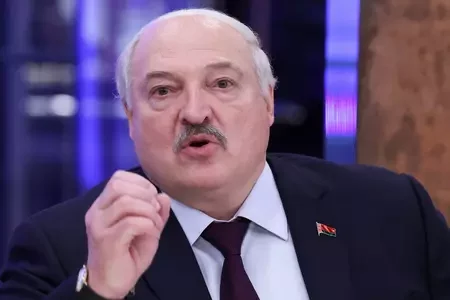
Yervand Martirosyan is 52 years old. He is a citizen of Armenia, formerly lived in Vitebsk. He was imprisoned for political reasons after a conflict with the police in May 2024. Yervand was accused of "repeatedly expressing himself in an offensive manner" towards Alexander Lukashenka while intoxicated, in a service vehicle, and in the presence of Department of Security officers. During the trial, Martirosyan pleaded guilty, but it didn't help – he was sentenced to two years in a penal colony.
Since this was not Yervand's first term, he was sent to penal colony No. 11 for recidivists in Vawkavysk. There, a few months later, a new case was opened against him for "malicious disobedience to the administration." It's unknown how many times Martirosyan's term would have been extended and when he would have been released, but a pre-New Year miracle happened.
On December 13, 2025, Yervand Martirosyan was unexpectedly released after a visit to Minsk by John Cole, US President Donald Trump's special representative. He, along with other political prisoners, was forcibly taken to Ukraine. From there, Martirosyan headed to Poland.
Here is his story.
Siberia, currency speculators, and "Sixth Department"
"I'm from Armenia. As a teenager, at 13-14, I went to Russia to lay asphalt, but I ended up in a juvenile detention center for a fight with locals. I got three years and served time in a colony in Siberia, Altai Krai. While I was in prison, my father died in Armenia. A telegram came, but what could I do? 4,000 kilometers away from them…"
After my release, I went to Belarus, to Vitebsk. It was the early 90s; we ran around the markets, stealing goods from Vietnamese and Koreans. In 1993, I went to prison for theft, released in 1996. And then problems began with the "Sixth Department" (referring to the organized crime unit, now GUBOPiK — NN). I was framed: someone robbed currency dealers, and they pinned it all on me, because those currency dealers were "covered" by the "Sixth Department." They caught me, held me for 10 days in a basement, demanding 55 thousand dollars. They beat me so hard I lost consciousness. They were afraid I would die, so they called a local police unit and ordered them to register it as if I had already fainted in their custody. If I really had that money, I definitely wouldn't have been stuck in Belarus; they wouldn't have found me.
In 1999, I married a Belarusian woman, lived with her. In 2000, I was arrested again. I was held for a year in a temporary detention center with homeless people. I went on a hunger strike until they asked me – what do you want? I said: "I'm tired of sitting with the homeless. Give me a ticket, I'll leave." As a result, they gave me a 10-year entry ban to Belarus, bought me a ticket, and sent me to Moscow. First, I lived there, then in Penza, then moved to Mordovia. I worked, and was imprisoned again for theft.
He spoke — and was imprisoned
I only came to Belarus in 2019. I used to live here, so I thought I understood everything. But it turned out much had changed. I got a job as a stamper at the Society of the Blind — assembling sockets and switches, living in a dormitory. I myself have a third group disability.
I didn't attend rallies in 2020.
But after those events, in 2024, I was in a company with a woman in the dormitory. We were drinking, decided to go for a refill. On the street, a patrol stopped us. They said: "Let's go to the police station." I agreed, only asked them to let the woman go.
In their car, they had cameras on their chests, recording everything. They started, saying: "You've come here, drinking our vodka, hanging out with our women, if it weren't for the Father, we would have bent you all over and kicked you out of the country!"
Well, I replied: "Go f*** yourselves, you and your "Father", p***ies!" They immediately: "Oh, well, you're in trouble!"
They brought me to the department, I spent the weekend there, then they gave me a fine of 25 basic units, sent me to a mental institution to "be on a drip." I thought that was it. But a week later, the plainclothes officers arrived. They took me to a psychiatric hospital, injected me with haloperidol for two weeks, as if I were inadequate. And do you know what haloperidol is? It makes your muscles feel like cotton.
And then they imprisoned me for two years under Article 368 — "Insulting the President." And I didn't even know that there was criminal liability for words.
Release with a bag over his head
This time, serving the sentence was difficult, there was no relaxation at all. They put moral pressure on me, the head of the penal colony in Vawkavysk constantly bothered me, sending me "to the roof" (punishment cell or cell-type room — NN). Afterwards, there was a prison in Mozyr. There, the deputy political officer hit me several times.
The release was strange: they transferred me to Hrodna's prison (Prison No. 1 Hrodna — NN), then put a bag over my head and took me to Ukraine. They dumped me — and that was it.
"I know: if I come to Belarus — I'll be imprisoned again"
Now I'm in Poland, living in a refugee camp, seeking asylum.
I am alone, I have no other connections or family. My mother died long ago in Armenia. When I was deported in 2000, my wife was pregnant. When I returned 19 years later, my son was already 20 years old. He doesn't know me, I haven't seen him. My ex-wife has long been married to someone else.
I have a disability: a replaced joint, I have diabetes, asthma, liver cirrhosis, a removed pancreas. Currently, my asthma has worsened. My goal now is to confirm my disability in Poland to get a card and the opportunity to find light work and work.
I know: if I come to Belarus — I'll be imprisoned again. I saw people in the penal colony who were imprisoned in 2024 for photos from the 2020 protests. The system there works simply: even after release — a year of preventive registration, and then back behind bars. That's why I'm here. I'm trying to fight my addictions, hoping for help from volunteers, and I just want a normal human life."
Under the control of volunteers and medics
Yervand received only part of the aid provided for every released political prisoner — about 600 euros. He handed the rest over to volunteers for safekeeping, as he fears he might drink it away.
Soon after his release, he had already relapsed so severely that he ended up in the hospital.
Now the former political prisoner wants to get sober (coded), as he cannot stop himself. Volunteers are looking for a way to pay for his treatment.
«Nasha Niva» — the bastion of Belarus
SUPPORT US



Fiaduta — to Kalesnikava: Mashanka, either return for a month, or don't teach to live those who are tired of getting bumps from repeatedly stepping on the rake








Comments