


At least 21 people have died as a result of a collision between two high-speed trains in southern Spain. The cause of the crash is unknown, but experts are already calling it unusual: the trains derailed on a straight section of track that had recently been repaired.
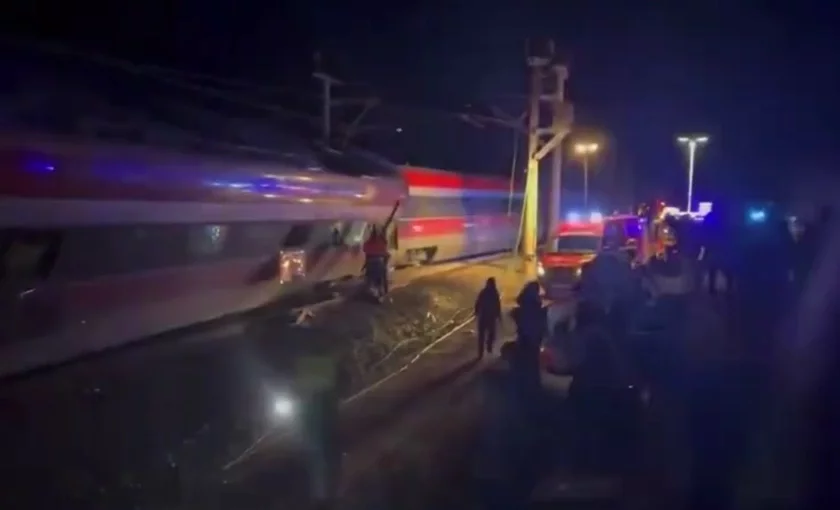
The train crash occurred at 7:45 PM local time on Sunday near the town of Adamuz in Andalusia, southern Spain.
A high-speed passenger train operated by Iryo, en route from Malaga to Madrid, derailed and veered onto an adjacent track, according to Spain's railway network operator Adif. The train then collided with an oncoming train traveling from Madrid to Huelva.
The exact number of injured is not specified, but according to Spain's Minister of Transport, Oscar Puente, more than 30 people with serious injuries are in hospitals.
According to the Andalusia emergency services, at least 73 people were injured in the collision.
The total number of injured could be higher: several more people might be trapped in the carriages, rescuers warned.
According to Puente, as quoted by El Pais, the crash appears "extremely strange" because the train derailed on a straight section of track that was repaired last May; the repair costs amounted to about 700 million euros. The train itself was also practically new, Puente added.
The official cause is not yet known. A special group of experts, formed under the auspices of the railway accident investigation commission, is leading the investigation. So far, experts have only expressed "puzzlement" regarding the potential causes of the accident, El Pais quotes the Minister of Transport. The investigation, which is expected to determine what happened, is anticipated to last at least a month.
One of the passengers on the first train told journalists that the impact was so powerful it felt like an earthquake, AFP quotes his account. After the collision, he felt like the train was about to overturn, after which the carriage he was in indeed fell onto its side.
The first train, which derailed, had about 300 passengers, reported Iryo, the company operating services on this route. The second, oncoming train, belonging to Alvio, could have had about 100 passengers.
According to a representative of the Italian railway company Ferrovie dello Stato (which owns the first train), the accident involved a Freccia 1000 train, capable of reaching a maximum speed of 400 km/h, Reuters reports. The second train could have been moving at about 200 km/h at the moment of impact, El Pais writes.
One of the deceased is the driver of the second train, Spanish media report.
The Andalusia Emergency Agency urged all passengers on the trains involved in the accident to report on social media that they are alive.
Following the accident, all railway services between Madrid and Andalusia have been suspended.
According to rescuers, during the crash, some carriages not only overturned but also became deformed. This complicates rescue efforts and the extraction of bodies. As Francisco Carmona, head of the Cordoba fire department, told Spanish public broadcaster RTVE, "we had to first remove a deceased body to reach a living person. It's a difficult and complex job."
According to a man who was on one of the trains, many passengers were injured by glass fragments. Other passengers told journalists that they had to use a special hammer to break the window glass themselves to get out of the deformed carriages.
Spanish Prime Minister Pedro Sánchez stated that the country would experience "a night of profound sorrow."







































Comments