


Europe Has Weaned Itself Off Russian Gas. The Cold Winter of 2026 Passed Without Crisis for the First Time
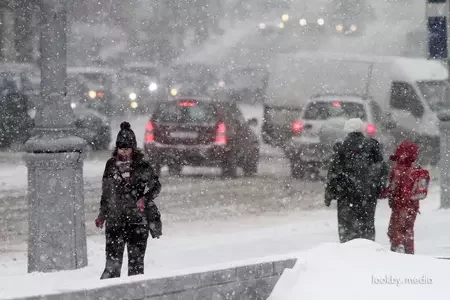
Europe is gripped by frost. If this had happened in any other of the last five winters, the EU would already be in an energy crisis, and electricity and heating prices would have soared to enormous values.
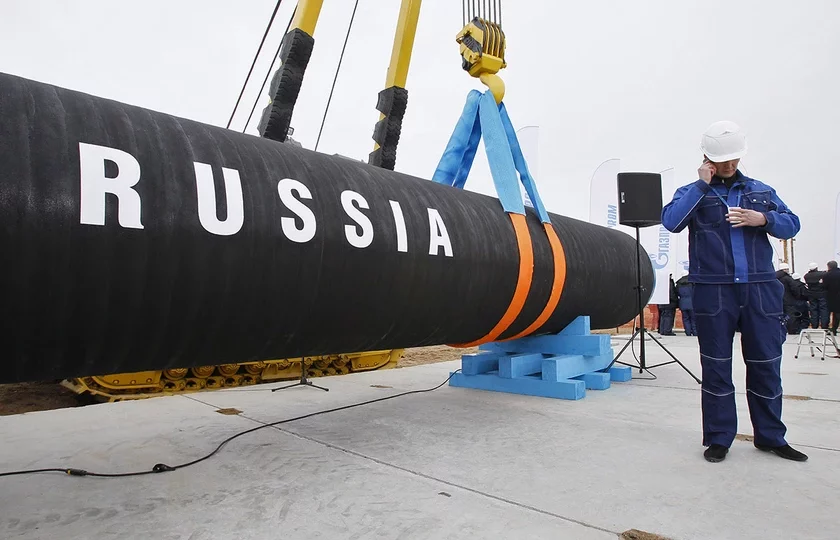
Photo: Dmitry Lovetsky / AP
However, calm prevails in the European energy market, giving experts reason to assert: in the fifth year of the Kremlin's gas war with the European Union and the fourth winter of the Russian invasion of Ukraine, Europe has finally learned to live without Russian gas. However, having freed itself from one energy hegemon, Europe immediately fell into dependence on another – the USA, writes the BBC.
Europeans now buy American liquefied natural gas (LNG) at market prices, whereas previously they exclusively received cheaper Russian pipeline gas. This means that European industry will not recover in the coming years after the energy crisis provoked by Russia, and Europe will continue to lose competition to the world's two largest economies – the USA and China.
Nevertheless, the acute phase of the crisis has already passed, as demonstrated by the current frosts. Last winter, the EU lost Russian gas transit through Ukraine — and yet survived the heating season without problems. True, then underground storage facilities were filled to capacity, and the winter was mild.
Now, however, storage levels were lower than usual even before the start of the heating season, and have now fallen to multi-year lows. Moreover, winter is becoming harsher every day: after the frosts and snowfalls of early January, a new wave of Arctic cold is heading for Europe. It's also freezing in Asia, meaning competition for liquefied natural gas on the open market will increase — and prices may follow suit.
However, even on the eve of a "perfect storm," prices in the European gas market remain within the new normal.
They are currently at approximately last January's level — 30–35 euros per megawatt-hour. This is higher than the pre-war 20 euros but entirely affordable for European consumers.
At the height of the crisis following the Russian invasion of Ukraine in 2022, gas in Europe cost 10 times more — sometimes prices exceeded 300 euros.
In 2023, the average market price decreased by 70% — to approximately 40 euros — and has not risen since, only declining.
In other words, while previously prices only didn't rise due to full storage facilities and a warm winter, now they only don't fall due to depleted reserves and frosts. Therefore, experts believe, and European officials hope, that not only this winter, but also in the future, Europe will be able to supply itself with gas at acceptable prices without problems — even considering that by the end of 2027 it plans to completely abandon Russian supplies.
«Turning Point»
«Half of the heating season is already behind us, temperatures have been lower than in recent years, and reserves are rapidly declining. However, prices are at one of their lowest levels since Russia's invasion of Ukraine and, adjusted for inflation, only slightly exceed the average for the decade from 2011 to 2020,» notes oil and gas analyst John Kemp.
In his opinion, the main reason is the abundance of liquefied natural gas on the market. And supply will only increase in 2026 with the commissioning of new plants in the USA and Qatar. This will not only cover winter demand in Europe even in the event of new cold weather but also replenish storage reserves in the summer at prices lower than last year's — meaning better preparation for the next winter.
European gas storage facilities are already half empty, and in Germany — Europe's main industrial country — reserves have fallen below 45%.
However, the world is gradually being covered by a long-awaited wave of liquefied natural gas supplies, promising abundant supply for years to come. Europe has been able to wait for this moment, and from now on, life without Russian gas will be easier and cheaper than in recent years, notes industry publication Platts.
«This winter promises to be the most comfortable for the EU in recent years in terms of prices,» writes Platts. «This makes 2026 a kind of turning point between the crisis period after Russia's full-scale invasion of Ukraine and the sharp increase in global liquefied natural gas supply.»
How the Kremlin Lost the Gas War
The EU managed to overcome its dependence on Russian gas for three main reasons.
Firstly, Europeans built terminals along their coasts to receive liquefied natural gas vessels. Secondly, they began to save electricity and heating. And thirdly, they accelerated the transition from fossil fuels to renewable energy sources.
For the first time in history, in 2025, wind turbines and solar panels in the 27 EU countries generated more electricity than coal and gas power plants, according to preliminary estimates by the International Energy Agency (IEA).
Whereas five years ago, before the start of the gas war, electricity generation at gas power plants exceeded that from sun and wind, now the situation has become exactly the opposite. And already in the next one to two years, the EU will generate twice as much electricity from sun and wind as from gas.
However, the European Union will not be able to completely abandon gas. Moreover, demand for it will grow due to economic growth and the rejection of dirtier fuel — coal. Europe hopes to meet these needs without returning to Russian gas.
How the EU is cutting gas purchases from Russia and increasing imports from the USA
(quarterly, in billion cubic meters)

The picture of the European gas market has changed rapidly. Back in 2019 — before the COVID lockdowns and the Kremlin's gas war — more than 50% of all gas for EU countries was purchased from Russia, while American liquefied natural gas accounted for ten times less — about 5% of imports.
Now, however, the USA's share in the European gas market has grown to 27%, while Russia's has decreased to 13%, according to Bruegel data. Norway also benefited — it increased its share by almost one and a half times, from 22% to 31%.
The USA and Norway now share the status of the largest supplier. And while there are no complaints against Norway as a reliable partner that does not politicize supplies, in the USA, Donald Trump is in power, who does not hide his animosity towards Europe, imposed tariffs against it, and is now declaring his intention to take Greenland.
Trump has significantly fewer levers of influence over American gas exporters than Vladimir Putin has over Gazprom. However, becoming dependent on the White House is still not advisable, according to American economist and Nobel laureate Paul Krugman.
«Europe bought gas from Russia — and it turned out to be a bad idea. Becoming dependent on American gas is roughly the same bad idea,» Krugman said. «Purely for national security reasons, Europe needs to develop renewable energy sources.»








Fiaduta — to Kalesnikava: Mashanka, either return for a month, or don't teach to live those who are tired of getting bumps from repeatedly stepping on the rake














Comments
Iншымі словамі пражэкту цара джучы капут, кітай & індыя, турцыя ў лепшым выпадку аплачваюць 30% кошту . Сэнсу ў існаванні маскоўскай імперыі няма. Немцы выцягнулі яго ў 70е, пра остер політік , усё фініта ))