


"I've never eaten tastier potatoes anywhere." How a Belarusian found himself at the end of the world
The opposite side of the planet, the antipode of Belarus on the globe, is located in the southern Pacific Ocean. And New Zealand is the closest large landmass. But even at this end of the world, ten time zones away from Minsk, there are Belarusians. One of them is IT specialist Alexander Kochin, who moved from Barcelona to Auckland, New Zealand's largest city, about two years ago. He shared his story with Devby.io.

Faculty of Physics BSU — Moscow — Vilnius — Barcelona — New Zealand
In 2006, I graduated from the Faculty of Physics at BSU. In those days, it wasn't hard to get into IT: IT companies simply "swept up" graduates of technical universities.
I worked for a couple of years in a typical Belarusian outsourcing company, and then moved to Moscow. I worked there for ten years in various companies. My last job in Moscow, from 2015, was a startup that made a logistics product for the American market. Back then, working in Russia for the American market was more or less normal. But a year later, our founder came to the conclusion that it wasn't quite right; that was when talks began about the influence of Russian hackers on US elections.
It was decided to relocate to Vilnius. Lithuania at that time created very pleasant conditions for IT companies and startups; quite a few Russian and Belarusian businesses moved there, becoming even more numerous after the events of 2020 and the start of the war.
My wife and I lived in Vilnius for three years, and I received an offer from Barcelona from Wallapop. It's something like the Spanish "Avito". However, things didn't go very well there; I worked for a year and started thinking about moving again.
I chose New Zealand. I had been looking at this country for a long time, I liked it very much. I knew something about it — the usual information from the internet about a country attractive for immigration. But in reality, of course, it was a "leap of faith." We realized that we could move there, albeit with maximum effort. And we decided: "Okay, let's go."
True, my wife said she was tired of moving: she would just organize a business, and then we'd move again. So we agreed that this would be our last move.
Preparing for the move to New Zealand, I specifically found a completely remote job. It was an American company, but all its engineering was Russian-speaking. And it operated in the European time zone. As a result, for almost a year and a half after moving to New Zealand, I had to work nights.
We've been here for two years now. We arrived during the post-COVID depression. The pandemic spread unevenly: when we left Spain, its consequences were already ending there. But in New Zealand, on the contrary, the market had collapsed.
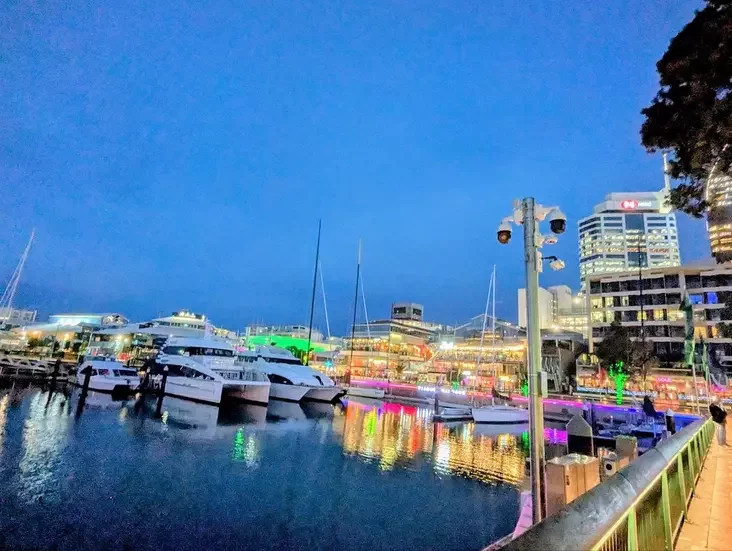
Photo of the narrator
New Zealand is a country with a free market economy and a high standard of living; there's IT here too. But the country itself is very small, with 5 million people. Therefore, large employers here are mainly banks and insurance companies. However, there are many small companies. This is convenient for me: I have a startup-like reputation.
Honestly, for the first while after moving, I thought that if we had known about all the difficulties in advance, we might have reconsidered. But now I realize it was the right decision.
How to get to New Zealand and legalize
How do people come to New Zealand? Essentially, there are two options. The rare one is if you miraculously manage to find remote work in this country.
Most people come here for education. There are world-class universities here. Once we understood the whole scheme, my wife decided it would be excellent to get an MBA here.
First, we came here for language courses. My wife came on a temporary student visa, and I "tagged along" as a partner on a visitor's visa. Later, my wife enrolled in university and received a full student visa. And I, as the student's husband, received a work partner visa, which gives the right to do anything here.
Only after that did real chances to find local work appear. The thing is, the country has enough resident specialists, whom companies prefer and don't filter out at the screening stage.
For a year and a half since moving, I applied for everything relevant — 100+ vacancies. During all this time, I had four serious interviews — where I had to come to the office, talk to stakeholders.
So, an important stage for any immigrant here is to obtain residency, meaning a temporary residence permit. Residency frees you from any problems related to finding and changing jobs.
Simple residency can be obtained by working for a local employer for a year and having your diploma verified by a local organization.
After a couple more years, you can apply for permanent resident status, a permanent residence permit. And after another five years, for citizenship. For now, I am a citizen of Belarus, despite living in Russia for 10 years, I did not change my citizenship.
It's also complicated with a cat
We moved to New Zealand with our cat. This country has the strictest laws for importing animals. There's a list of countries where an animal must have lived for at least six months for you to be allowed to bring it here. For example, if someone brings animals to New Zealand from Russia, they are first sent for temporary care in Korea or the UAE. A special company handles the paperwork, the cat receives the necessary vaccinations, and then it is processed as special cargo. And here, it also had to be in quarantine. And all of this cost a fair amount.
Now my cat has Russian, Lithuanian, and Spanish passports. In New Zealand, they said they wouldn't make a new passport — let him live on his Spanish one.
Work: "After Russian-speaking IT, I was in shock"
Currently, I work at the New Zealand startup Charge Net. The company is already ten years old, but it has maintained typical startup size and structure. It's the country's largest network of charging stations for electric vehicles. We have a hybrid schedule; I periodically go to the office — I have a couple of test electric cars there. Quite a few field trips where I do production testing at sites.
About two-thirds of the employees are Kiwis (as New Zealanders call themselves). But there are also plenty of foreigners. Recently, for example, they hired a guy from Peru; he sits in the same office as me. And our Product Owner is German.

Photo of the narrator
Work — like life in general — is very measured here. When I came to a new job from Russian-speaking IT, I was in shock: I do everything reactively, while others don't rush. In New Zealand, it's not customary to overwork; it would look very strange.
New Zealanders don't have a habit of getting close to each other quickly; this also shows in team relationships. Recently, our development team went to a conference. In the evening, we quietly had some beer together, discussed a couple of familiar topics. And that was it. No spark of friendship passed between us. If I had come to such a conference in a Russian-speaking team, I'm sure everything would have been different.
Culturally, we are very different. And I carefully try not to mess up and somehow grasp their culture.
Different New Zealanders
When I talk about Kiwis, it's important to understand that New Zealand is a country of immigrants. There are many descendants of immigrant families here. And if, for example, a girl was born here to a Chinese family, she is considered a Kiwi. In general, there are many Chinese and Indians here; these are the two largest diasporas.
We should also mention the Maori. This is the indigenous Polynesian people who lived in New Zealand before the arrival of Europeans. They make up about 15% of the population here. The entire New Zealand state is founded on the Treaty of Waitangi between the Maori and the British. And now it is perceived as a predatory treaty — there have been many debates about how unfair it was. But for now, it's not being revised, as it's a complex matter.
Many Maori live in separate settlements, but you often see these people with tattoos on their chins. It looks very cool. In our company, we have a Maori employee who works in safety and occupational health.

Photo of the narrator
Maori are treated in New Zealand with a sense of cultural and historical obligation — very carefully. Maori culture is quite actively promoted (or, as some believe, imposed). The Maori language is being revived, actively taught in schools and universities. Overall, this is a sensitive topic for New Zealand.
There's absolutely no special attitude towards Belarusians here. We are rare guys here — as are Russians, for that matter. New Zealanders are educated people, and when I say I'm from Belarus, they reply that they've heard of this country "somewhere in the center of Europe." They show polite curiosity.
However, when they realize that I speak Russian in everyday communication, they ask why. They ask what happened to our language.
Actually, people in Kazakhstan, in Almaty, were more surprised to see a Belarusian. From them, I heard "Wow, from such a distance, that's something!" But here – well, Belarus is Belarus. People from all countries are here.
If you think your English is good — you might be disappointed
The working language in the company is English. Its local version has some local words, but more problems come from the accents. New Zealand English has many accents, with Scottish, Irish, or other roots, already transformed here. At first, it was very difficult to understand different team members.
I found it easy to communicate in English with Europeans — for example, with Spaniards. But here I had to make an effort.
Important: if your English is good enough for interviews in Europe — it's not a given that it's good enough for interviews in New Zealand. Of course, you shouldn't be afraid to try your luck. But I'll say this: you might be disappointed.
Income, taxes and KiwiSaver
I can't compare incomes and living standards in New Zealand with those in Belarus, as I left Belarus a long time ago. I'll try with Moscow's, but that will also be difficult. Living in Moscow by New Zealand standards is quite cheap. We left that city in 2017. I had a good Moscow salary, enough to rent an apartment in a good area near the metro, and we denied ourselves little.
Here, we are certainly not struggling either. The standard of living is even better than in Moscow, but it "eats up" most of the money. I can say this: if I lived in Moscow with today's New Zealand salary, I would definitely have more money left after all mandatory expenses.
It will be easier to compare incomes with Spain, from which we left not so long ago. In Barcelona, at least two years ago, there was a clear "glass ceiling": a Senior QA Engineer didn't earn more than 55,000 euros anywhere. A Lead was given around 65,000 euros per year.
The minimum a QA engineer can expect in New Zealand is around 80,000 New Zealand dollars per year [$46,400]. A Senior will earn from 100,000 to 120,000 [$58,000 – $70,000], a Lead – something around 140,000 per year [$81,000]. This is a very rough estimate based on the vacancies I've seen.

Photo of the narrator
Taxes in New Zealand are very simple. I have personal accounts with the local tax authority and at work, where I see my payslips and the amounts of tax I pay. There's a progressive scale here [from 10.5% to 39%]. Various tax deductions also affect the overall income tax rate. I pay 28% of my income.
Also, the employer is obliged to pay 3% of the salary into the local pension fund, called KiwiSaver. And you can voluntarily save up to 10% of your salary there yourself. Money from KiwiSaver is managed by pension funds, which invest it worldwide. But the pension system is not available to you without residency.
In my opinion, with the move to New Zealand, we started living better. In general, that's why people move. We moved to Vilnius — life was somehow better in Vilnius than in Moscow. In Barcelona, it was better than in Vilnius. And in New Zealand, it's better than in Barcelona. Though we both miss Barcelona, of course, no denying that.
Medicine
As long as you don't have resident status, healthcare is entirely your responsibility. Many employers pay for insurance. For residents and holders of long-term work visas, some medical services are already free, but it's still better to cover the rest with insurance.
Your window to the world of medicine here is a GP [General Practitioner, family doctor]. You can't see a specialist without going through them. However, GPs solve most problems themselves.
I haven't heard of multi-month waits for medical specialists. My wife went for procedures without problems according to the schedule prescribed for her. However, I know that MRI scans can take half a year to wait for here. Sometimes, if there's a long wait for a specialist at a regular hospital with insurance, people go to a private clinic and book an earlier appointment.
In any case, all of this is completely unlike the Belarusian medical system, as I remember it. Where you went to a polyclinic like a shop. Here, everything needs to be planned in advance. Except, of course, for "emergency services."
Housing
Auckland, New Zealand's largest city, is also the most expensive. Rent in Barcelona was cheaper. Here, a house or apartment with two bedrooms (a three-room dwelling by our standards) will cost from 600 to 800 New Zealand dollars per week [$350-460].
Finding housing in New Zealand is similar to the same process in other civilized countries with a high standard of living. The contract under which you rent housing protects your rights. Here, you cannot be evicted at any moment, like in our country. I recall my student days in Minsk, when my friend and I were renting an apartment and the landlord told us: "Please vacate in two weeks, because my son is getting out of prison, and I have nowhere to house him."

Photo of the narrator
But all this has a flip side. The choice of tenants is a very responsible matter for landlords, and besides, demand is always high here. Therefore, finding adequate housing for adequate money is not easy.
Most often you deal not with the landlord himself, but with an agency. Many owners, for example, move to Australia (for a Kiwi, this is roughly like a Belarusian moving to Russia). The agent primarily looks at how you and your family look, behave, what your profession is, why you came. You write all this in a cover letter. They will ask you to upload all sorts of documents — for example, about income. And they will also ask for references — from a previous landlord, from work, and also from a person who has lived here for some time, has a good job and reputation.
When we rented our first home, I asked for a recommendation from our landlords in Spain as a reference. Our landlord later said they praised us highly.
I also asked my then-CEO, who lives in California, to write a work reference. And by that time, we already had a good local acquaintance here, whom we met in Barcelona.
Here's the story with mortgages. The average cost of a home in Auckland is one million New Zealand dollars ($580,000). And ideally, you should come to the bank with 20% of that amount already. Then the bank will give you a loan — let's say, for 25 years, and then you will pay roughly the same amount each month as you would for renting a similar property, or even less.

Photo of the narrator
There are additional options — for example, if it's your first home, the bank might agree to a smaller down payment and better interest rates. But all of this is also only available to residents.
Food
New Zealand is the most expensive country of all the ones I've lived in. And groceries here are also expensive. On the one hand, New Zealand is a country with a serious agricultural sector, with very developed agriculture. On the other hand, selling all this cheaply in a small domestic market is simply unprofitable. The same story applies to seafood, which is my main disappointment here after Barcelona.
I have never eaten better meat than in New Zealand. Only Icelandic lamb might compare, although I tasted it a long time ago.
And also (now Belarusians will throw slippers) I have never eaten tastier potatoes anywhere. And draniki (potato pancakes) made from them are also very delicious.

Photo of the narrator
New Zealand is known as a major exporter of butter. But there isn't a giant selection of dairy products here. And in general, New Zealanders are somewhat indifferent to dairy. There's absolutely no cottage cheese, for example. And kefir is a special dietary item for lovers of certain bifidobacteria. And it's only sold in one type.
Another important feature that those living in the EU will understand. Europe is one large economic zone; in any pan-European supermarket, two-thirds of the products on the shelves are imported — resulting in a large variety of items. But here, that's not the case. The country is small, at the end of the world, and bringing food here is simply very expensive.
But perhaps the only product I truly miss here is bread. Any bread here is some kind of rubbery crap. Sometimes people tell me: "Oh, there's a bakery on the other side of town where you can probably buy a crispy bun." And I feel like laughing in response, because in Barcelona, you simply can't buy a non-crispy bun.
Auckland and Kiwi lifestyle
Auckland is the largest city in New Zealand. 1.7 million people live here, one-third of the country's population. We planned to move here initially because it's easier to find work. Moving to the capital, Wellington, with a population of about 200,000 people, would have been strange. Of course, there's IT there too — but noticeably less. And it's also the windiest place on earth, by the way.
Although Auckland's total population is almost the same as Minsk's, it also doesn't feel like a big city. The multi-story center, the City, can be walked around in three hours. We lived there at first. All the emigrants hang out there; it's dense, more or less lively. But now we've moved to the suburbs, where most Kiwis live. And that's an absolutely different experience.
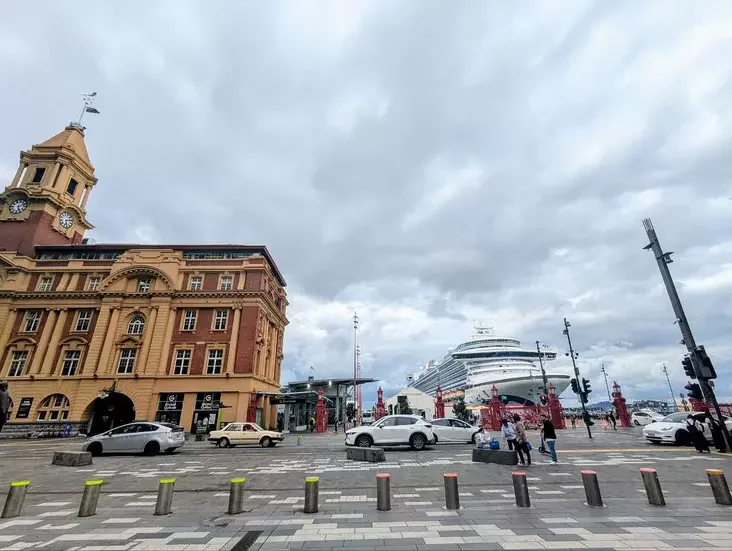
Photo of the narrator
We live in the Beach Haven suburb. And if I were to go out onto the street now, not very late in the evening, I wouldn't meet anyone at all. It's very quiet and peaceful here. And the residents chill somewhere in their backyard or inside the house. And by 10 PM, many are already going to bed.
And this true Auckland — enormous in area, sparse, people not packed into multi-story boxes. You live as if in a village. I drive to the office as if from one part of the village to another.
Kiwi lifestyle is about relaxation. I'm slowly adopting it, and I really like it. We are also gradually soaking in the local culture. It's an English culture where you probably will never get as close to people as you might in a Russian-speaking environment. But at least you can live normally, neatly next to each other, maintaining dignity.

Photo of the narrator
Nature as the main attraction
The best nature in the world is here. Everything is simply incredibly beautiful — waterfalls, mountains, beaches. Literally under my house there's a picturesque trail that goes through a real tropical forest. But otherwise, New Zealand is quite a boring country. A bunch of cool natural locations — that's the main entertainment.
Overall, nature here is quite safe, without any deadly creatures. You'd have to search for the only poisonous spider.
There are almost no mammals, except for those that have been introduced. They are considered invasive species. The most famous local flightless bird, the kiwi, suffers greatly from possums, which were once tried to be bred for their fur. New Zealanders don't forgive them for this; possums are simply called upon to be destroyed, like other invasive species. I was walking recently and saw a hedgehog — couldn't kill it, just moved it off the path.
Another attraction is "The Lord of the Rings" — the film trilogy that was filmed all over the country.
Hobbiton [sets in the form of a Hobbit village, characters from the "Lord of the Rings" books and film saga] is a two-hour drive from Auckland. But tickets need to be bought a couple of months in advance. I once decided to go there for my birthday, wanted to buy a ticket a month in advance and even managed to think — how smart I am! But there were no tickets left.
Flights within New Zealand are not particularly expensive. You can fly to Wellington for about $100 ($58). But for international flights, you'll have to pay significantly more. To the nearest large country, Australia, you have to fly for five hours — in that time, you'd fly across all of Europe.
Main plus: "A country where everything is truly made for people"
New Zealand is a very cozy country, wonderfully arranged. Everything here is genuinely made for people. Take, for example, this walking path near my house. It's just a piece of wild forest that has been very well equipped, although it could have been done simpler and cheaper. And this is a very unusual story for those who have lived a lot in Belarus and Russia. Where much is done as if... "just to get it done." For example, a sidewalk is made to be a sidewalk, not for people to walk on it. Here, you can see that everything is done with care for people. And you use all this country — and you're happy.
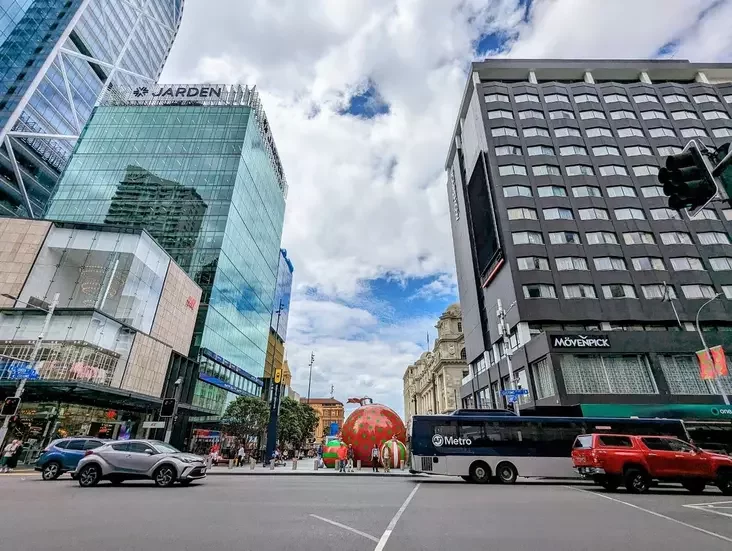
Photo of the narrator
This comfort and care are felt in the infrastructure, in various services, even in relations between people. Everyone treats you very kindly, and this is also perceived as part of this entire comfortable infrastructure.
Even the police here are not for doing things typical of other countries, like catching those who exceeded the speed limit by 7 km/h on the highway. Simply in the presence of police, you feel safe. In Belarus and Russia, you have completely different feelings about the presence of authorities.
Of course, like everywhere, New Zealand has a lot of problems. People also criticize the government here. But still, the level of comfort for citizens is incomparable.

Photo of the narrator
If someone asked me if I was satisfied with choosing New Zealand two years ago, I would say it wasn't worth coming here. Our two previous emigrations somehow went easier. But now, that the difficult period related to job searching and settling in is over, I understand that it was a super-correct decision.
However, I won't swear off anything. Maybe for some reason, we'll decide to move, but for that, we would have to really, really want to. Maybe some job offer will appear, so fantastic that it would be a sin to refuse. Maybe we'll become so Kiwi that we'll decide, like some of them, to move to Australia. But for now, we intend to stay here.
Advice for those considering New Zealand
To move, you should either get an offer from a local company in advance, or come here with a specific plan. It's not worth coming on a whim — everything is very expensive. And the first couple of years of life will cost twice as much just due to lack of knowledge. This is a rule I learned after three moves.
The best option is to come for education. Firstly, during your studies, you'll immerse yourself in the local culture, learn to speak the same language as locals, and make contacts, which is highly valued here and will help with job searches. Secondly, after graduating from a local university, any employer will be happy to hire you + you get an excellent three-year visa, during which you'll have time to set up your life here and apply for residency.
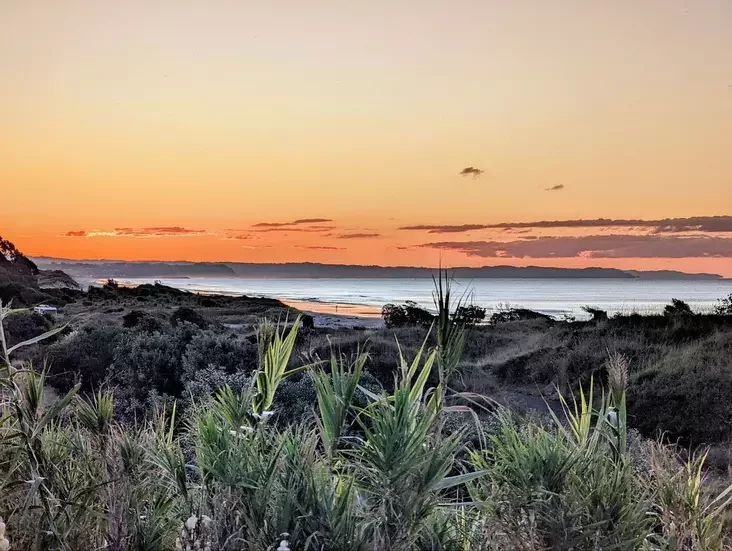
Photo of the narrator
Of course, there are also extreme options. A friend of mine came to New Zealand to study on a three-month language course with a visa for the same period. In those three months, he managed to find some kind of work. But when his visa expired, he was laid off. As a result, he spent several months in huge stress, trying to solve his document problems and eating through his last savings. I don't even know what would have to happen for him to exhale and relax. That's it, he doesn't love New Zealand anymore.
This is a story with a good ending — he found a job at Amazon. But most people in such situations are not so lucky, and they leave.
And one more important point: it's very bad to come here with certain ambitions. My wife met one such person at language courses. He was about 40 years old, had a very high opinion of himself. In Russia, he worked as some kind of director, but here, they didn't even want to hire him as a packer in a store. Because everyone didn't care who he was in Russia. And so his ambitions completely didn't align with what New Zealand could offer him.








Fiaduta — to Kalesnikava: Mashanka, either return for a month, or don't teach to live those who are tired of getting bumps from repeatedly stepping on the rake



















Comments
Краявіды сапраўды фантастычна прыгожыя, але спрыяльны клімат толькі ў раёне Оклэнда, таму ўласна там усе хочуць жыць. Узровень ультрафіялету вышэй, чым у іншых месцах плянэты, калі не берагчыся, дык на скуры адбіваецца гадоў за пяць.
Дарэчы, праўда ў тым, што нашмат лягчэй з арэндай там, дзе бюракраты твае правы нібыта не абараняюць. На Філіпінах, напрыклад, здымаў жыльлё хутка і лёгка. Ніякіх сачыненьняў, даведак, рэфэрэнсаў. І ніхто не падмануў.
Мясцовых спайваюць, праводзяць стэрылізацыю і аборты, забіраюць дзяцей для абязлічвання, заганяюць у гета і палююць з сабакамі, а замест іх завозяць мігрантаў без нацыянальнага кода, каб дабіць зямлю да асіміліцыйнага канца. З Краіны Вялікай Белай Аблокі зрабіць Новую Зеландыю - забраць нават імя і падсунуць Зеландыя ( дзе тая зеландыя і якое дачыненне яна мае да зямлі Вялікай Белай Аблокі?)
Разам: Адным маоры менш Адным акупантам больш.