


Belarusian Musician Attended a Historical Festival in Poland — And Now Sews Costumes from Different Eras
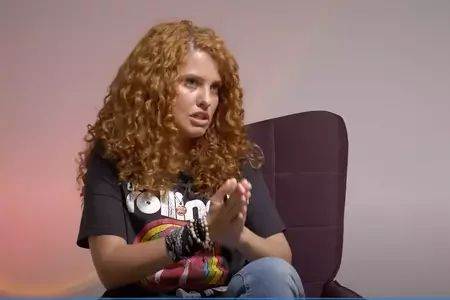
Special pockets are sewn into ancient skirts — to hold a phone connected to the internet. Hanna Liapeshkevich shares some secrets she learned by getting into historical reconstruction. She ended up at the festival as a musician but got interested — and now creates images of ancient beauties herself. Why some women perform in men's costumes, how much an outfit costs, and where to buy 12th-century decorations, she told Most publication.

Hanna Liapeshkevich. Photo from her personal archive
Hanna is a professional musician; she plays the dulcimer and performs as part of the Vadanosava Band. Together with the band, the girl ended up at a historical festival in Tykocin — a small town near Białystok. At that time, she didn't even have a full costume — she had to borrow one from Katsiaryna Vadanosava, a musician and singer who is involved in reconstruction and studies historical fashion.

Hanna Liapeshkevich at the historical festival in Tykocin. Photo from her personal archive
The atmosphere of the event impressed the girl.
«This is essentially a circle of like-minded people and companions. You gather together, share what you've found — some sources, photos, items," she describes the reconstruction community. — I liked everything: playing for people, talking with them, sitting in a tent and doing my own thing. And people walk around and look at you like an exhibit. It was one of those moments when you realize you're discovering a new world».

Hanna Liapeshkevich. Photo from her personal archive
One Outfit — Hundreds of Euros and Months of Work
After the first festival, Hanna decided to assemble her own costume — the image of a Krivichanka from the late 11th-12th centuries. It consists of several elements: a shirt, a ponyova (outer skirt), a belt, a headpiece, and decorations. To make it as historically accurate as possible, she ordered materials from special shops for reenactors — those that produce fabrics and decorations based on patterns from past eras.
The process itself requires not only money but also knowledge. There are almost no ready-made patterns; much has to be assembled literally piece by piece — from photographs, descriptions, and research.

Hanna Liapeshkevich in a Krivichanka outfit. Photo from her personal archive
Hanna used a copy of Byzantine silk — an expensive material that, in the past, only wealthy people could afford. But working with it proved difficult.
«It just unravels in your hands. You sit there wondering how to sew it so it doesn't fall apart," she admits.
Hanna made some things herself, and bought or ordered others. It took several months and about 200 euros to assemble the entire outfit.
Why Women Sew Men's Costumes
Hanna says that reconstruction doesn't always give the feeling of a complete "transfer" to the past. Modernity remains at festivals: food, infrastructure, bio-toilets, phones. For the latter, special pockets are sewn into skirts.
Some participants choose male characters to have more opportunities for involvement. They participate in battles, demonstrate weapons, while female roles in such events are often reduced to household tasks or simply being present in costume.
Hanna also plans to create a 19th-century male character — it will provide more opportunities for participation in reconstruction. In addition, she wants to learn saber fencing, which is also popular at festivals.

Hanna Liapeshkevich. Photo from her personal archive



















Comments