


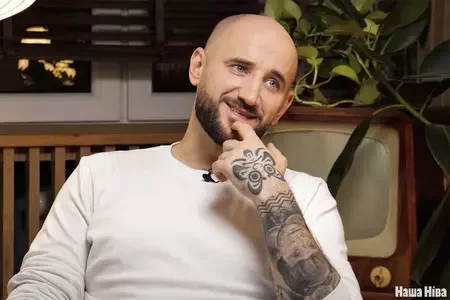
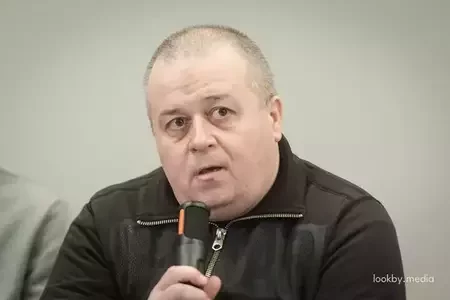
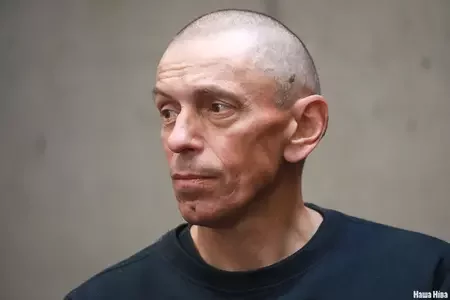
“Pasha, I don’t believe you.” Seviarynets told how a random girl motivated him to switch to Belarusian forever
“Pasha, you are such a Belarusian patriot, you talk about what a wonderful Belarus will be, but you don’t even speak Belarusian yourself.”

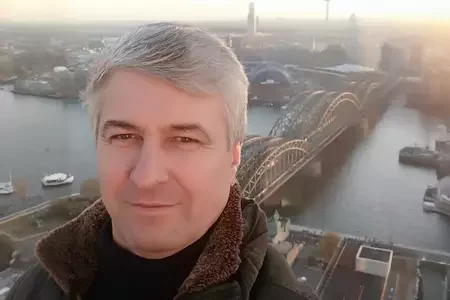
According to politician and former political prisoner Pavel Seviarynets, the Belarusian language was constantly present in his life. His parents had a great influence on this, sending their children every summer to the village of Unorytsa (Rechytsa district) on the Dnieper.
“This is a wonderful land, simply a paradise on the ancient path from the Varangians to the Greeks. A house stands right on the river bank. You can imagine: you take ten steps — the Dnieper is in front of you. It's a miracle. And people there speak Belarusian. Now, there are already many dachas there, almost none of those people are left… but back then, this was the source of Belarusianness,” Pavel recounts with warmth.
According to him, there were also many books in Belarusian in the house of his philologist parents. His father often switched to Belarusian in conversation. But, as Seviarynets notes, the children in the family grew up Russian-speaking:
“Everything around was in Russian, school, naturally, was in Russian, there was nothing Belarusian for us until a serious thaw in the early 90s.”
The final transition to his native language, as Seviarynets recalls, happened thanks to an incident in November 1994. At that time, Pavel was a student and lived in a dormitory. One day, he was asked to help a neighbor, a countrywoman from near Polotsk, carry a bag to the train station.
“We had to talk about something on the way. So I started talking about how cool Belarus was, how we had just gained independence, and how wonderful and cool it would be,” Pavel recalls, noting that the conversation was in Russian. As a result, already by the train carriage, the girl frankly admitted that she did not believe his words.
“At the end, I hand her the bag, she gets on the train and says:
‘Pasha, you know, everything you say is nice, but I don’t believe you.’
— ‘And why don’t you believe me?’
— ‘You’re such a Belarusian patriot here, you talk about how wonderful Belarus will be, but you don’t even speak Belarusian yourself.’
I say: ‘Yes. From tomorrow, I will start speaking Belarusian.’
She says: ‘Oh, come on, you’re pulling my leg,’” the politician recalls the details.
According to Seviarynets, upon returning to the dormitory, he immediately called his parents:
“I call — there were still tokens then — my parents, and I say: ‘Dad, Mom, from tomorrow, I will start speaking Belarusian. Let’s speak Belarusian.’”
Pavel also warned his roommates:
“The guys were a bit shocked, but they said: ‘Well, okay, Pasha, fine, we’re all for it.’ And that was it.”
“So from that day, it was November 1994, I have been speaking Belarusian. And there are no contradictions anymore. You speak Belarusian, you are for Belarus — everything is wonderful,” Seviarynets concludes.
«Nasha Niva» — the bastion of Belarus
SUPPORT USNow reading













Pinsk—Minsk train stopped near Dzyarzhynsk without heating. After arriving in the capital, passengers were picked up by people from social networks and driven home






Comments