


"Depression in a penal colony is a terrible phenomenon." Fyaduta spoke about Andrei Padnyabenny, who committed suicide in a penal colony
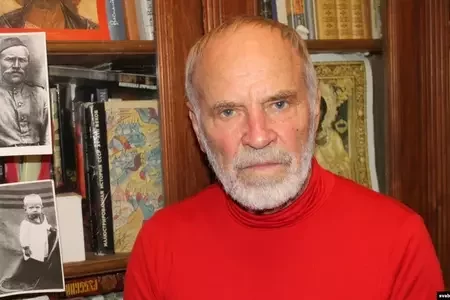
On September 3, political prisoner Andrei Padnyabenny was found dead in Mogilev penal colony No. 15. He had hanged himself. Former political prisoner Aliaksandr Fyaduta was in the same colony, personally knew Andrei, and shared his memories of him on his Facebook page.

Andrei Padnyabenny
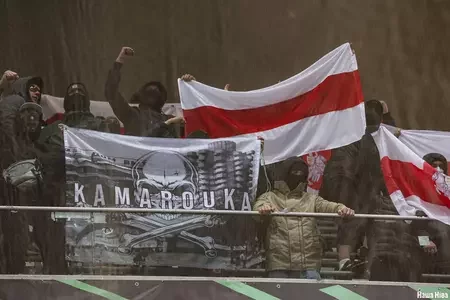
A "BCHBer" committed suicide in our penal colony. "BCHBers" [from the white-red-white flag] was what those convicts called all "political" prisoners who wanted to emphasize that they did not share our views. [...]
I knew him, or so I thought. His name was Andrei Padnyabenny. He was a citizen of Russia, and he was serving a sentence immediately under a whole "bouquet" of articles: here are 369 (insulting a government official), and 368 (insulting the President of the Republic of Belarus), an act of terrorism, inciting national hatred, creating an extremist formation and participating in it, etc., etc.
Andrei did not resemble a terrorist or an inciter of hatred. Tall, calm, intelligent, he clearly read a lot and thought even more. He was thirty-seven years old. A symbolic age.
Our detachments were neighbors — the sixth, mine, and the eighteenth — Andrei's. We often talked. Mostly about some political and economic problems, which he understood much better than I did. But it always ended the same way. Andrei would ask me:
— Iosifovich, when do you think this will end?
And no matter what we were talking about — the Russian-Ukrainian war or the terms of our imprisonment — I would say approximately the same thing:
— I don't know, Andrei. I don't know.
I was telling the truth. I really didn't know anything.
And Andrei, tall, thin, would turn and leave.
He had two children, it seemed, remaining free. And he wasn't "warming up" (like all convicts sentenced under terrorist articles, he was forbidden money transfers).
Andrei wasn't taken to the "promka" — the production zone. He swept the yard. We were colleagues: I was listed as a cleaner in the workshop.
And then I was taken to the republican hospital for convicts. The colony doctors decided to conduct my full examination.
Two and a half weeks later, I returned. And a few days later, I was struck by rumors that swept through the entire colony: a "BCHBer" had committed suicide in the punitive isolation cell.
Any suicide, and even an attempt at suicide, is an unpleasant thing for the administration. Prosecutors arrive, investigators, papers need to be filled out. Here there's also the problem that it's about a "BCHBer" — meaning the case will get publicity anyway. And, finally, it happened practically after the first "tranche" of those released "in the name of Donald Fyodorovich Trump." That is, at a moment when almost all political prisoners had at least some hope.
We will never know what actually happened. What pushed Andrei to a step that could only have been dictated by complete despair.
They said he had supposedly received some letter from home. But what could have happened to make a young man, who remained calm after the announcement of a sentence of over sixteen years of imprisonment, suddenly fall into such a depression that he decided to take his own life?
Depression in a penal colony is a terrible phenomenon. In my detachment, a man who lost his wife and mother within one month tried to cut his throat, and only his ignorance of his own anatomy prevented him from dying. But there – two such terrible losses and two minor children who were given to an orphanage. And with Andrei – what?
I don't know.
I only know that it is not the way out.
Now reading









Belarusian woman hunts for traditional hand-woven bedspreads across the country — see how many exhibits she has already bought from grandmothers PHOTOS

















Comments