


Mahatma went through a long evolution together with his people. Not all of Gandhi's precepts can be adopted by Belarusians. Gandhi's tactics worked in a rule-of-law state, which the British Empire was. We have a different situation. And yet, the fascinating story of Gandhi's life and victory teaches each of us a lot.

India during Gandhi's time is under the control of Great Britain. Most officials are British, who have special rights, for example, to travel first class.
Relations in the village are semi-feudal: peasants pay tax, land rent, and give part of the harvest. Most of them live in debt.
The average life expectancy is 23 years.
Industry and infrastructure: mines, railways, cotton processing factories - work to export wealth to the metropolis.
The British allow newspapers, but censor them, open three universities, but close law faculties in them.
Little Mohandas Karamchand grew up in such a country.
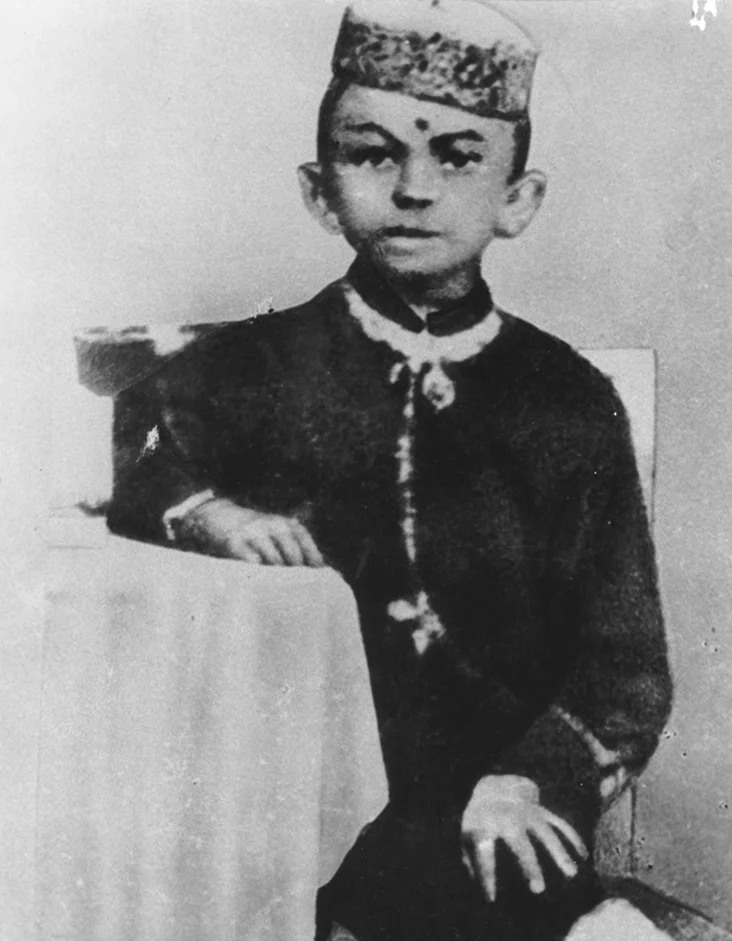
The first photo of Gandhi. Mohandas Karamchand is 7 years old in it. Photo WIKIMEDIA COMMONS
"Compressing your thought"
"First they ignore you, then they laugh at you, then they fight you. And then you win."
Mohandas Gandhi was a master of aphorisms. But how did he become one? The insecure young lawyer would go into a stupor, turn pale, blush, and could not say a word in court. "The world spun before my eyes, and I asked my colleague to read my speech!" But this played a role - in order not to get confused from excitement, Gandhi tried to speak little: "I made it a habit to compress my thought." From this was born his aphoristic style.


In general, young Gandhi wanted to become a doctor. But the older brother opposed: "You are not of that origin to cut corpses." Well, a lawyer it is then.
Mohandas was from a wealthy family. Both his father and grandfather worked in very high positions in the colonial administration.
At the age of 13, Mohandas was married to a girl, Kasturba, a year older than him. To make it cheaper, the wedding was combined with the second one, of a cousin, a boy of the same age. After the wedding, the young "husband" continued to go to school.
"I was a coward. I was haunted by the fear of villains, ghosts and snakes. I was afraid to go out the door at night. I couldn't sleep without light, I imagined ghosts coming at me from one side, villains - from the other, and snakes - from the third," - the feelings of a young husband. "I was ashamed to admit this to my wife. She was not afraid of snakes or ghosts. And she could go anywhere in the dark."
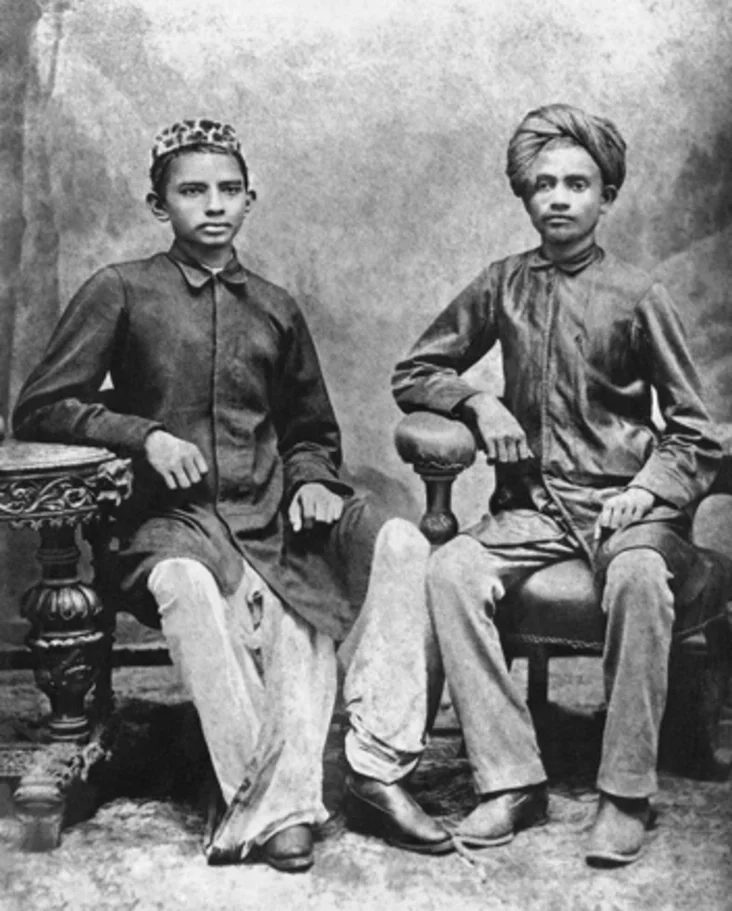
Four children were born in the marriage. The eldest son, out of spite for his father, converted to Islam. He did not want to fight for India, to give up income. He worked as a lawyer, spent a lot and lived in pleasure. He visited his father's funeral incognito, and died a year later from cirrhosis. And the other three sons became followers of Mahatma.
The Great Soul
The Hindu term "Mahatma" - "great soul" - was given to the 46-year-old Gandhi by the writer, Nobel laureate Rabindranath Tagore. That is how this name stuck, although Gandhi received the name Mohandas Karamchand at birth.
Refusal of sex
Gandhi's wife Kasturba remained illiterate throughout her life. Relations in the family were not easy. "My wife became for me the first example of nonviolent resistance."
"You have burdened me with everything, you have made me cry bitter tears, turned me into a slave!" - she reproached him. There was always someone visiting, eating at their house...
Once, Gandhi invited a person from the caste of untouchables to his house and in the morning was going to take out the night pot after him. With such actions, he sought to support the untouchables, many of whom worked as sanitation workers, Gandhi called them "children of God". "My wife did not want to allow me to take out this pot, but she did not want to do it herself," Gandhi recalled. She cried and swore, and her husband insisted that she do this work "with joy." A quarrel broke out, and Gandhi angrily pushed his wife out of the house. Then, of course, he repented.
In his youth, Mohandas was very jealous of Kasturba. He was afraid that she would cheat.
And at the age of 37, the couple decided to forever give up physical intimacy. "Finally, our marriage became happy and peaceful!" - wrote Mohandas. For him, this was another spiritual exercise.
Gandhi was greatly influenced by an incident that happened to him at the age of 15. Usually after school, the guy took care of his very sick father, but he always wanted to run to his wife. And one day he said goodbye to his dad, flew to Kasturba, and a few hours later learned that his dad had died. Mohandas worried all his life that he was not there. When the couple's first child was born and soon died, Gandhi considered it a punishment for his licentiousness, lust.
Having given up physical intimacy at the age of 37, he finally dropped the stone of guilt from himself. How Kasturba looked at it is unknown. Outwardly, she supported her husband in everything. Having sold the house, distributed jewelry and outfits, she lived with him in ostentatious poverty, often in the open air. Did she regret it? "The most important thing in life is to choose one direction and forget about all the others."

Mohandas and Kasturba gave up physical intimacy at the age of 37. "After that, our marriage finally became peaceful and happy," Gandhi wrote. In the photo: Gandhi with his wife in old age. WIKIMEDIA COMMONS
London
After school, Mohandas Gandhi, at that time already the father of two children, decided to enter the university. The guy chose one of the most expensive colleges in London: expensive means high-quality, he assumed. The large family did not want to let the guy go to Europe for a long time. When Mohandas decided to go anyway, the head of the community excommunicated him from the caste: "From today, this child becomes a pariah" (Gandhi, who became famous several decades later, was accepted back).

At 19, Mohandas swears not to eat meat, not to cheat on his wife and not to drink. Then his mother puts beads made of the sacred tree of tulasi on his neck and blesses him for his departure. Kasturba with two sons remains waiting at home.
Gandhi stepped on European soil in a white flannel suit - he believed that he would blend in with the crowd. But it turned out that Europeans only dress in white in hot India.
The first time in Europe was especially difficult for him - he spoke very poor English: "I did not have time to understand the meaning of phrases, and even if I did, I could not answer immediately. I built every sentence in my head before pronouncing it. I didn't know how to use a knife and fork."

Ahead are years of learning about Western life and, at the same time, about himself. Gandhi tries to dress like a real Englishman: "A silk top hat, a starched collar, a silk shirt and a dazzling tie of all the colors of the rainbow. A three-piece suit, leather patent leather shoes with gaiters, gloves and a cane with a silver knob." In an effort to become a gentleman, he signs up for dancing and violin. But he can't do either. But vegetarian friends slip him books on the history of religions. He swallows them all, gets carried away by the Bible and the Koran, and turns to the theoretical foundations of Hinduism, which he had not been interested in before. In the book "Bhagavad Gita" (this is the "Indian Bible", written in the form of a dialogue between the hero-prince Arjuna and the god Krishna), Gandhi finds the basis of his future teaching: selflessness and renunciation of wealth.
Despite good grades, Gandhi is a weak lawyer because he is shy. But he tries. Finally, he finds a job in South Africa. He is hired by a Muslim merchant of Indian origin. Kasturba with two sons continues to wait for her husband in India.

When, many years later, the first black leader of South Africa, Nelson Mandela, came to India, he said: "You gave us Gandhi, and we gave you Mahatma." The 25-year-old lawyer Mohandas Gandhi did not know that Africa would make him a world celebrity and spiritual leader.
The Birth of Mahatma
Gandhi spent in Africa from 1893 to 1914. In the shy lawyer, the talent of a mediator opened up, he was great at reconciling the parties. He earned good money from this. He was able to buy a good house and furnish it beautifully, moved his family.
On the side of Britain, he participated in wars with the Boers, descendants of Dutch colonists, and with the Zulus, the indigenous people of Africa. One might expect that he would take the side of the oppressed, but no: there and here Gandhi defended the empire. Then he still believed in the empire, in the fact that the future of India is as part of the empire, he simply fought against racism in it. Then he still believed that in order to achieve equality, Indians need to adopt everything from Europeans: clothes, manners, etiquette - and thus join civilization.
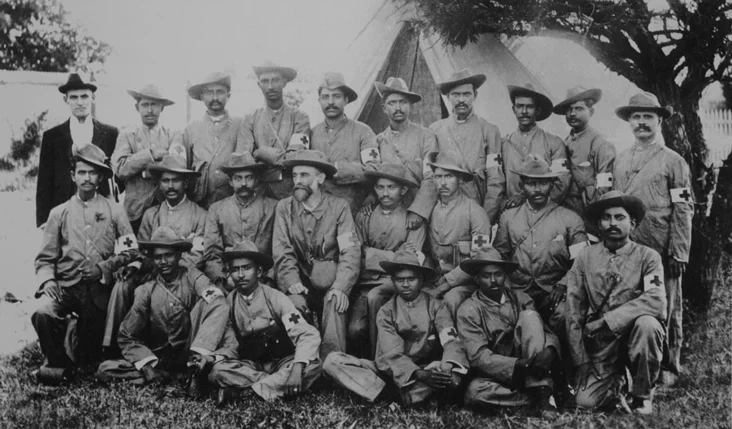
Gandhi felt the discrimination immediately: he came to the court in Johannesburg in a European suit and an Indian turban. The guards took him out of the hall.
In Gandhi's time, the inhabitants of southern Africa are the British, Boers, autochthonous black population... and Indians (South Africa today has the largest Indian diaspora in the world). Blacks and Indians are in a disenfranchised position, they cannot walk on sidewalks, ride in stagecoaches...
In the middle of the XIX century, the British invited Indian workers to sugar cane plantations. To lure them to the ends of the earth, each was promised a land plot after five years of work. Indians quickly populated a good part of the region, developed business... But in 1867, diamonds were found here. British business seriously began to push out Indian competitors. One after another, laws began to be passed against them in order to force them to sell land, business and leave.
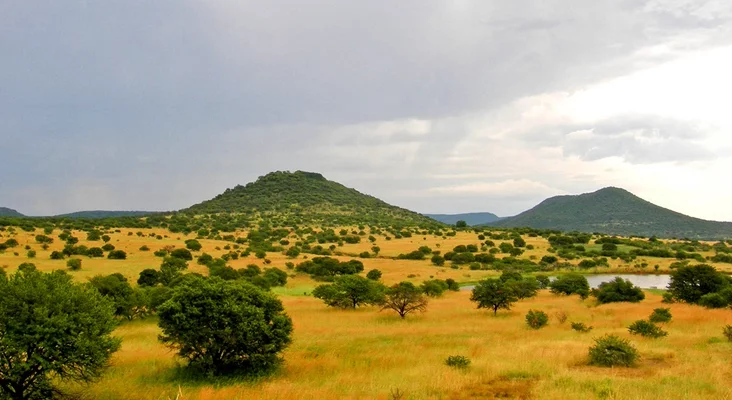
Once the authorities sent Gandhi to a trial in Pretoria. The man took a first-class ticket, sat in the compartment and went, admiring the African nature. After a while, a fellow traveler entered the compartment. Seeing an Asian neighbor, he became furious! Conductors began to urge Gandhi to move to the third class, intended for blacks and Asians, but he resisted, showing his legally purchased ticket. At the Pietermaritzburg station, the police threw Gandhi out of the train along with his suitcase. The night in the waiting room at this provincial railway station became the most dramatic in his life. He wondered: return to India or continue to live in humiliation? And after a few hours he made a key decision.
Now the building of the railway station in Pietermaritzburg is a place of pilgrimage. As is the prison in Johannesburg, where Gandhi sat with his associates.

The old railway station in Pietermaritzburg, South Africa. Here Gandhi was forced to spend the night when he was thrown out of the train for the color of his skin, and this night determined his life. SA-VENUES.COM
We do not obey, but we do not hide
The authorities of British Africa conceived to introduce registration: all Indians from the age of 8 had to register with the police and submit fingerprints. "As if we are a nation of criminals!" - people grieved. The police received the right to enter the houses of Indians without warning for inspection. Disobedience threatened prison and deportation.
"It is better to die than to agree with such a law," - responded Gandhi, who was already well known as a human rights activist.
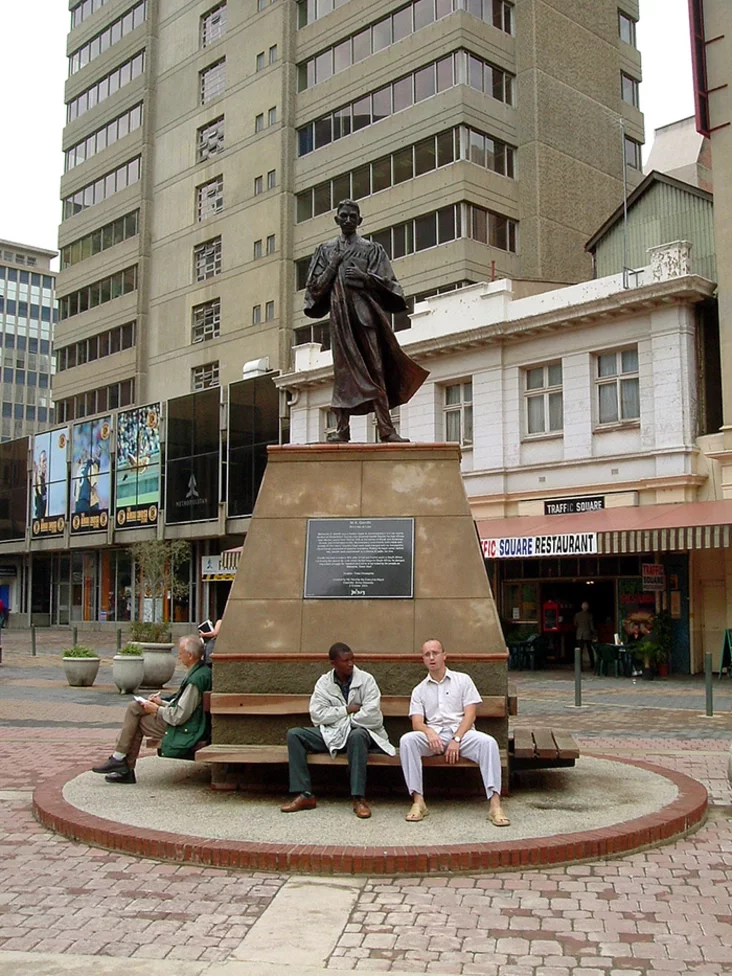
His call was simple, but innovative: we do not obey an unjust law, but we do not hide from responsibility. Gandhi called his method satyagraha, from two words in Sanskrit - perseverance and truth.
"Are you ready to fight evil to the end, lose your job, go to jail, endure torture, hunger and even die?" - Gandhi asks the crowd of fans at a rally in the Johannesburg theater. It will be difficult, he warns. Without suffering, without restrictions, there is no result. But in the end we will win.
A full theater of hands rose in support. The first satyagraha began.
"It is impossible to stifle civil disobedience, as it is impossible to put consciousness in prison," - writes Gandhi.
At the trial for organizing a mass event, Gandhi proudly declares: yes, I am the leader of the civil disobedience campaign, I ask to condemn me in the strictest way, if only the honorable court considers that the Black Law is fair. In response, a mild sentence - 2 months in prison.

Gandhi's tactics worked in a rule-of-law state, which was the British Empire. Its laws could be terribly unfair, but if something was not prohibited, then it was not punished for it, and the judges were really independent of the executive branch.
Meanwhile, two thousand people publicly burned their registration certificates in protest.
The first Prime Minister of independent India, Jawaharlal Nehru, later wrote: Gandhi's merit is that he was able to deprive his people of fear, gave them confidence in the coming victory.
"Under British rule, the Indian people experienced primarily fear - an all-consuming, oppressive, suffocating fear of the army, the police, the tentacles of the secret services, fear of laws, prison, hunger... It was against this ubiquitous fear that Gandhi raised his peaceful and determined voice: "Do not be afraid!"".
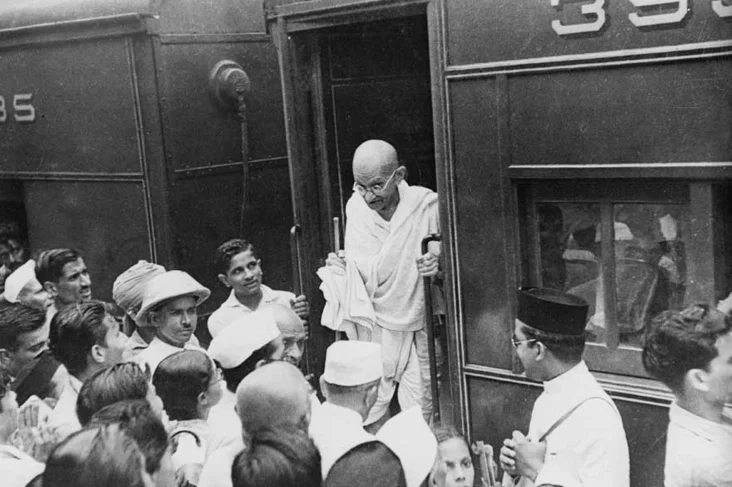
Third class, because there is no fourth.
Already in India, Gandhi always traveled only in third class, emphasizing his closeness to the people. When he was asked why he traveled in third class, he joked: "Because there is no fourth". WIKIMEDIA COMMONS
The joy of prison oatmeal
Passions flared up, and in 1908 Gandhi was behind bars again. He was convicted on several cases for more than six months.
The prison turned out to be quite a decent place, Gandhi writes and adds: "The real path to happiness is to get to prison and endure suffering for your country and your religion." He rereads the "Bhagavad Gita" and gladly prepares sugar-free oatmeal for all his cellmates.
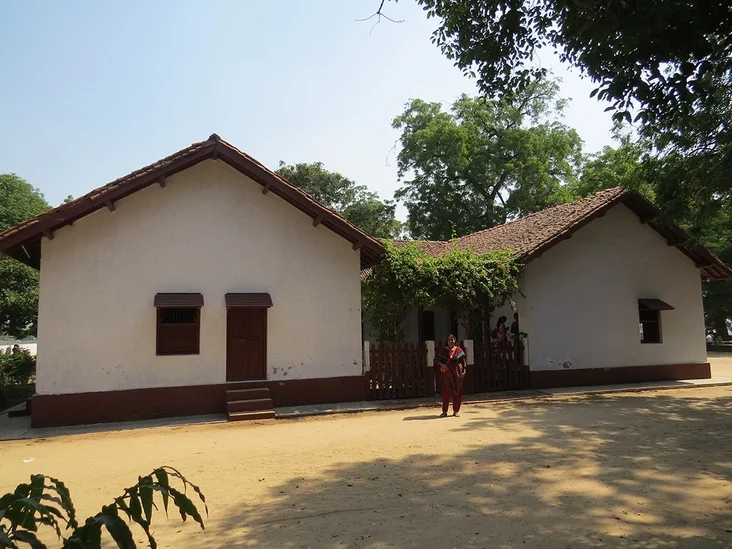
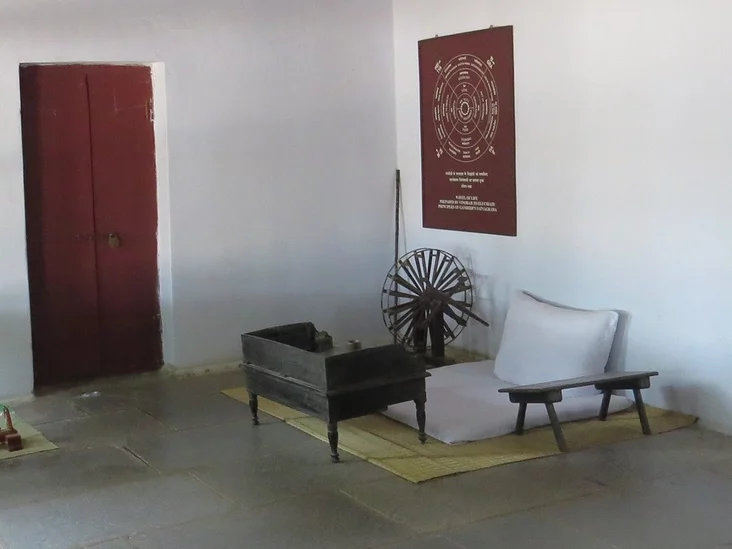
Gandhi says that it is necessary to continue to irritate the government and fill the prisons. The willingness to endure in the name of the cause is evidence of conviction in one's righteousness and the seriousness of intentions. And people themselves massively go to prisons: "lose" registrations, traders - licenses. People in groups demonstratively cross the border between colonies - this is also a violation of the law. The world community is shocked by the severe punishments for these minor, symbolic violations. "Gandhi has an unthinkable spiritual power, turning ordinary people into heroes and martyrs," - notes one of his associates.
In the end, the colonial authorities have to arrest so many people that there are not enough prisons. Gandhi is happy and confused. He is put in prison in Pretoria, in a cell without windows. His hands and feet are tied...
Public opinion around the world supported the peaceful protest, especially sympathized with the imprisoned women. India also began to seethe - and these are golden streams to Britain. The Viceroy began to make conciliatory gestures. Negotiations lasted a month. And, finally, victory. The humiliating laws against Asians were repealed.
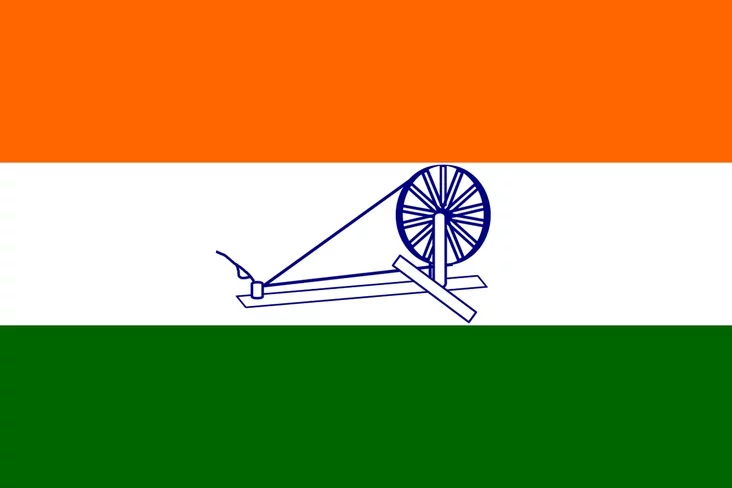
At the negotiations, Gandhi gives the local Minister for Colonial Affairs, General Jan Smuts, sandals made by his own hands. Such were worn by the participants of his protest marches. Interestingly, 26 years later, on Gandhi's 70th birthday, Smuts will return the sandals to him with a joke: "I wore them every summer, although I did not feel worthy to follow in the footsteps of such a great man."
The victory of the strike, peaceful protests incredibly inspired the 45-year-old Gandhi. He gathered his family and went home, to India, where he had not been for more than 20 years, to spread his tactics to his homeland. And in his homeland he was already greeted as a hero.
A mistake the size of the Himalayas
In Africa, Gandhi fought against racism, and in India - for independence. But it was also an exclusively peaceful protest.
On the one hand, the Indians simply did not have weapons, they had nothing to oppose the British army and police. But there was another side.
Non-violence was a rational strategy in the British Empire. For Gandhi, it was also a philosophy: "We are all made of the same substance, we are all children of one creator. It is a mystery to me how people can be proud of humiliating another."

1919. India is tired of the First World War - almost a million Indians fought as part of the British army. Now they are waiting for new rights, freedoms, and possibly the status of a dominion. Instead, the authorities decide to maintain wartime laws: "Anyone who, by words, or gestures, or images, tries to incite discontent with the government, shall be liable to life imprisonment or imprisonment with or without a fine." Outraged, Gandhi announces satyagraha. The form comes to him in a dream - hartal.
Hartal is a ritual abstinence from affairs, both fasting and strike. Let the entire population leave their occupations for a day and dedicate themselves to prayer.
On April 6, all of India does not go to work. In addition, the participants of the satyagraha decide to violate the law on the sale of prohibited literature and print two brochures by Gandhi. The demand for them is unthinkable. People are eager to demonstrate their courage, everyone strives to pay more and eagerly awaits arrests. Hundreds of thousands take to the streets without any organization from above... A real revolution begins: the people disassemble the rails, cut the wires.

In response, the authorities disperse rallies, arrange public floggings, and in Amritsar - the sacred city of the Sikhs - shoot at the crowd. People there, in search of salvation, began to jump into the well... 400 people died. Gandhi goes there to reconcile and comfort, but the police remove him from the train.
Gandhi is crushed. He regrets that he called the people to protest when they were not yet ready to fight peacefully. He calls premature satyagraha a mistake the size of the Himalayas.
Do not buy their goods
A year later, Mahatma expresses new proposals: minimize contacts with the British (do not do business, do not hold positions, do not go to their schools) - and do not buy British goods.
And suddenly it turned out: the British in India are strong not by themselves, but because the Indians cooperate with them. Britain especially suffered because of the fabric: Indians stopped buying British fabric. Lancashire fabric manufacturers demanded that Gandhi be sent to a desert island.

"We refuse to participate in your political actions. We refuse to accept your system of values, because we have our own and because we can manage ourselves." This thought changed the consciousness of millions.
Gandhi's persistence
Gandhi is on the rise, after the non-cooperation company, he announces a campaign of disobedience... which did not happen because of the tragedy. In a small town, residents burned English fabrics in the square, and when the police tried to disperse them, they set fire to the police building. 21 people burned down.
Gandhi interrupts satyagraha. He believes that the people are not ready to build a new India. Acts of disobedience will flood the country with blood.
Associates try to dissuade, threaten, ask. Stopping now is irrational, they prove, we must press.
Our goal is not to expel the British, but to build a new India, says Gandhi. We are waiting.
Soon Gandhi was arrested. He receives six years, leaves prison barely alive after two: he developed purulent appendicitis.
For several years, Gandhi lives in the ashram. He spins, prays and thinks. In 1930, the British announced the collection of a commission to deal with the fate of India. It has only imperialists. The Indian National Congress party and Gandhi decide to fight for independence.
Half-naked fakir
The idea of the action comes to Gandhi again in a dream. Salt is a very important product in a hot climate, where it constantly leaves the body with sweat. Salt was a state monopoly, as in many countries now - alcohol and tobacco. Gandhi proposed to organize a march to the town of Dandi, where deposits of sea salt lie directly on the coast. Ahead is 400 km, 78 people are walking behind Mahatma. They stop in every village, and after 23 days a multi-thousand demonstration comes to Dandi. Gandhi evaporates the first spoonful of salt.
The authorities were amused by this: some childish games, commented the Viceroy of India. The show of this half-naked fakir is disgusting, Winston Churchill wrote.

And the people rejoiced: "Throughout the country, in cities and villages, the main theme of the day is how to extract salt, we found the most bizarre ways. Since no one was well versed in this issue, we learned everything about it, printed leaflets with recipes, showed the resulting salt (an unattractive product) with a solemn look and often sold it at auction at exorbitant prices," - recalled the head of the Indian National Congress Jawaharlal Nehru. And he repented: "We were ashamed that we doubted the effectiveness of Gandhi's method."

The resonance of the action is colossal. The authorities are no longer laughing. The head of the British secret police arrives in Bombay. Gandhi threatens to seize British salt developments. For this threat and a spoonful of evaporated salt, he and another 80 thousand people end up behind bars for several months. The whole world sympathizes with them.
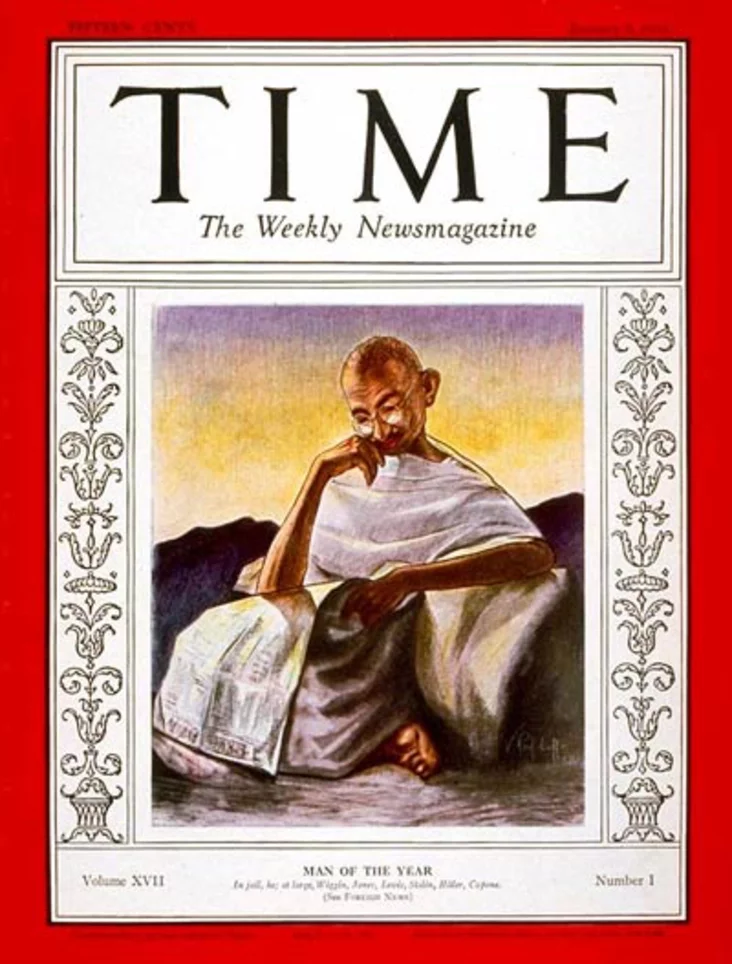
The authorities are forced to negotiate. The Viceroy offers Gandhi a compromise - the cessation of satyagraha in exchange for an amnesty for political prisoners, the abolition of the state monopoly on salt production, and permission for the activities of the Indian National Congress. Gandhi agrees.
His associates from the INC are in despair: why compromises, if complete victory is so close... Gandhi justified himself: the people are not yet ready for a peaceful revolution... The party breaks with him, he - with the party.


Boston Tea Party with salt
According to legend, during a meeting with the Viceroy of India, Gandhi took out a packet of salt: "I will put some salt in my tea in memory of the Boston Tea Party." Subtle trolling. Then, in 1773, the Americans sank a cargo of English tea in Boston Harbor. This marked the beginning of the American Revolution, which escalated into a war of independence.
The struggle for the untouchables
Even as a successful lawyer, Gandhi complained: I want to help people for real. For this, he even worked part-time as a paramedic. Gradually, Mohandas decided: "What I live for and will gladly die for is the complete elimination of untouchability."

Untouchables in India are called the lowest castes, this is a huge number of people, 16-17% of society. Traditionally, they lived as outcasts, they were not allowed to use public wells, temples, schools, roads...
Since they have been doing the dirtiest jobs for generations, their immunity allowed them not to be afraid of many bacteria and viruses. In a hot and humid climate, a huge population density and a low level of general hygiene, their isolation prevented infections from spreading. There is such an explanation.
The untouchables had their own movement, and their leader Ambedkar (he also studied in London as a lawyer) hated Gandhi. He believed that the politician was promoting their problems and simply wanted to get votes. Ambedkar himself converted from Hinduism to Buddhism, which does not recognize castes, and promoted such a decision among his people. He offered his caste a new name - Dalits, "oppressed". Now this name is considered the most politically correct.
In 1932, the British singled out the untouchables into a separate electoral curia, so that during the elections they would not intersect with other castes. Gandhi demanded that they be allowed to vote with everyone, and declared a hunger strike.
"I was furious that he chose such a minor issue for his highest sacrifice," - wrote Nehru (Gandhi was more of a philosopher, Nehru - a politician).
-
"Bulbianyia" — what a brand was lost! Here's what they cooked there and what Vladimir Vysotsky and the KGB chairman remembered about them
-
"Ancestors were friends with Skirmunt." A Belarusian man compiled a family tree that already numbers 1900 people — how did he do it?
-
Archaeologists discovered an industrial center from the Roman Empire era in Great Britain



































Comments
Марксизм по индийски.