


Stanislau Salavei: The Belarusian healthcare system is destroyed, and it needs to be healed
Gynecologist Stanislau Salavei has come a long way from working in top Minsk hospitals to night shelling in Odesa and political work in Poland. In an interview with "Belsat", he tells how the Belarusian healthcare system is destroying itself, about the salaries of doctors in Poland, and why bringing Belarusian doctors home will be much more difficult than it seems at first glance.

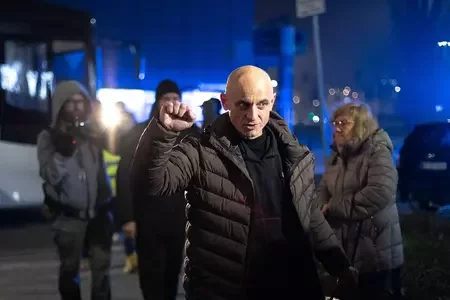
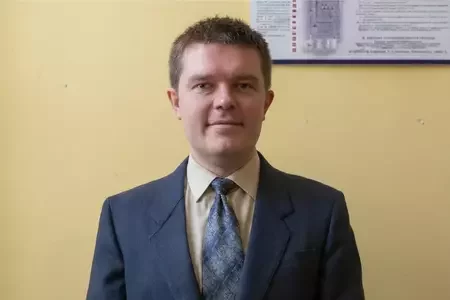
Stanislau Salavei. Krakow, Poland. April 14, 2024. Photo: Karolina Nowicka / Belsat
In 2021, Stanislau Salavei left Belarus and worked for two years as an obstetrician-gynecologist in Ukraine, then moved to Poland and joined the United Transitional Cabinet, where he is responsible for the healthcare block and the reform project for the transitional period.
Stanislau Salavei is a graduate of BSMU. From 2016, he worked as an obstetrician-gynecologist and ultrasound diagnostics doctor at the 3rd Clinical Hospital in Minsk, previously undergoing internship and working at the RSPC "Mother and Child". In 2019, he received an award for scientific activity. During the pandemic, he sought fair COVID payments. In 2020, he participated in solidarity chains, protest actions, was arrested twice, and was a member of the independent medical trade union "Panacea". After the chief doctor of the 3rd hospital suggested he "resign amicably", Stanislau spoke about it publicly.
From the conveyor belt of cruelty to pressure in the hospital: how the great repressive machine reached everyone
— If we go back to 2020: what surprised, frightened, or impressed you the most — as a doctor and as a person?
— The election results were not a surprise to anyone. Everyone perfectly understood that there would be no honest elections; falsifications were expected. It was not a revelation that the security forces in Belarus are capable of cruelty.
But the scale of what happened after the elections — that was a shock. The fact that violence became massive, conveyor-like, that detention centers were practically turned into torture camps, that this was done demonstratively and on such a scale — I think no one could seriously imagine this. The scale of repression, the attempt to suppress the first wave of protests — there has been nothing like this in modern Belarusian history.
And even this was not enough to quickly break everything. They had to activate a long, sticky repressive machine: a year of methodical pressure until public forms of protest, which later erupted again in the context of the war in 2022, were completely suppressed. The country de facto transitioned into a semi-military state — with censorship, legalized torture, and a demonstrative disregard for laws. And this, of course, strongly changed the internal perception of reality.
— What was most painful for you in leaving the 3rd capital hospital: the dismissal procedure itself, the pressure, the feeling that the system breaks those who do not remain silent?
— It's harder to talk about it now, so much has happened since then that the dismissal no longer seems serious in that context: two emigrations, living in a country at war.
And even then, it wasn't perceived as "the end of the world." Of course, it was unpleasant: the 3rd hospital is where I formed as a specialist. "Lived at work" — that was me. I truly came at night when needed, even outside my shifts.
But looking broader, it all looked like a circus: the country has a chronic shortage of doctors — yet the authorities do everything to intensify this shortage. They expel dissenting students, push out doctors who allow themselves to have opinions. The team that formed in our department, in my opinion, was one of the best in Minsk in terms of the level and volume of operations. And this team was quickly disbanded: more than half of the core staff resigned within a year. Formally, the department was not closed, but the level and volume of work noticeably declined.

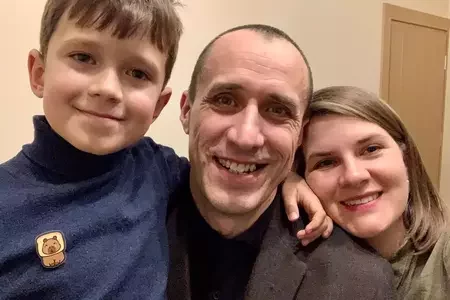
Stanislau Salavei. Photo from personal archive
The question is — who was hurt more in the end? The system and the patients. This is very indicative of the authorities' approach: the key task is to push out dissenters, even at the cost of destroying working structures. First, people are essentially forced out of the country, told: "get out, you're not needed here," and then when there's literally no one to work, they start talking about "hundreds of thousands of migrants" who supposedly will come and save everyone.
Ukraine as "here and now" salvation, which later turned into life amidst war
— When you were choosing where to leave, why did you choose Ukraine?
— You have to understand my emotional state. From realizing that I would have to leave to making a decision, only a couple of days passed. Ukraine was in the category of "quickly get out to where they won't reach you, and then I'll finally decide."
I had an intermediate level of German; theoretically, I could have looked at Germany. But in Germany, that would mean a long period without work: language learning, exams, bureaucracy. In Ukraine, it was much easier for a Belarusian doctor to integrate into the system then: the language is similar, documents are processed through understandable schemes, the culture of medical work is closer.
I must honestly say: I never dreamed of "leaving forever." The most I thought about before was working abroad for some time. Friends and colleagues played a huge role. While I was recovering, I was simultaneously sending resumes based on the principle of "I'll try, and then we'll see." Thanks to friends from Odesa, an offer came with very good conditions, and at some point, I thought it would be strange to refuse it.
I think the feeling of temporality also played a role. It seemed that it was about a year and a half of work, not an irreversible intention to change country and life. Ukraine at that moment looked like an option where one could quickly return to usual work and not fall into a multi-year bureaucratic hole.

— You lived in Odesa for two years under conditions of full-scale war. What were your daily routines like: work, everyday life, fears, communication with patients? What was the most difficult?
— I remember February 24, 2022, very well. The day before, I was still convincing a colleague that there would be no war: it's a war that cannot be won, there's no logic in it. I learned about its start practically from the arrivals: the first strikes on Odesa hit in the morning, relatively close to us.
Odesa was bombed from the first days. The city emptied, checkpoints appeared, queues, limited shop hours. Very quickly, the usual picture of life collapsed: bank accounts, logistics, everything that seemed stable. For foreigners, especially Belarusians, this added adventures: the car might be scratched, tires deflated, official structures treated you with conscious distrust — such everyday, but very indicative details.
The planning horizon sharply shortened. You live from today to the end of the week. If there are intense shellings for several nights in a row, you simply exist during the day in a "want to sleep" mode. There was a moment when, after a long series of night alarms and "Shahed" drone strikes, I went to bed thinking: "Just land and explode already, just let me sleep."
The clinic continued to operate. Patients understood everything; we were all in the same information field; there wasn't much to discuss anymore — everyone lived with the same level of anxiety. Over time, people get used to almost anything. I understand very well the people who continue to live in frontline cities now: a moment comes when war becomes background noise. As a result, I lived in Odesa for a little over two years under wartime conditions.
— Why did you leave Ukraine?
— The reason is bureaucratic. I didn't manage to renew my passport on time. At the moment when it was time to submit documents for renewal, a law appeared prohibiting renewing passports outside Belarus. And that's it — you find yourself in a legal loophole.
You have a residence permit in a country where a full-scale war is ongoing, and it's seemingly indefinite. On the other hand, it's tied to a document you can't update. There's no embassy, you can't go to another country where there's a consulate because your passport is expiring. After some time, you turn into a person with an expired document — and that's a completely different reality.
Formally, there was an option to apply for asylum. But I know literally only isolated cases where people received refugee status in Ukraine. For most, it's either rejections or a story that takes many months, if not years.
Poland here is a result of the Dublin Regulation: you must seek protection in the first country you entered or have a visa for. I had a humanitarian visa on an expiring passport, and I came to Poland to apply for protection and sort out this situation somehow. On the everyday side, friends and acquaintances helped a lot: where to live, how to open an account, how to talk to officials.
Between Doctorina, the clinic, and the UTC: what Stanislau Salavei is doing now
— Where are you working now, generally speaking?
— Currently, I have several areas of work, but the main income comes from the IT project Doctorina — an artificial intelligence-based platform. The idea is to develop an AI-based doctor that can meet the medical needs of people who, for some reason, don't have access to doctors: provide a quick explanation of the situation, a second opinion, or advise where to seek further help.
In parallel, I'm working part-time in a Polish clinic as an assistant. The goal is very simple: to learn the language faster, better understand the system, and adapt. In the future, I would still like to return to practicing as a gynecologist.
I have already confirmed my Belarusian diploma in Poland, but this is only the first stage. To become a practicing doctor, you need to pass a language exam, a professional exam, complete an internship, and then a residency. That takes years.
And, of course, there's also work in the United Transitional Cabinet.
— What are your responsibilities in the United Transitional Cabinet?
— My task in the cabinet is, first and foremost, the healthcare block: analyzing the situation, planning steps for reforming the system, working with vulnerable groups, and medical expertise for political prisoners.
We started with the very basics: to understand what resources are available at all. We conducted research on the number of doctors, as the figures from the Ministry of Health did not match reality. Later — research regarding nurses and working conditions.

Stanislau Salavei. Krakow, Poland. April 14, 2024. Photo: Karolina Nowicka / Belsat
We are trying to move the topic of medicine from a mode of heroization, where medics are only talked about as heroes, to a mode of normal discussion of problems. Because the system is destroyed – and it needs to be healed. And if reforms are written only by medics, no one will like them except medics. Therefore, we involve economists, lawyers, patients, people who understand how processes are organized. Belarus in this sense is unique: in our country, the interests of officials are higher than the interests of both patients and doctors.
Now we are talking not so much about reforms as about sanitation – an attempt to stabilize the system in the first hours, days, and months after changes, so that it simply doesn't collapse. Because "better immediately" will not happen. And bringing doctors back from emigration is extremely difficult: salaries in medicine differ by many times, and people have few objective reasons to return. Therefore, it is important to understand what can be done in the country here and now so that the system does not fail completely.
— You work part-time as an assistant in a Polish clinic. If you compare this income with what you earned as a doctor in Minsk, what's the difference?
— When we start talking about salaries, the difference becomes even more noticeable. I understand that an assistant in a clinic is not the same as a full-time specialist doctor. But even my part-time assistant job here pays more than a doctor's full-time position in Minsk, if you convert to bare euros. In Minsk, I worked more than one full-time position; here, it's a different income level. Of course, expenses are also higher: rent for housing in Poland and Minsk is poles apart. But when talking about specialist doctors, residents, a Polish doctor can easily afford housing, a mortgage, a car, vacation, travel. For them, it's not "wow, incredible luxury." It's a normal result of normal work. Comparing it with Belarusian reality is simply painful here.
— Would you return to Belarus if such an opportunity arose?
— Now I can honestly say: for now, yes. But I am very cautious about any categorical statements on this topic. Life and war have shown: what a person says does not always coincide with how they behave in a real critical situation.
I saw this in the example of Ukraine. There was a Ukrainian doctor who before the war loudly said that "if it starts, I'll take an assault rifle and go," but when it started — a couple of days later, he was volunteering somewhere near Rotterdam. And there was another example — a very calm anesthesiologist-resuscitator who never beat his chest and lived an ordinary life. But when military equipment started approaching his city, he simply sent his family to Europe and started going to work with a hunting rifle. That's why I'm cautious about phrases like "I will never..." or "I definitely will..."
One more thing needs to be understood: the longer a person lives in another country, the deeper they grow roots. Work, language, children, school, social connections... If you already have stable work in a clinic, duty rosters scheduled months in advance, colleagues who count on you, the question "can I drop everything tomorrow and leave" stops being abstract. This applies not only to doctors, but for medics, the situation is particularly complex: confirming a diploma and integrating into the system is a long journey, and the further you've progressed on it, the more costly a sharp turnaround becomes.
I understand very well that the return rate among medics will be lower than among many other professions. Even now, I am sure that a significant portion of colleagues with whom we work on reforms will not return. And that's normal; no one is obliged to sacrifice their life and family for a symbolic gesture. Therefore, my honest answer is this: right now, I would like to return if a real opportunity arises to return to a free Belarus and be useful both as a doctor and as a person. But such questions are ultimately answered not in interviews, but at the moment when that opportunity truly appears.









Comments
Ня трэба пляваць у бок сваіх людзей! Лукашэнка не вечны, а беларусы выцягваюць краіну як могуць, покуль такія Салаўі языкамі ядавіцяць.