


Why is the Armenian leader sad listening to Zemfira and Lady Gaga? What's new in Pashinyan's image?
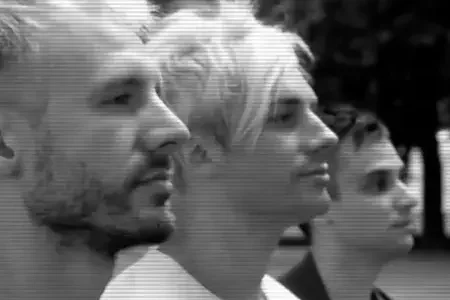
A bald middle-aged man sits and sadly listens to Zemfira, Armenian chanson and folk songs, Adele, John Lennon, French and Russian rap, DDT, baroque music, and Vysotsky's Gypsy romance. In these videos, he squints in the sunlight, ties a tie, places a yellow rose in the lapel pocket of his jacket, or types on a computer. But most often, he looks straight ahead — sometimes with a smile, sometimes thoughtfully, and sometimes sadly.
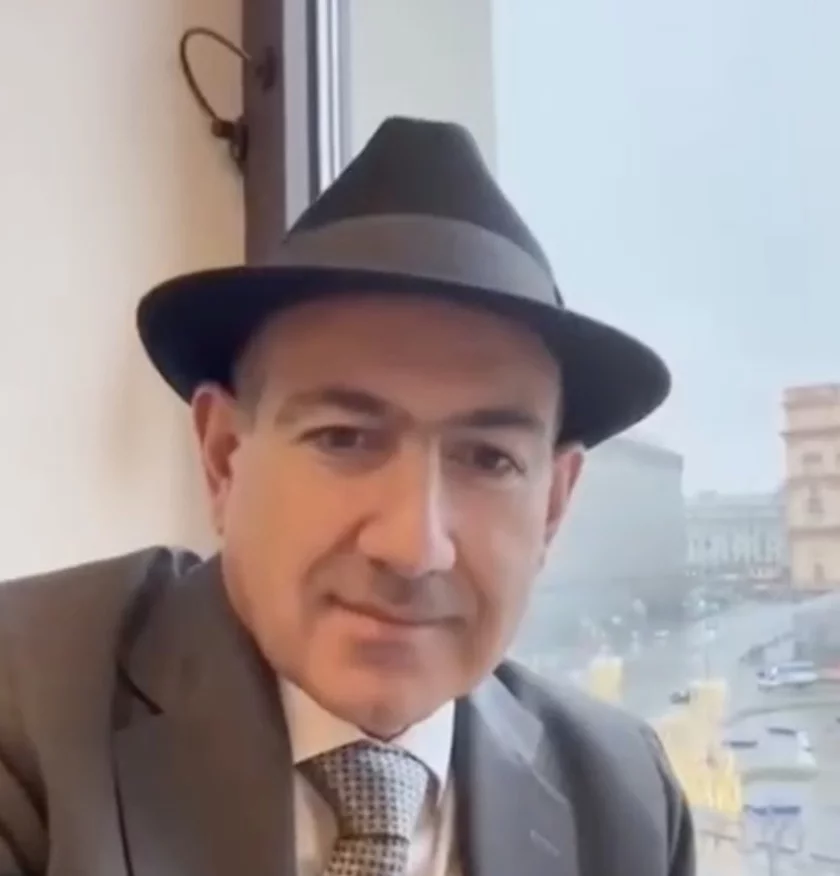
This man is Nikol Pashinyan, the Prime Minister of Armenia. Parliamentary elections are scheduled for June 2026, and ahead of the election campaign, the politician has begun to change his public image, writes the BBC.
Now, his denunciatory tirades against opponents have been supplemented by videos where he silently listens to music.
"Bad times are ending. You can stop grieving and being afraid and start living on. And enjoy life," this is how political scientist Mikael Zalyan, a former MP from Pashinyan's ruling bloc, interprets the Armenian leader's new style.
American PR strategy or pure inspiration?
Musical videos are Pashinyan's way of wishing his subscribers a good morning and expressing his love for them. At least, that's how he explains it himself — in the captions to the videos, and by making a "heart" gesture with his hands.
A sensation among post-Soviet youth was the video where the politician sits with a sad expression to Zemfira's song "PMMML". It was released in October and has since garnered over 16 million views on Instagram. Thousands of users then uploaded their own parodies to TikTok, and businesses used the meme for advertising. And while Pashinyan's average videos get about 100,000 views, those with music often exceed a million.

Pashinyan, sad to Zemfira, is one of the main memes of recent years
Pashinyan's Instagram page has attracted subscribers not connected to Armenia. A video to the song by Kazakh singer Aua Rai, made by the prime minister during a visit to Astana, was covered in local media almost more than the visit itself.
Pashinyan's trips to Russia were also an occasion to demonstrate a very eclectic musical taste. For example, from Moscow, he greeted his subscribers with a view of the FSB building on Lubyanka and the song "Belye Rozy" by the group "Laskovy May". A few days ago, upon arriving in St. Petersburg, he listened to "Dozhdys" by the group Uma2rman.
But who came up with the idea for these videos and who chooses the music for them?
In November, Russian marketer Yegor Balkonsky retold a report by an American PR specialist at a specialized conference. It allegedly stated that the New York-based company Edelman — one of the largest PR agencies in the world — was behind Pashinyan's strange videos.
This story spread across the Armenian media field, and many in Armenia are convinced that Edelman advises the prime minister.
However, Edelman categorically denies this version. The company does not work for the Prime Minister of Armenia and is not connected to his social networks, a representative said in response to a BBC inquiry.
"I don't know if this company works with the Armenian government. I'm only judging by the speaker's words and some slides that flashed on the screen," Yegor Balkonsky replied to the BBC's question.
The version about the American company's involvement was also refuted by the prime minister's press secretary, Nazeli Baghdasaryan. The idea of shooting videos with music belongs to Pashinyan himself, and he personally chooses the music for them, she told the BBC.
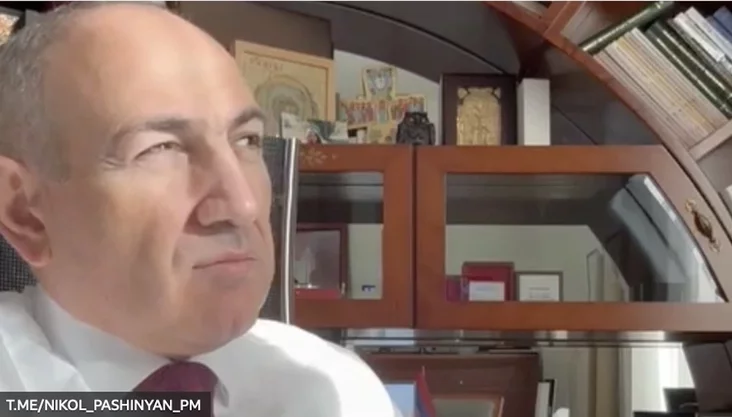
In the videos, Pashinyan silently listens to music, sometimes with a thoughtful expression
"No PR companies or consultants are involved in developing the prime minister's social media strategy. All relevant work is carried out by the media team of the prime minister's office," Baghdasaryan added.
From revolutionary to statesman
Coming to power in 2018, Pashinyan captivated the minds of Armenian residents and their compatriots in the diaspora, becoming the country's most popular leader in a century. But two years later, Armenia lost the Second Karabakh War, and in September 2023, almost all Karabakh Armenians fled after Azerbaijan regained control of the entire region.
Many in Yerevan and throughout the country felt that the country had reached a dead end and things would only get worse. But this summer, a diplomatic breakthrough occurred — a de-escalation with Azerbaijan and the approval of the text of a peace treaty. After several years of fruitless efforts and his party's defeats in local elections, Pashinyan's proclaimed "peace agenda" began to bear fruit.
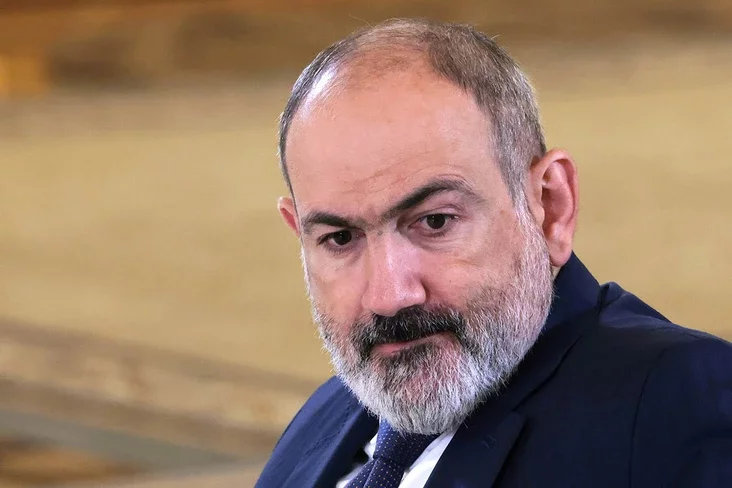
Nikol Pashinyan. Photo: Mikhail Metzel, Sputnik, Kremlin Pool Photo via AP
Now his task is to instill optimism in voters. Social networks serve as the main platform for this, and in this, he has unique experience.
The 2018 protests, which brought him to power, were organized through Facebook. Hundreds of thousands of people watched online broadcasts of Pashinyan's speeches. Even the fact that he used conversational rather than the formal-literary language of TV presenters and officials enchanted viewers.
Immediately after the change of power, many joked that Armenia was now governed through Facebook, recalls Tigran Grigoryan, director of the "Regional Center for Democracy and Security" in Yerevan.
"It was a strange trend — officials, including the prime minister, conducted live broadcasts from their offices. The prime minister showed his residence," says Grigoryan.
But after the Second Karabakh War, the authorities became more closed off — the times were not conducive to viral content on social networks.
"After the war, [Pashinyan] tried to behave more restrainedly. His wife continued to manage social networks in a freer style, and many criticized her for it. That she, as it were, did not take into account the times we live in, that there was a war, that there were many casualties. I think that's why he tried to be more restrained," says Mikael Zalyan.
But the period of mourning for Pashinyan is over, and the election campaign has begun. The ruling party skillfully uses media resources and social networks for political struggle, says Tigran Grigoryan. According to him, "a whole infrastructure of political bloggers" has grown around Pashinyan.
"All key members of the ruling party are very active on social networks, youth social networks," says Grigoryan, referring to Instagram and TikTok.
The political scientist notes that, according to sociological surveys, it is young people who support Pashinyan and his government the least — and now the authorities are trying to work with them more actively.
But have the musical videos helped boost the Armenian prime minister's ratings?
Grigoryan notes that for now, Pashinyan's videos generate more enthusiasm among young people in other countries of the former USSR. In Armenia, changing attitudes towards him is more difficult, Mikael Zalyan agrees, because after seven years of Pashinyan in power, most people have already formed their opinion of him.
"People are divided into three large groups. There's one that supports him. Some unequivocally, some with reservations, some as the lesser of evils. The second group consists of those who hate him. Everything he does evokes fierce hatred in them. And, naturally, all these videos annoy them even more," says Zalyan. "But there's also a third group that has either moved away from politics, or has never been interested in politics, or is fed up with everyone. In this group, perhaps, he has gained new followers, at least he was able to attract their attention."




















Comments
Мужик средних лет знает, что делает.