


The Nobel laureate listed several names.
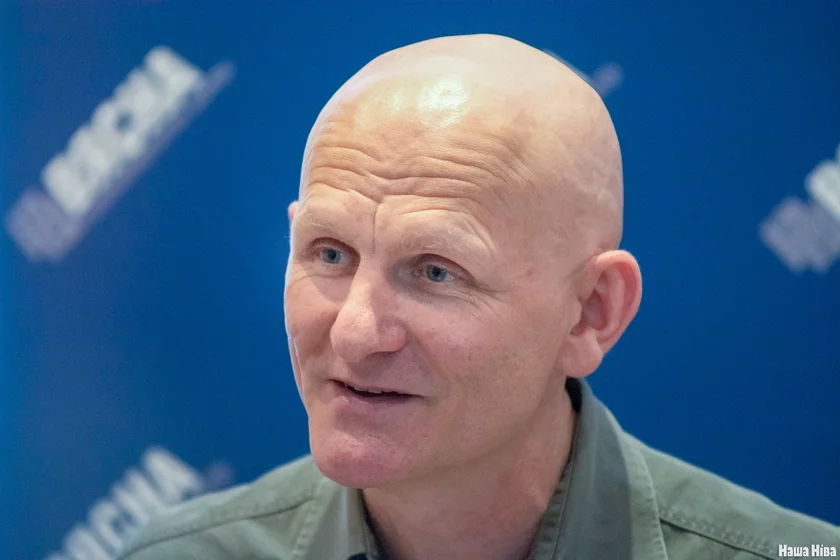
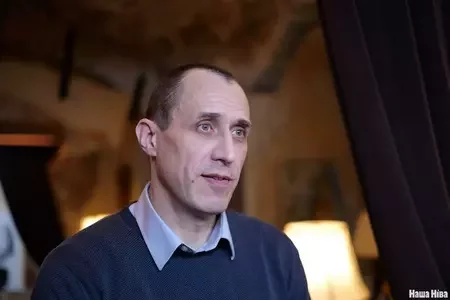
Nobel laureate Ales Bialiatski, in a new episode of "TOK," spoke about the people who became moral compasses for him.
“I was fortunate in life to meet many outstanding people, both Belarusians and non-Belarusians, who served as an example for me in my life. I constantly (...) strive to learn from people. And even in the colony, there were very important, interesting people with whom I talked and from whom I drew an example,” Bialiatski notes.
Václav Havel
One of the most significant figures for Bialiatski was the Czech leader Václav Havel. Bialiatski met him personally twice. According to the Nobel laureate, the last letter Havel wrote was addressed to him:
“During my first imprisonment, he sent a letter of support to political prisoners, including myself. These were personal letters. It was, in fact, the last letter he wrote in his life. Three days later, he died. When this letter reached me, I didn't yet know that Havel had passed away.”
Vasil Bykaŭ
Speaking about Belarusian authorities, Bialiatski first mentions the writer Vasil Bykaŭ, whom he also knew personally.
“We are from different generations. He was much older than me. He was already over 60, and I was just over 20. Nevertheless, for me, he was always such an immense figure as a writer, as a philosopher, as a person who managed to formulate the Belarusian idea in his works and show a large part of the life of the Belarusian people. He was truly a great man.”
Political Prisoners of the 1930s
A special place in Bialiatski's list of role models is occupied by people who went through Stalinist repressions and preserved their dignity. Among them are writers Siarhei Hrakhouski and Siarhei Novik-Piajun. The latter, as Ales recalls, went through all possible prisons: Polish, a Nazi concentration camp, and the Soviet Gulag.
“He was a very private person, but with a strong character and firm Belarusian identity. He was Belarusian to his very last cell. He lived a long life. And when I met him in the 1990s, he was already almost 90 years old. A man with a difficult fate, but he preserved his Belarusianness,” says the human rights defender about Novik-Piajun.
Belarusian Partisans and Intellectuals
Bialiatski mentions a whole pleiad of Belarusian figures with whom he was connected by work and friendship:
“Mihas Charniaŭski, historian, archaeologist, who was consistently Belarusian and preserved his Belarusian identity during the difficult 1960s. These also include artists Mikola Kupava and Ales Marachkin. These are older friends with whom I worked very closely and for a long time, starting from the late 1980s.”
He particularly warmly recalls the philosopher Mikola Krukouski, who was a partisan during World War II, but always emphasized the national character of that struggle:
“When people told him: ‘Well, what were you doing there, partisans, you fought for who knows whom, what were you doing?’, he said: ‘We fought for Belarus. We are Belarusian partisans. You cannot give away the partisans, or the partisan movement in general, to the communists, because no communists would have created it if people hadn't joined it. That's how I was.’ These were truly people with their own point of view on history, because they were part of this Belarusian history and were truly devoted Belarusians.”
Ales Pushkin
Among his role models, the human rights defender also names his friend, the artist Ales Pushkin, who died in prison. According to Bialiatski, Pushkin was not only a talented artist but also an active public figure.
In summary, Ales Bialiatski notes that ideal people do not exist, but it is important to strive for the best:
“We are not ideal. You are not a statue, not made of gold. You have both good and bad traits. But I always tried to take the best from people, to be better than I am myself. This continues to this day. Looking at the younger generation now — there's also something to learn,” states the Nobel laureate.
-
Ivan Prus recounted how he made $200 by housing a movie star in a dilapidated apartment near a dump in Shabany, furnished with items from his dormitory
-
Top translator went to Belarus to renew his passport — and was arrested for donations. "The KGB looked at the sum and decided that no one in their right mind could spend so much of their own money"
-
Lithuanian border guards found a batch of cigarettes worth 260 thousand euros on the border with Belarus
Top translator went to Belarus to renew his passport — and was arrested for donations. "The KGB looked at the sum and decided that no one in their right mind could spend so much of their own money"
Top translator went to Belarus to renew his passport — and was arrested for donations. "The KGB looked at the sum and decided that no one in their right mind could spend so much of their own money"




Vibe Programming Will Change the Developer's Role, RLVR, and When the Bubble Bursts. A Belarusian AI Engineer Working in the USA Explained What Awaits Us in 2026
Vibe Programming Will Change the Developer's Role, RLVR, and When the Bubble Bursts. A Belarusian AI Engineer Working in the USA Explained What Awaits Us in 2026

Russian battalion commander argued with his superior and disappeared forever. The latter eventually confessed to the murder — but was later shot dead himself














Comments