


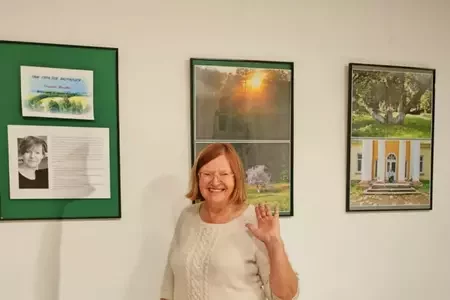
“I am now a completely different person.” Writer Sviatlana Kurs on cancer and her philosophy of life
Radio Svaboda spoke with the writer about Christmas miracles, about what hurts, about what not to ask, and how an oncological diagnosis affects life and creativity.
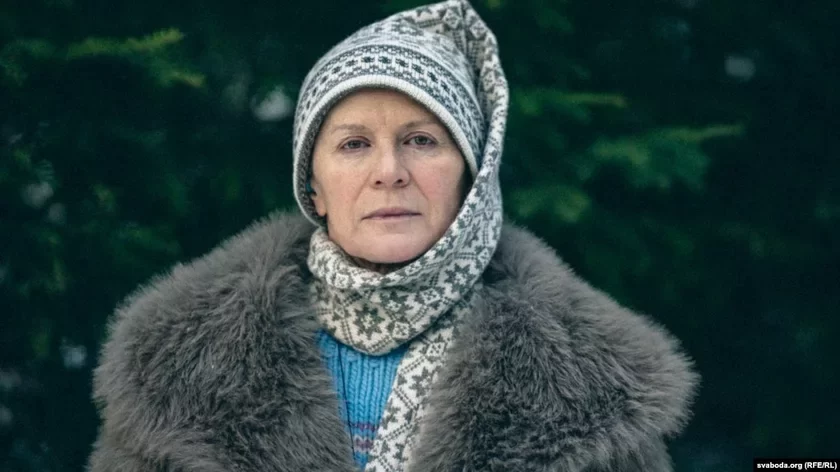
“I learned to ask”
— You received enormous support from Belarusians when you announced your oncological diagnosis on social media and that you needed help. How did the oncological diagnosis change your view of the world, of people?
— It completely changed. I haven't fully understood everything yet. In general, I am now a completely different person. Especially since this is a diagnosis that remains open. I can die very quickly because my type of cancer is sometimes resistant to treatment. Unfortunately, it has a very high recurrence rate. Approximately 75%. Therefore, I don't particularly see a future. I have to live for today, tomorrow, and the day after tomorrow. It's quite difficult. I learned to ask, which was very hard for me. Now I know how to ask. And naturally, some things have taken on greater importance for me.
These are small things, mostly everyday routine. But I'll tell you honestly, I'm terribly tired. I know that people fight cancer for decades, but I've only had it for, you could say, seven months. Sometimes I feel so depressed that I simply have no strength, no desire for anything, nothing brings me joy. But then a new day comes, and you want to live again.
— You said you learned to live for today and find joy and meaning in routine. What brings joy, what gives you this feeling of the day? For example, now, as we speak.
— Well, I've got coffee while talking to you… I now match most young people as they are described on social media. I read that it's trendy for them, for example, to 'rot in bed.' There's even an English term for it. I really love sleeping in bed now. Another trend is making a 'nest bed' with large, long, and small pillows and sleeping there with all your cats and dogs. I do the same; it's the greatest joy for me. And also reading. Only food has dropped out for me; I can't eat. My intestines and stomach were all messed up there, and nothing brings me joy now, just coffee, because it makes me more alert, and I can't have sugar now.
In general, a person is such a well and a mine that they will find joy in everything. Right now, I really want to go to the center of Warsaw and look at the Christmas decorations. I live alongside all people, feeling what other people and my contemporaries feel. People are so afraid of war, and living with this theme, they try to decorate wartime Christmases more and more lavishly. I used to wonder, like in Remarque or other war memoirs — about the Warsaw Uprising, about Belarus under occupation — how people could love, give birth, play, drink, celebrate weddings, and so on. But now I understand all of this.
And feelings are sharper, and joys grow immensely, because what we see — these shadows — they are very tall, very black. And then you start comparing your life. Even in the worst moments, when I was ill, and even died a few times, I remembered that at least I was dying among friendly people on white sheets, and everyone was trying to help me. But there are Ukrainian prisoners of war and Belarusian political prisoners. I always pray for the soul of that 39-year-old girl, the only daughter of an old, unfortunate mother, who was effectively killed in prison. She had a cancer diagnosis; they released her only to die. She lived freely for a couple of months and then died. I pray for them. And against the backdrop of this darkness, small joys seem very significant.
We are not all billionaires. Probably, billionaires have great joys, great routines. I've heard that some wealthy people go on human safaris in Kenya or former Yugoslavia. Many such signals reach me. But we are simple, ordinary, innocent people. We live by daily rituals; they please us as long as we have health. And if there is none, it's quite difficult to be pleased.
“Now I am uncompromising towards phenomena and actions, but I have become softer towards people.”
— More than 10 years ago, I did a project called 'Life After Cancer,' which included stories of 22 people after an oncological diagnosis. They talked not only about fighting the disease but also about how their priorities in life changed, how they, however strange it may sound, improved thanks to the illness. You said you learned to ask. And in what have you improved, or in what have you changed your priorities?
— It's hard to answer. I used to be much more uncompromising towards people. But now I am uncompromising towards phenomena and actions, and I have become softer towards people. And what especially cuts my eyes, heart, and soul now is how people don't know how to relate to each other. Not with evil intent, because there are malicious people who work for various kinds of evil, special services, war, and so on. But simple, ordinary people.
It starts with people treading on all sensitive nerves, invading others' boundaries, insulting, comparing to just anything, using inappropriate metaphors, speaking rudely. This has become terribly jarring to me. Simply dull and unreasonable. It's like opening a door and hitting yourself on the head with it, or stepping on a rake. There's no need to flatter or fawn, but non-violent relationships, non-violent communication – it's a very simple thing. Just don't invade others' boundaries. That's all. Don't start a conversation rudely, don't compare anyone to anyone, don't discuss children's appearances, character traits, and so on. This doesn't mean you have to be silent, flatter, and not tell the truth. Just tell the truth easily and pleasantly, without touching on personalities, on all the painful things that exist.
All of us, let's say, have old mothers. I've seen many times how people would insult: 'Your mother is so ugly.' But look at your own mother, look at yourself. And it's very amusing to me to see that some young and not-so-young people talk like gods. Nothing threatens them. My dear, I think, tomorrow something will await you from which you might not rise. Yet you behave like some Olympic god, and not even a first-tier god. There's no wisdom in any of this. This has changed greatly within me.
Now I talk to people, and before, I tried not to hurt them unnecessarily. But on the other hand, I also learned to ruthlessly discard from my life what doesn't suit me. Before, I could tolerate up to seven times, put up with someone's nonsense. But now I count to three if it's someone I know, and I count to one if it's a stranger. I used to think that some people were fools and that's why they spoke rudely and senselessly and tried to hurt others. But now I see that there are many malicious people in the world, which, however, doesn't negate the fact that they are fools. A malicious fool is the worst thing one can encounter. And for themselves and for others, they are completely useless. Just spit such a person out and forget them.
“What Russians are offering the world now is some kind of ersatz, some kind of margarine made from oil.”
— You haven't dropped out of the information space; perhaps not all the time, but you read social networks, you read the news. What has touched you most in recent months concerning what is happening related to Belarus?
— I have a very interesting observation. I observe Belarus as much as I can, how it lives now, and Belarus, which now lives outside of Belarus, because we are approximately equalized. That Belarus which lives outside of Belarus has almost no access to the Motherland, but it does have freedom. And that same Belarus which lives in Belarus — either has no freedom, or has no informational freedom. It balances out. And I follow with interest how some parts of Belarus have turned towards themselves, turned away from Russian dominance in everything.
“Russian culture” — in quotation marks, because what Russians are offering the world now is some kind of ersatz, some kind of margarine made from oil. So, when they recoiled from Russia, there's also a very interesting trend among young people aged 18, 16, 25, who have strongly leaned towards Russia, but at the same time haven't stopped thinking about Belarus, considering it an independent project. I'm curious what will become of this. I don't see anything bad in this, but I'm interested to what extent people can be forced to eat margarine made from oil or, as Dovlatov said, chew shoelaces. And it turns out that even young people can be forced to chew shoelaces. But this never lasts long, because if a person is offered to chew shoelaces or eat a honey cake, they will, of course, eat the honey cake. What don't I like? I already said: I don't like that people don't know how to relate to other people. Because it seems to me that with everyone, from friends to fierce enemies, one can talk with dignity and without toxicity. Without bending, without groveling. This is what bothers me.
But in general, I see the future of our country as very positive and very optimistic. Besides Belarus, little else fundamentally worries me as much. I think about it constantly, as we all do, from young to old. And I think that Belarus is very hungry to be Belarus, for everything Belarusian. For quality, for freshness, for freedom — not only in language, culture, literature, history, but also in the realization of every person, each in their profession, in their place. This is essential for all of us — both for us, the white-red-white people, and for the red-green people. This is very essential and important. And I won't say that we will easily find common ground with them, because propaganda is a poisonous thing. It is precisely violent communication in its worst manifestation. But we will find common ground, because we have a common country.
And what else surprised, delighted, and made me think — that was Belarusian Islamophobia. The latest case with the girl, with Jasmine, who wanted to sell headscarves. I started reading the comments and saw that the problem wasn't in the headscarves, but in the fact that Islam has very bad PR, and this PR is created by Islam itself, primarily by its followers. And that Belarusians analyze, they think. Also from these cases, it became clear that a great energy of resistance has accumulated in people. If it were possible to express a resolute 'no' and not get hit on the head for it, not go to prison, not be repressed, crushed, and wiped against the asphalt, then they all very sharply opposed what they do not wish for themselves, namely the Islamization of secular life. I am confident that if this repressive pressure disappears, the protest will be even stronger than in 2020, because there is hunger, there is aspiration, there is strength. People want to live their single life as people, not as defective children.
“These unbeaten female pilots helped me a lot.”
— Sometimes people don't know how to talk to their friends, acquaintances who have oncological diagnoses. What would you advise — what not to ask, how to talk? Or to talk and not pay attention? How does this work for you?
— I am grateful to those who spoke with me very little and rarely. You see, there's an inner circle, family, and very close friends. And they served me completely. I couldn't even walk; I couldn't get to the toilet by myself. I couldn't breathe. And they helped me. And all my friends from the wider circle — first, second, third, fourth, you understand yourself that friends can be close and distant — from close friends to just acquaintances. Almost all of them were very reserved, and they simply wrote me little, and almost no one called. I was grateful for this, because a person suddenly has very little strength, but they want to respond to good people, you understand? And a sick person has to make enormous efforts. You need to dose interactions. Especially, you shouldn't call without an invitation, or, God forbid, just come home; that would be scandalous. That's the first thing.
Second — don't say: 'Everything will be fine.' Because we don't know if everything will be fine. The person is in their right mind. They know a lot about their illness, they communicate with doctors, they read statistics, they can even turn to artificial intelligence, and it will tell them that not everything is perfectly fine. So don't say empty words and empty comforts. But my close friends helped me a lot by sharing success stories, stories of healing. Also in a passive style. They didn't write to me: 'Sveta, how are you? How do you feel today?' They simply sent me stories — please call Magdalena, or call Maeike. My friends live in different countries; they sent me contacts and addresses of women who also had stage four ovarian cancer and who overcame it. These unbeaten female pilots helped me greatly to recover, because they gave me hope. And again, Stanislau Salavei, a Belarusian oncologist, helped me a lot. He simply taught me to perceive this illness as an illness, and not as the end of the world. That's how he talks to the sick; one needs to know how to talk like that. Yulia Chabhunina, who also went through this, helped me a lot, because she explained everything to me in its primary factors — how it would happen, what method of treatment. People who trembled and shouted were very harmful to me: 'Why aren't you doing anything? Why aren't you running here and there? Why are you waiting for analysis results and not contacting other doctors?'
This caused me terrible anxiety, and there was nothing else I could do. I could only enter the protocol and wait for the analysis results. And I had such three-four weeks when I couldn't do anything. And everyone was causing me the most terrible panic.
I am grateful to everyone, because all of this was done out of kindness and goodness towards me. But I'm simply telling you how I reacted. Despite everything, I have no shadow of resentment towards anyone. I didn't receive a single wish to die, although I expected to receive such. Not even a single red-green person wrote anything like that to me. I am grateful to everyone for this. So, for such a sick person, it's necessary for close ones to surround them with necessary care, and for those a bit further away to surround them with silence and peace. And, of course, I can't tell you how much I needed money. All my life I earned little and worried little about it. But when it became critical, people helped me. They collected many times more than I asked for, more than I needed. And I had the opportunity to spend on all sorts of related needs — medical and non-medical. And without this money, I wouldn't have been able to cope.
These are my conclusions: leave them in peace, give them space, don't console with empty words, but console with concrete examples and do concrete things. By the way, people offered to cook something with their wonderful hands or clean the house. This is not so much needed now, because in big cities and small cities there is oncological catering, very cheap. There are Ubers that will take you to the hospital from the hospital. All of this exists. And what also deeply touched me, these artifacts, souvenirs made by hand, postcards, decorations, books, drawings that people tried to send me — I received many of them.
And you know, the aura of love helped me. Because an old nurse in my hospital told me that she had never seen women with my diagnosis who felt so well after chemo, having so many cancers in them. She says: 'Probably someone important is praying for you.' And I said: yes, very, very important people are praying for me. People ordered masses for a whole year. People prayed for me in several churches around the world. I tell you, this gives such an aura of support.
A person, let's say, falls into despair at night, feels bad, and suddenly, from nowhere, strength appears, and the person doesn't die, but waits for the morning. Because people mostly die in the morning — from two to four in the morning, in the hour of despair, in the hour of the bull. And it was then that these human prayers — they asked for me to live. They reached me with a great impulse. That's how I survived.
“How can I write, act, or enjoy Christmas now when I feel as if I have seasickness?”
— I know you don't write quickly. But is there inspiration to write? Are you writing, what are you writing?
— There is inspiration. I've been writing all the time. It's just that my book is constantly changing. It's such a living creature to me. Remember the myth of Antaeus? He was the one who felt strength when he stood on the earth. And how Hercules gripped him in his hands, lifted him from the ground, and Antaeus began to transform from a fish into a snake, from a snake into a lion, from a lion into some other mighty, terrifying creature. My book is like Antaeus; it changes. We are separated from the earth, because it would be pleasant and easier to write in the Motherland. But my book is transforming; what it will turn into is unknown.
When I received the diagnosis, I had very small chances of survival. I was sure I wouldn't write anything more. But now I'm gradually starting to come back to myself, and I write to myself, I write and write. I feel very bad now after the operation. In the sense that nothing hurts, but my intestines were all mixed up there, they cut out everything from the intestines, and from the bladder, and from whatever else they cut out. And now everything is mixed up in there, I'm constantly nauseous. And I constantly want to go to the toilet, then I don't. I rush back and forth, nothing works out. Can you imagine how a person lives with such uncertainty? A person is very attached to their digestive and excretory system. And so, how can I write, act, or enjoy Christmas now when I am constantly in a state as if I have seasickness?
But this too shall pass, this too shall pass. I already feel it passing. And then, I'm sure, I will have bright and clear days again.
“I'm even embarrassed by how great a life my book has received.”
— I once spoke with Svetlana Alexievich, and she said that in the women's publishing house she founded, the most commercial, best-selling, and most profitable book is your book 'Where Are You Going, Wolf?'. What kind of life, beyond just a book, does your book live? How many translations does it have?
— I'm even embarrassed by how great a life my book has received. At the Lublin Theater, there's a very serious play based on it. And many people write to me that they also went through all of this, that their families went through all of this, that I gave them the strength to live and turn back to Belarusianness, to the sun, even though the book, it would seem, is not very cheerful.
I am very grateful to this book. I have learned to respect it. I liked respecting both myself and my work, because a person knows everything about themselves — where they underworked, where they overworked, where they falsified. So I learned to respect this book after many people wrote to me that it had turned their lives around, given it flavor, and removed a significant amount of the despair that is now spread in the air. I think there are already six or seven translations into various languages. And there will be more translations: a Spanish translation is being prepared, there will be a book in English, and there will be translations into smaller, but personally very interesting languages for me.
“I think the Lord has hidden a gift for me.”
— Do you make wishes for Christmas or New Year?
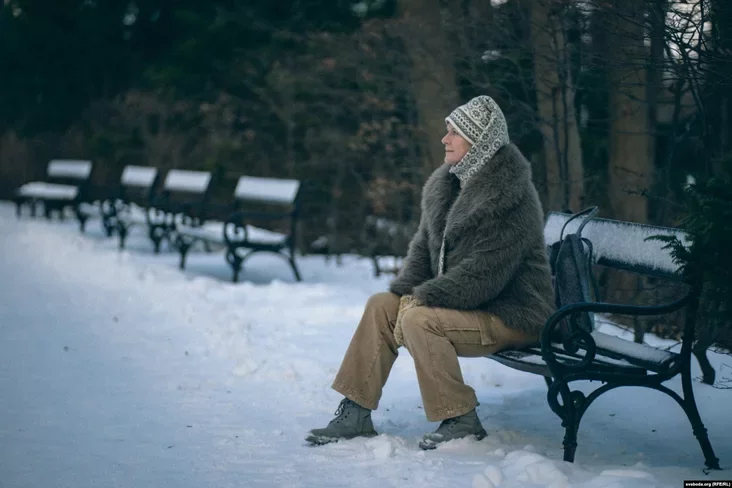
— My wish is very modest — to clean the house. In these seven months, I've significantly messed it up; I don't have the strength to clean, and my son can't carry everything on his young, manly shoulders. I now think that the Lord has hidden a gift for me. This gift awaits me around the corner. And I will receive this gift, unwrap it, and see what the Lord wants to give me. I now really love to behave like a child before Christmas, whose heart flutters because it doesn't know what will be under the Christmas tree in the morning. That's the same feeling I have, that I'm in my pajamas, I'm about to run into the living room where my parents put several gifts under the tree.
Fortunately, I had a happy childhood, and every Christmas until I was 14, I received such gifts. So now I have this expectation of a great gift. It could be a black gift, it could be a white gift. At the same time, I'm waiting for some metaphysical, mystical, joyful, fiery gift, and I'm sure I will receive it. That's one thing. And second, earthly desires, not very simple ones. To clean the house myself, without calling a cleaning service, without accepting outside help. To cook salmon. I really love salmon. To go and look at the illuminations. I am confident that both my future and the future of Belarus, despite everything, are quite interesting. I'm not very afraid for myself and not very afraid for Belarus.















Comments