


Bartosik: «How can you?» — I say. — «How can you compare dull and banal Pornhub with classic Belarusian literature!»
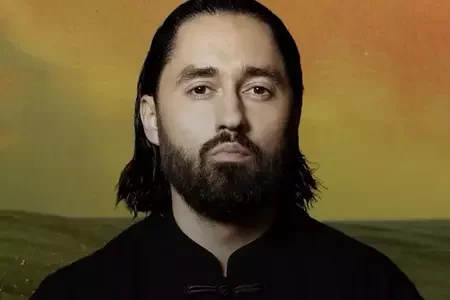
Bard and writer Zmitser Bartosik told 'Salidarnasts' about 'The Honduran Series,' humor that saves, and a luxurious life.
— Zmitser, your political pamphlet 'The Honduran Series' about Don Lucas will soon turn 30. You invented it in the spring of '96, «maybe for half a year,» — because surely everything would change by autumn. But here it is, as you sang, «the movie gets sharper and sharper…»
— Does it seem to you today, as to many Belarusians, that 'The Honduran Series' is eternal?
— Well, now we've all become a little wiser. Nothing is eternal, but that it's for a long time — yes, that's true.
If you look at it with cold rationality, Belarus today is a Russian satellite. Vladimir Vladimirovich intends to stick around until 2036 at least. And then, as health allows. So, until 2036, we need to somehow…
— Hold on.
— Not everyone will succeed. I don't want to infect anyone with my pessimism. But for some, this might even be optimism.
— Many laughed at this pamphlet in '96. It seemed timely and fun! In 2012, singing it, you said that Belarus increasingly resembled Latin America. And people laughed less…
— And now it's not funny at all. 1996 was a year of large demonstrations in Minsk. And it was the year when many young people specifically attended these rallies. It seemed that the new generation would be unequivocally pro-Belarusian, with an independence-minded spirit.
Unfortunately, all our dreams crashed against a different reality. After all, there are more people from the Soviet generation. Even Soviet people are not a generation. The Soviet person is represented in Belarus across all age groups.

— But you are also a Soviet person. You were born in Russia, lived there until third grade, until you moved to Homiel. And you changed. And now you are even more Belarusian than some who were born in Belarus.
— I even felt ashamed of myself, of the Soviet person. Indeed: why did I go after him like that? Not the worst person, in principle.
It's not even about being Soviet here. My comrade, journalist Zmitser Lupach, said that in his village, there was no 'children's room,' no 'living rooms' or 'halls' in the houses. There was a worse house and a better house. The same with clothes: there was a suit to go to church or somewhere else, for a celebration.
The same with language. How can you write your surname in a cemetery in the 'worse' language? Either in Polish or in Russian. In the 'worse' language, you can argue with your wife or talk about anything. But to go out into the city, to go to the district center — that requires switching your language to a better one. To a 'going-out' one.
So, it's not about being Soviet here. The Belarusian problem is precisely this: the attitude towards one's own, as to a worse house, worse clothes. That is, everyday ones, in which one cannot appear in public.
Some say that this problem originated somewhere in the 50s, with the beginning of Soviet urbanization. Someone is sure that it was sown already in the 19th century. But under Stalinism, this 'worse house' was reinforced by fear.
A 'Soviet international newcomer' like me, who came, learned the Belarusian language as another interesting language, and then asks the question: «Why shouldn't Belarus be like Poland, Czechia, Lithuania?» To create something new on the foundation of its own culture. An absolutely normal message both for an internationalist who moved in, and for a caring nationalist.
And a 'normal' person, who survived everything that happened here, knows not only where the 'better language' is, but also where the 'dangerous' language is. And how to change this 'sign of trouble' in their head? I won't make a big discovery if I say that it's only through diligent work in the cultural field.
— You once said: we need to prove to people that being Belarusian is fashionable. It seems that in 2020, we understood that ourselves. Many did even earlier. But what came of it?
— It's still too early to draw a line under the year twenty-twenty. How it will resonate in the future.
It seemed that all we wanted were fair, free elections. But unexpectedly for everyone, a national voice broke through.
Perhaps Belarusianness didn't become fashionable, but it became noticeable far beyond Belarus. For me, the most important thing that happened in 2020 were the courtyard concerts. I simply physically felt the audience's thirst for the Belarusian word, Belarusian song, Belarusian anecdote.
This is a good sign. It's a sign that the Belarusian language is becoming necessary. But it doesn't mean that we will live to see the harvest, to see with our own eyes the sprouts that were sown.
«I fell in love with the city they destroyed: with Niamiha street and the Niamiha courtyards»
— You are an experienced emigrant. Can you compare what was the hardest in which emigration?
— The hardest thing is when you are torn from the city where you began to remember yourself. The road to kindergarten, where you first went to school, where you started looking at girls. Your first favorite places. And when you are torn from there, it's truly a trauma.
For me, that's the city of Ust-Kamenogorsk, in eastern Kazakhstan, which I never saw again. Because it's more than 4 thousand kilometers from Belarus. I wandered a bit through Google Maps through the courtyards of my childhood, realizing that little had changed. Everything else — and we lived in Voronezh, Gorky, Homiel — was easier
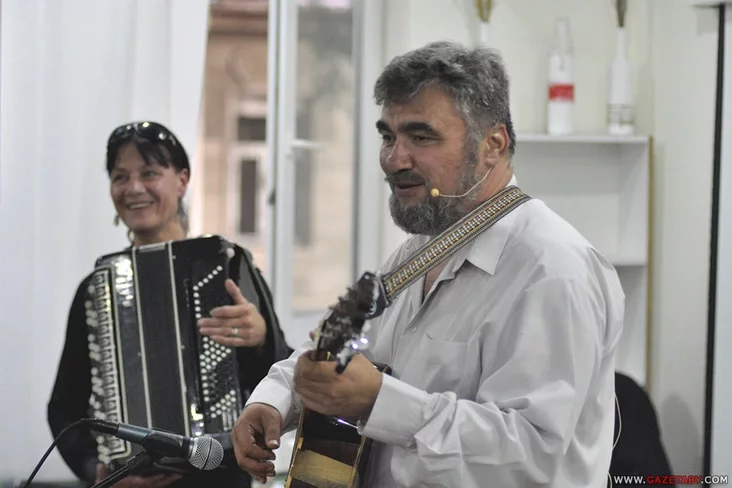
In today's emigration, I don't feel difficulties. There are no tears, no nostalgia. Only longing and sadness for my endless journeys through Belarusian villages. And this road often appears in my dreams. Not a specific road, but an imaginary one. As well as some strange, non-existent villages, people who are not actually there. And the fear that I didn't manage to ask something most important.
And I have no nostalgia for Stalin's Avenue in Minsk. Although I lived in the capital for almost 30 years, having moved from Homiel at the end of '97.
Minsk for me is not today's city of Minsk. I was constantly looking for old Minsk traces, asking people about the Niamiha district.
Minsk for me is a ruined city. A few pieces of it remain in the form of Rakawski Suburb, Upper City.
Everything else is a pompous Soviet Stalinist ensemble. In terms of architecture, it was completely indifferent to me. Because I fell in love with the place that was destroyed: with Kazmadzemyanauskaya street, with Zamchyshcha, and the Niamiha courtyards. What Zianon Pazniak managed to photograph.
Another matter is that in Minsk I met many fantastic people! Like Valiantsin Taras, Mikhas Herchyk, Arlen Kashkurevich. You could listen to them endlessly! I recall our conversations and envy myself.
In today's emigration, there's a slight daily mental cloudiness: what am I even doing here? I think I'm not the only one feeling this today.
— But does your sense of humor help?
— Without humor, you can go crazy. I'm lucky that my family is with me, so there's enough humor. Constant teasing, jokes, cheerful banter.
I'm currently narrating audiobooks. And sometimes interesting moments happen. Once I was sitting in the kitchen, looking for an intonation. I was reading Globus's 'Domovikameron'.
And the text went like this. «Such a night as she had with the Domovik, the woman hadn't seen even in dreams. And in her dreams, she was loved by a bear, a horse, and even an elephant…»
At that moment, my daughter comes into the kitchen. «Well,» she says, «I just came in to get some yogurt. And I ended up on some kind of Pornhub.»
— «How can you?» I say. — «How can you compare dull and banal Pornhub with classic Belarusian literature!»
Or another incident. In Hapeyeu's 'Dragon's Night,' there's a phrase: «His hands glided over the tender skin of her legs.» I read this phrase incorrectly. Instead of «slIzhali» (glided), I read «slizgAli». I had to reread it.
But it's not such a simple task. You have to get the same timbre as a week ago. And the microphone needs to be at the same distance. Because I'm not working in a studio, but at home.
And so I reread this magical phrase. «His hands glided over the tender skin of her legs.» Read it once. Second time. Third time. Didn't like it. Went to the computer, edited it into what I had recorded earlier. Not it.

And again I return to the couch and start my stuck record. «His hands glided over the tender skin of her legs.» Finally, my son, who is doing his homework, can't take it anymore. «Dad, damn it. Will his hands finally, someday, glide somewhere, damn it? Over the tender. Skin. Of her. Legs?»
— «For that, son,» I say, «you need to listen to the book. But, believe me. Even if they do glide somewhere, that's not the most important thing.»
By the way, I invite everyone to visit the 'Kamunikat' audio library. There's already a lot you can listen to there.
— You have a wonderful family! I am greatly impressed by your daughter Yustyna and her reflections. And by your wife Tatsiana, who perhaps even saved you in 2020 by sending you to her grandfather's homeland in Odesa. And she traveled with you through Belarusian villages when you were collecting stories from village houses. She even plays the accordion with you on stage. Not a woman — a miracle! Did you meet online?
— Yes, Tatsiana, on the advice of her colleague, posted an ad on a dating site. And I was the first one to respond.

How much of a lucky ticket she drew, you'd have to ask her. But looking at our four children, it wasn't the worst ticket (smiles).
«Alive, healthy, and free. Is that not enough?»
— Last year, your Yustyna won the 'Bard's Autumn' festival with a significant lead over other performers. You also participated in it in the 90s.
— Yes, I was worried about my daughter, and I'm very glad that Yustyna got the most votes. She is indeed a great girl.
And I participated in October '94. This was actually my first trip abroad, still with a Soviet passport. At that time, there was a visa-free regime with Poland. It's hard to believe now.
At the festival back then, a rather large audience gathered, very interested in Belarusian culture. And not just interested, but creating a lot in it: writing poems, singing, including with a guitar…
— Throughout our conversation, I hear a certain sadness in your voice…
— Why be sad? Alive, healthy, and free. Is that not enough? Life is luxurious. As long as there's something to do, work — then do it.
So many interesting things are being created in the song genre, in literature, in poetry. Starting from Niakliajeu, Nasta Kudasava. Too many to list.
I don't know what will happen to the Republic of Belarus. But as for Belarusian culture, — it will definitely live on and surprise. I have no doubt about that.
What distinguishes today from the early 90s is that back then there were many people who believed that Belarus had become independent. Simply a normal country.
People were returning, learning the language, singing songs. Yes, there weren't many of them, but not few either. Back then, to get into that same 'Bard's Autumn,' you had to pass an audition, a competition. Those selected went to Bielsk Podlaski for the competition.
There were about 10, maybe 15 of us from Belarus. And the old House of Culture in Bielsk was packed to the brim. 'Tuzin Hitou' brought us from Belarus. There were many young authors from Podlachia. For the Podlachian audience, it was interesting, cool, great back then. People even stood in the aisles because there were no more seats. Today, that's hard to imagine.
Many things were created in the 90s: I wrote a couple of songs, masterpiece after masterpiece flowed from Shalkevich. And Kamotski? And Melnikau? And what about the youth? Vinahradau, Rabiakonak, Akulich, I won't even remember everyone.
And yes, at those festivals I didn't win anything. Neither in '94 nor in '96. I got a little offended, sulked. Because I'm such a good bard, and they didn't give me anything (smiles).
Volski comforted me: «But you have good prose!» I say: «What are you talking about? What prose could I have?» He replies: «Going to the City.» That was my column in 'Nasha Niva.' He says: «That's excellent prose!»
And so I calmed down! To this day, I recall Volski's words and bask in them (smiles).
As for my mood, the amplitude, it seems, is like anyone's in emigration: it jumps from cheerfulness to sadness. The children bring joy. And that distracts from all sorts of nonsense.

With his wife, daughter and son in Bychki, the homeland of Vasil Bykau
And as long as I have something to narrate, that's fine. And my 'sufferings' are more about things not going quite as I want.
But I recently narrated Meir Shalev's magnificent Israeli novel 'For the Blue Mountain'. I recommend everyone to listen to it. It's a fantastic novel!
I'm currently narrating Valiantsin Taras's memoirs. So, my 'sufferings' for now are more related to reading.
And I need to 'finish' my book (laughs). Because I announced that I decided to lift the spirits of Belarusians, who, it seems, have also been a bit sad lately. So, I hope, to the joy of all of us, a collection of funny stories will come out.






















Comments