


Apocalypse Tomorrow. Statkevich wrote his first article — warning of danger from Russia
Recently released political prisoner Mikalai Statkevich launched a Telegram channel and immediately published a lengthy article in it, warning Belarusians and the entire world — as an English version of the article was also simultaneously posted — about the danger that threatens them. «Perhaps I was left alive and am now free only to warn you,» he writes.
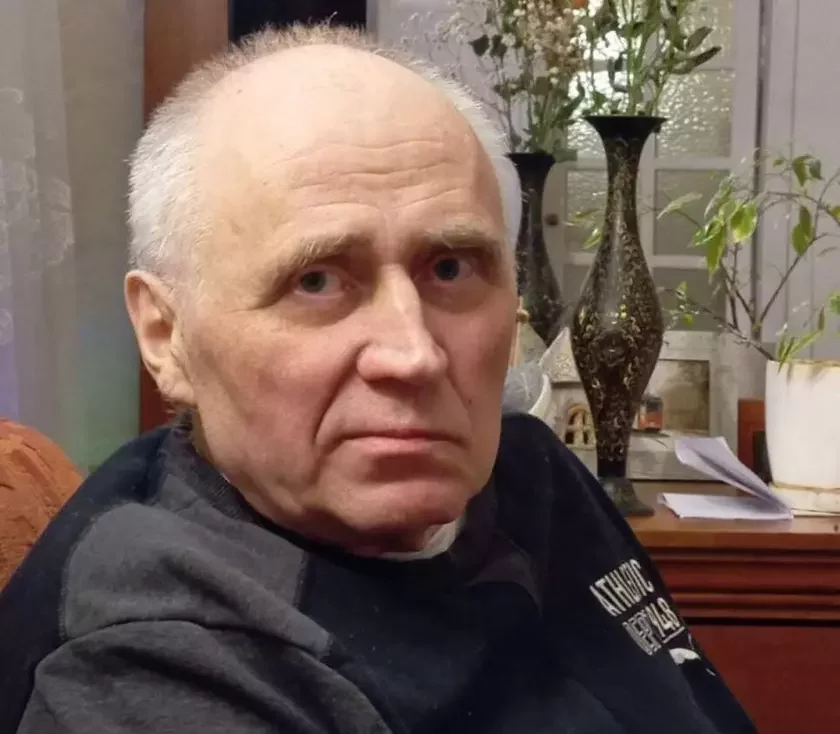
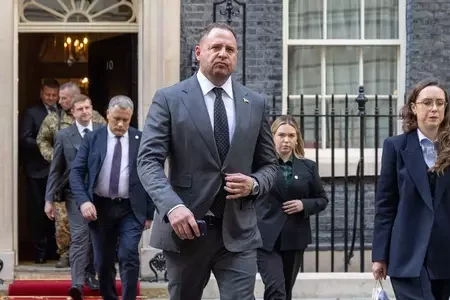
Mikalai Statkevich in the first days after his release
European leaders stubbornly claim that a war in Europe will begin in the coming years with an attack from Russia.
These statements cannot but have serious grounds. I believe that European intelligence agencies drew serious conclusions after their failure in early 2022, when only American electronic and British human intelligence uncovered Russia's preparations for an attack on Ukraine, and they have serious reasons to give such forecasts to the leaders of their countries. Let's make our own analysis of the situation and form our own prognosis for its development, as this directly affects the fate of our country.
Let's consider the Kremlin's motives for unleashing a new war (the main one being the failure to achieve the goals of the war with Ukraine), its decision-making mechanisms, and its readiness to use nuclear weapons.
I. War Aims and Their Achievement
1. Preventing NATO expansion and its approach to Russia's borders is merely a formal pretext for war.
But the situation for Russia in its confrontation with NATO has only worsened since the start of the war. Sweden and Finland joined it, causing the Russian Baltic Fleet to find itself surrounded by hostile shores and even partially turning into a lake fleet — some small missile ships are being transferred to Lake Ladoga, where after launching Kalibr missiles, they can at least hide from retaliatory strikes in the skerries. And from Finnish territory, as well as from the Gulf of Bothnia, it is now possible to strike at nuclear submarine bases located in the bays of the northern coast of the Kola Peninsula, even with tactical missiles and drones. Also, the Kandalaksha railway station, where railways from St. Petersburg and Arkhangelsk converge and through which the peninsula is supplied with everything necessary, found itself within their reach. Thus, most of the most important component of the Russian nuclear triad is under threat.
2. The real main reason for the war was not the conquest of Ukraine, but rather the Ukrainians themselves — another 40‑45 million new subjects for the empire, as Russia's population is shrinking.
The Far Eastern Federal District, which constitutes 40% of the country's territory, is home to only 7.8 million people. The difference in population density on both sides of the Russian-Chinese border is more than 100 times. With increasing dependence on China, this could threaten Russia with the loss of its eastern territories in the strategic long term.
And now, instead of millions of fast-footed Ukrainian «migrant workers,» the Kremlin has acquired an enraged people, ready to maintain a million-strong army, against which it now also needs to have an equally numerous army.
3. An attempt to overcome the crisis of national-historical consciousness of Russians after the collapse of the USSR.
Wars usually begin with history teachers who tell stories of «ancestral lost lands,» instilling in students pride in past greatness and a desire to reclaim what was lost. Real history is mercilessly falsified in the process. German militarism of the last century, in fact, began in the century before last, when a gigantic statue of Germanicus, a leader of local tribes who managed to destroy several Roman legions through deceit and betrayal, was erected on the Rhine. At the same time, Charles I, the creator of the Holy Roman Empire of the German Nation, which included almost all of Europe, and his conquests were glorified.
Naturally, this led to a desire to reclaim the «lost.» And, as a consequence, to the war of 1870 with France, to the First World War, to Hitler's «master race» theory and everything that happened later. In the Russian version, this began with the theory of the «triune Russian people,» thereby appropriating the history of Kievan Rus'. Then it turned out that Kyiv became the capital of independent Ukraine, and its history, naturally, part of the history of the Ukrainian people, which contradicted deeply ingrained stereotypes in Russian mass consciousness. Questions even arose about the nation's self-name. The Kremlin tried to propose a new answer to the question «Where do we come from?» «on the fly,» based on an unconfirmed legend about the Apostle Andrew the First-Called's stay in Chersonesus (near present-day Sevastopol).
And on the real fact of the baptism of Kyiv's Prince Volodymyr (who, by his appearance described by Byzantine historians, looked exactly like a later Zaporozhian Cossack, even with a forelock). Nevertheless, a new «sanctuary» for the people was urgently built near Sevastopol. But, as the puppet character of then-independent Russian television Khryun Morzhov once said: «Not inspiring.» And now, after four years of war, there are no doubts among Russians themselves about the national distinctiveness of Ukrainians and their separateness from Russians.
Much is now said about the need to combat the falsification of history, referring only to the history of the Soviet-German war. I agree, the falsification of history is a very dangerous thing. All history. The only effective remedy for imperial complexes is the blood of sons. I believe that so that no nation has to take this bitter medicine, independent historians should compile a common objective version of the region's history over the last thousand years. And widely disseminate it in an accessible form (for example, as comics).
4. The desire to force the West to lift sanctions imposed after the annexation of Crimea.
In the Kremlin, due to the light (and too light) tongue of one local politician, the opinion somehow took root that European politicians «have no balls,» unlike «tough» dictators. But four years ago, it became clear that this accessory is also present in democratic leaders. And asserting the opposite demonstrates ignorance of the region's history.
In 1939, Stalin issued an ultimatum to the Baltic countries and Finland to accept Soviet military bases. Dictators ruled in the Baltic countries then. They accepted Stalin's terms because they feared him less than their own people. These countries lost their independence.
But parliamentary Finland refused. The parliament transferred broad powers for organizing defense to General Mannerheim, whom the parliamentary social-democratic majority, to put it mildly, did not particularly like: 20 years earlier, during the suppression of the local Red Guard uprising, he sent many comrades and friends of social-democratic deputies under the ice of the Gulf of Finland. After that, he was almost untouchable for about 20 years, but he created a public organization and, predicting Soviet aggression, trained many thousands of ski-shooters and snipers in it, who became a real nightmare for the Red Army during the war with the USSR, in which the latter suffered a humiliating defeat.
Thus, four years ago, by demonstrating masculine qualities, European politicians not only were not intimidated and did not lift sanctions, but began an economic war against Russia, due to which the Russian economy is in recession, which is masked in public statistics for propaganda purposes using a deflation coefficient. Significant additional financial losses are incurred by the propagandistic demonstration of the absence of international isolation. Visits of leaders of so-called «friendly countries» to Moscow inflict tens of billions of dollars in budget losses, because «friends» only come for significant discounts on Russian oil or gas.
Russia's share in the global Gross Domestic Product (GDP) is about 3% and is falling, and claims that, in fact, taking into account Purchasing Power Parity (PPP), Russia has already overtaken Germany, do not benefit Russian propaganda, because if this PPP is taken into account for all countries, it will turn out that Russia has already been surpassed by Indonesia, and Brazil is approaching.
Even if the «hot» war in Ukraine stops, the economic war with countries that generate more than half of the world's gross product will continue, which will lead the Russian economy to recession and a social crisis of failure to fulfill numerous social obligations to war veterans and their families, and very likely — to a political crisis with a change of power.
Thus, Russia has not achieved any of its true war aims and has found itself in a dead-end situation with bleak prospects.
This war proved to be a strategic mistake of the Kremlin. And with a strategic mistake, any action, as well as inaction, only worsens the situation.
Let's consider the reasons for this failure of the country's leadership, its intelligence agencies, and diplomacy. Let's consider the Kremlin's decision-making mechanisms that led to this mistake.
II. Kremlin Decision-Making Mechanisms
It is already obvious that these mechanisms are based on stereotypes of Russian mass consciousness and propaganda and historical myths, and exclude the participation of independent conscientious experts.
The primary and most dangerous of these stereotypes is about the existence of a «triune Russian people,» and that Ukrainians and Belarusians are «artificially created nations.» From their point of view, this means that the mentality of the Russian and Ukrainian peoples is identical.
This stereotype formed the basis for forecasting Ukrainians' reaction to the Russian invasion. But the reaction of the Ukrainian people turned out to be completely different from what was expected, which indicates deep mental differences between the two nations. The reasons for this difference must be sought in their genesis. In the 9th century, Kyiv was captured by the Rus' — in the languages of all Scandinavian peoples of that time, this word meant «warrior-robber»; it was how Vikings, the sea marauders of that era, called themselves, making the city their base for further attacks. Thus, «Kyiv and its surroundings» became Rus'.
Thus, the only heirs of those Rus' are today's Ukrainians, who inherited the positive and negative traits of those marauders. Russians have a different origin. One should not recall the ridiculous propaganda myth, invented later by the descendants of the Varangians to justify their right to rule, about the «invitation of the Varangians to Rus'.» Does this mean that Novgorod merchants, stern, greedy, and brave people, called robbers to bring order to their money chests and fur warehouses? Do you really believe this?
Let's turn to the authoritative Russian historian Solovyov, who divided the population of that time into two categories: 'muzhs' and 'muzhiks' or 'smerds'. The former were the prince's retinue or boyars (then predominantly Varangians) — real people who possessed weapons, knew how to use them, and were ready to defend their honor, their loved ones, and property with weapons in hand. The latter were «small incomplete people» who could not do this and were merely «fodder» for the former. It is deeply symbolic that in Russia, a word that before the reform of 1863 was the name for agricultural slaves, is still a compliment to a man.
Thanks to stereotypes about the «triune Russian people,» the Kremlin decided that the descendants of the 'muzhs' would behave like the descendants of 'muzhiks'. This is a big mistake. The same mistake is made regarding Belarusians.
The topic is so important and dangerous for us that I must dwell on it in detail.
In the penal colony, I had a period when they did not give me books from the local library for 5 months. So I read everything in a row that my neighbors had. One day, I was given a thick (and therefore very valuable in those conditions) book by one of the apologists of the «Russian world,» Maksim Kalashnikov. The real surname of this machine-gun-automatic rifle pseudonym, as one can easily guess, is the banal Kucherenko. The book, as is common for literature of this kind, exposes a global conspiracy against Russia, and also contains a historical overview with a large number of elementary factual errors, which made me doubt the author's declared historical education.
But there was one chapter that caught my attention. The author examines the mentality of Russians based on their attitude to land, power, the church, etc. In total, across 7 directions. He examines it quite objectively and honestly. I analyzed the mentality of Belarusians according to his scheme. Coincidences with Russians were only in half of one point. If these points are considered equally important, then Belarusians coincide with Russians in their mentality by 7%. Somewhat too little for a «single people.» Especially since 2020 clearly revealed the existence of our distinctive independent nation. And what a nation!
Propaganda campaigns unleashed by the Kremlin also significantly influence its decisions.
A peculiar feature of propaganda is that its creators sooner or later begin to believe in its truthfulness. That is, they repeated for so long that «Ukraine is an underdeveloped state, poke it — it will fall apart, and the clown will run away,» that they themselves came to believe it. But Ukraine did not fall apart, the «clown» turned out to be a worthy president, and now the Kremlin does not know how to get out of this war while saving face.
Moreover, when propagandistic stereotypes become ingrained in public consciousness, the actions of the authorities must correspond to these stereotypes, which deprives the authorities of the possibility of political maneuver.
The worst thing is when the head of the country engages in propaganda. Independent analysis becomes impossible in such a case. Because experts and advisors must tailor their positions to the opinion of the head and merely re-voice the official position. Collective decisions are impossible in such conditions and become unilateral, which affects their quality, because the head, deprived of expert support and having their own motives and interests, often makes decisions harmful to their country or even gets into absurd situations, as was the case with the President of the Russian Federation when he publicly presented unrealistic data on Ukraine's combat losses.
I have no doubt that he was only re-voicing data officially provided to him by Russian generals. There was no experienced advisor nearby who would explain that among generals since Soviet times, the principle «The main thing is to report correctly» dominates. This leads to an excessive overestimation of enemy losses. For example, during the Soviet-German war, according to reports from Soviet troops, the total losses of the Wehrmacht amounted to over 80 million people, which exceeded the total population of pre-war Germany.
Thus, the decision-making system in the Kremlin is unilateral, without qualified expert support, and strongly influenced by Putin's desire to retain power. Personal decision-making practices by the leader create additional risks.
Putin's articulated method of «uploading a problem to the brain at night and waking up in the morning with a ready solution» is indeed effective. I myself used it for working on dissertations. But it is only suitable for passive objects. Attempts to apply it in politics, where the objects of the decision are active and possess their own will, have typically led to political mistakes and losses.
Thus, the existing decision-making system in the Kremlin carries high risks of ill-conceived adventurous decisions.
In summary, it can be asserted that in such a system, the decision to start a war, even with the use of nuclear weapons, is very likely.
Therefore, the risk of Russia unleashing a war with the West is indeed high.
Let's consider where such a war might begin and what risks it poses for our country and the world.
III. The Belarusian «Balcony»
This is what Russian generals call our country because from our territory, strikes can be launched against three NATO countries and Ukraine. The capitals of these countries are dangerously close to the Belarusian border.
It is obvious that the first strike of Russian troops will be launched from Belarusian territory and directed against the Baltic countries, which are geographically isolated from major NATO countries and can be cut off from them. Furthermore, their occupation would allow the Baltic Fleet to regain operational space, secure maritime communications with the Kaliningrad region, and provide more guarantees for the export of Russian hydrocarbons from the ports of the Leningrad region.
The main strike will be directed not at Estonia, whose eastern border is covered by large lakes, but at Latvia, to reach Riga or the Gulf of Riga and cut the Baltics in two, with the aim of depriving the defending forces of maneuver, and, at least in the Eastern Baltics, of supplies and reinforcements. The strike will be launched from the Polotsk region. Simultaneously, a strike will be launched from the Grodno region towards Kaunas and Klaipėda. This could be reinforced by a Russian strike on Kaunas from the territory of the Kaliningrad region, to then capture Klaipėda and prevent the use of this port for delivering reinforcements and military equipment. Another strike could be launched from the Ashmyany region towards Vilnius due to the attractive proximity of this city to the border.
You might ask, why am I predicting this so confidently? Simply, Russian generals like to use the developments of their Soviet colleagues. For example, the truly very successful and most effective of all operations in the Second World War in terms of its results, Operation Bagration. One only needs to look at the maps of this operation.
In the autumn of 2015, after another release, speaking at a conference held in Warsaw under the auspices of the OSCE, and commenting on the deployment of a motorized rifle brigade in the Bryansk region, I expressed the opinion that this brigade could be used against Ukraine for a strike on the right bank of the Dnieper towards Kyiv, which the Soviet army had already done in the past war. Only then, it was necessary to forcefully cross the Dnieper in the Loev region with heavy losses. And now it can be comfortably crossed, along with the Pripyat, over bridges on the territory of Belarus. Which the Russian invasion group did four years ago. Without such a possibility, the Russian blitzkrieg would have been impossible, and the war with Ukraine would not have started at all.
Unfortunately, my prediction at that time came true 7 years later, confirming the effectiveness of the approach. And now, a book with maps of Operation Bagration, specifically its second, «Baltic» part, lies before me, making the forecasting task easier.
IV. Use of Nuclear Weapons
This idea, allegedly, has been discussed among Russian generals since the 2000s. Specific plans, if one believes what reached the independent press, were as follows: suddenly start hostilities, seize as much territory as possible, and then, when NATO mobilizes a response, strike with nuclear warheads to secure the seized territory through negotiations with «ball-less,» intimidated European politicians.
Now, when European politicians have shown completely different qualities than expected, the idea of a preemptive nuclear strike on the locations of NATO nuclear forces in Europe has emerged and is actively discussed in the Russian semi-military press, to avoid a «retaliation strike» after the use of nuclear weapons against NATO, for example, in the Baltics after a Russian invasion there. The most likely place for a Russian nuclear strike will be the Suwalki Gap, to make it impossible to send reinforcements through it to the Baltics, if the railway there is destroyed, the asphalt on the highway burns, and all this is covered with burning radioactive trees.
Strikes on «bottlenecks» of Trans-Baltic highways, places of concentration of reinforcements and material resources are also possible. Now Russian generals understand that there will be a Western «retaliation strike» and are looking for ways to avoid this response — heaven is heaven, but one wants to live too. Ideas on how to prevent this are actively discussed.
For example, in the magazine «Zbroya» («Weapon»), the discussion of options for a preemptive nuclear strike on the locations of NATO tactical nuclear forces has become a constant topic.
Their hopes are as follows: if a strike is launched with tactical nuclear weapons, the USA, with its powerful strategic nuclear forces, will not intervene, because, as the author of the proposal mockingly notes with surprise, they somehow believe that strategic and tactical nuclear war can be different.
In the event that Russia only uses tactical nuclear weapons with a shorter range, the USA, in their opinion, will use this as a pretext for not using its long-range strategic nuclear weapons and thus unleashing a world nuclear war. Thus, Russia only needs to neutralize 100 tactical thermonuclear aerial bombs with a power of 500 kilotons each, located at NATO airbases in Italy, the Netherlands, Belgium, Germany, and also destroy Britain's nuclear potential, because the French Constitution allows it to use nuclear weapons only for self-defense in the event of a nuclear attack on its territory. True, the author does not explain how, from the point of view of the French Constitution, a nuclear strike on a NATO airbase in Germany near the French border will be regarded if the blast wave and radioactive clouds head towards France.
The author sees no problems with Britain at all. There are four nuclear submarines with «Poseidon» missiles with nuclear warheads, two of which, ready for launch, are on combat duty in port, where they can be easily destroyed, and the third is on such duty in the open sea. The author believes that if Russia now has a nuclear submarine-hunter of enemy submarines, then that Russian submarine can find and destroy the sole British submarine on duty at sea. Perhaps he does not know how difficult it is to first detect a NATO submarine with its latest stealth technologies in the World Ocean, let alone a specific one. Such reasoning is surprising in its incompetence. But such is the current level of Russian experts, and their conclusions may be in demand.
It seems that the Kremlin has accepted the idea of a preemptive nuclear strike on the West. At the same time, they fully admit that there will be a similar retaliatory strike. And they have figured out how to make the first while minimizing the threat of the second.
V. Quasitactical Missile
The appearance of the so-called «Oreshnik» was initially surprising. Why such an expensive-to-maintain and vulnerable machine? It is clear that any weapon is used in war. Including old tanks, cannons. So why simply scrap old «Yars» missiles when one can remove one stage and reduce their range to 5500 kilometers?
If one can use them even for firing dummy warheads. Moreover, as was visible even from a newspaper photo of the strike on «Yuzhmash,» these dummy warheads were fired without any guidance — as if they just threw a handful, hoping one might hit something.
This is like bringing the Tsar Cannon to the front. Expensive and ineffective.
But what was alarming was that the «Oreshnik» remained under the command of the Strategic Missile Forces, where it had been from the beginning.
This means that the systems for storing and delivering nuclear warheads, and for their use with special codes (the so-called «nuclear briefcase»), also remained. This implies that the «Oreshnik» can very quickly be transformed back into a ballistic missile: simply remove the warhead with metal dummies and replace it with the old «Yars» warhead of slightly reduced range, which, formally, reclassifies it from strategic to tactical while retaining its former set of munitions and tremendous destructive power: 3‑6 warheads with a total yield of up to 500 kilotons.
Thus, the Kremlin, by creating a hybrid, formally tactical «Yars,» has prepared a weapon for a preemptive nuclear strike on Europe, which, in its opinion, should not trigger US involvement in a retaliatory strike. But, apparently, Moscow does not hope that a «retaliation strike» can be avoided, be it from British or French nuclear submarines.
Therefore, to avoid a strike on its own territory, it decided to expose another, formally still independent country to this strike.
VI. Why Nuclear Weapons in Belarus
The Kremlin's decision to deploy Russian nuclear weapons on our territory is surprising from the outset. Usually, they are placed in a guaranteed safe location, not in direct proximity to a combat zone where they could come under enemy fire, and on the territory of another state whose people do not want them. This is because people intuitively understand that their own nuclear weapons truly protect a country from aggression, while foreign ones make it a hostage of another state, which may have completely different, unknown plans and interests.
Moreover, Putin immediately and categorically refused any form of Belarusian control over these weapons. All these statements that we now have nuclear weapons, that «we will press the button together (use Putin's 'nuclear briefcase')» — this is either deception or (what is much worse) self-deception.
First, they announced the deployment of nuclear aerial bombs for Su-25 aircraft (including Belarusian ones). Then — Iskander medium-range missiles, capable of carrying a nuclear warhead. Now they are deploying the hybrid «Yars» (also known as «Oreshnik»). A storage facility for nuclear warheads is also being built.
Why on our land? To be closer to a potential adversary, they have the Kaliningrad region, where nuclear Iskanders are already stationed. The hybrid «Yars» has a range of 5500 km, which is twice less than the unmodified one. So why not deploy it on their own territory — it will still reach any corner of Europe. But for some reason, they are placing it not far from Ukraine.
Although most of that «Yars» is just a pipe filled with gunpowder (solid rocket fuel), so even an FPV drone with a cumulative grenade is capable of creating a «big boom-boom» from the «Yars.» And transporting nuclear charges from storage to missile positions, when there could be saboteurs, ambushes, mines along the way, is it not too risky? Nevertheless, all this is being done contrary to logic and safety.
I find only one explanation for such a risk — the first preemptive strike by Russia on Europe is planned to be launched precisely from our territory. This will be immediately detected by the other side. And one local politician will not resist and will boast about his nuclear prowess.
And then Western leaders will begin to discuss response options. Where to strike in response — on the territory of Russia, which has 1400 strategic warheads, or to choose the safer option of striking the territory from which the missiles came?
And they will have a great temptation, which the Kremlin also counts on, to choose the latter option. According to the logic: «Belarusians, of course, are a pity. But surely we won't start a world nuclear war. And they themselves are co-aggressors for the second time. And this way we save face. Because we'll respond, and we won't start a world war.»
In Moscow, they will reason something like this: «Belarusians, of course, are a pity. But they themselves want to be sovereign. Let them get what they deserve under a full sovereign program. At least our territory will remain intact.»
Thus, our country is simply being used as bait for NATO strikes, to protect Russia from them.
NATO strikes will obviously be carried out with 500‑kiloton thermonuclear warheads, and will be directed against the locations of nuclear munitions and their carriers. For example, at Asipovichy and Krychaw, and also, possibly, at the rear and communications of Russian invasion groups in the Baltics, which are also on our territory. Half a megaton is a very serious charge — the blast wave, the zone of destruction and fires will spread for hundreds of kilometers; almost all of Belarus will have air contaminated with radioactive smoke from fires.
For example, the power of the nuclear charge detonated by the Americans over Hiroshima was 18 kilotons. About half a million Japanese died then from the consequences of the explosion over several years. Will anything remain of Belarus and Belarusians if we receive several strikes of 500 kilotons? Today, so-called «ordinary» Belarusians say: «At least we don't have war.» They might eventually envy Ukrainians, because ordinary, not nuclear, missiles fall on them, from which one can still hide.
Only we ourselves can stop this insane and deadly plan for us. Regardless of views and ways of earning a living. And it is real. Because everyone has children, and the most terrible fate I wish upon no one is to watch a small person suffer from radiation sickness without the possibility of saving their life.
After some time, the radiation induced by thermonuclear explosions will subside. But in conditions of global warming, entire regions of the planet become uninhabitable. Therefore, our land will not lie empty for long. Other peoples will settle it. And its new inhabitants will look with surprise and regret at the last dying aboriginals and wonder how they managed to lose such a blessed land.
I have no hope for this state. Because I remember once reading in an official newspaper the answer to a Western journalist's question about how Russia attacked Ukraine from Belarusian territory. The answer struck me with its sincerity: «We had exercises. Russian troops entered by one route, but could exit by different ones. Why Russian generals decided to withdraw them this way (through Ukraine), I don't know. They didn't tell me.»
This «They didn't tell me» — it's not about dictatorship, not about democracy. It's not about a state at all. We will have to do everything ourselves. The necessary resources for this exist.
To conclude
I will not hide it, I felt awkward offering you this text. Especially to those who rejoiced at my release, who congratulated Maryna and me, and offered their help.
This was very important to us.
Thank you, people!
And now I paint such terrible prospects for you. This text was very difficult for me to write, taking a lot of moral, emotional, and even physical strength, supplies of which I do not have in abundance right now. But if there is even only a one in ten chance that this horrific scenario is real for us — then that is already tremendously significant. But, in my opinion, and I have thought a lot about this topic, the chances are much higher.
Therefore, I consider it my duty to warn you about it. I believe that every person has a purpose in life that cannot be shirked. Perhaps I was left alive and am now free only to warn you. Because forewarned is forearmed, they once said. You are forewarned. Let us think and act together to save Belarus, our loved ones, and the world.
We can do it. Belarus will live!
Now reading





In Poznań, a gynecologist removed the uterus and ovaries of a 24-year-old Belarusian woman without her consent. The doctor faces up to 20 years in prison







Comments
пакуль 112 асоб падписалася. А так вельми слушны артыкул.