


"The romance ended before it even began": how Minsk residents moved to the wilderness
Life in the capital, tours across Europe, stable income — the family left all this behind, moving to an almost empty village. In return came blueberries, a stove, chickens, freedom, and working for themselves.
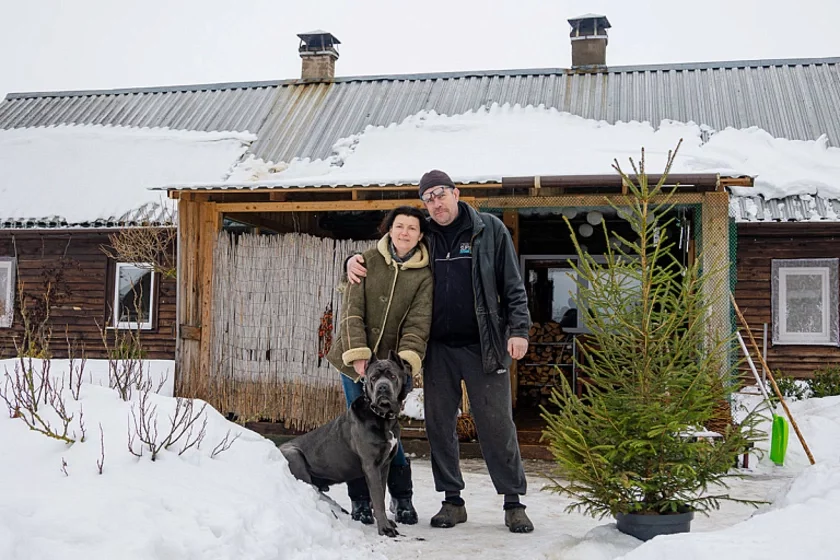
Photo: Tochka.by.
In the village of Linki, Valozhyn district, it gets dark around 4:00 PM in winter. After sunset, there's only a field, a forest, and a few lights in the windows. There are only a couple of houses with permanent residents. The nearest agro-town, Vishneva, is six kilometers away. There's no bus.
On Palyavaya Street live Andrey and Alena, a married couple who moved here from the capital.
Journalists from Tochka.by spoke with the couple and found out what it's like to live in the wilderness.
From artists — to farmers
Once upon a time, Andrey and Alena were musicians, touring Europe with concerts and working in various ensembles, including on television.
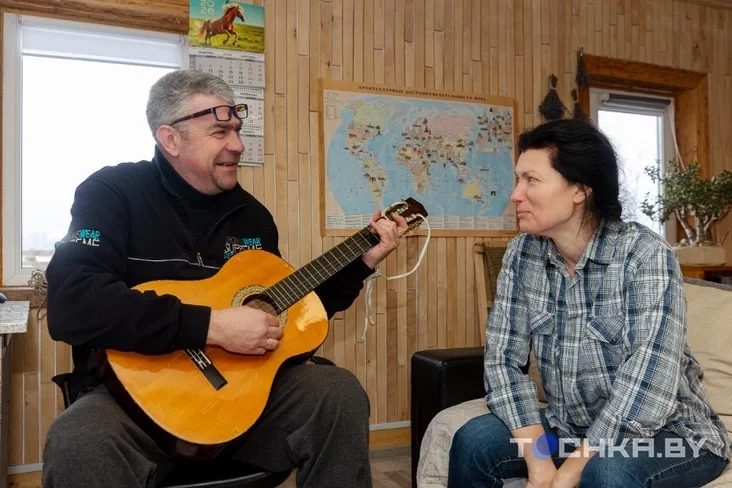
Today they have almost a hectare of land, blueberries, lavender, chickens, ducks, homemade bread, and cheese. In short, a personal subsidiary farm.
If the electricity goes out, the house is heated by a stove. If the water freezes, the well comes to the rescue. In summer, you hear birds and tractors; in winter, complete silence, which a city dweller still needs to get used to.

"We didn't leave for a beautiful picture. It just became clear: if we don't create work for ourselves, no one will offer it to us," says Alena.
Their move from Minsk began with a common urban problem — lack of space.
"When the second child was born, the apartment became catastrophically small. Plus a big dog in the family. We decided: either we expand in Minsk, or we move out of town," Andrey recounts.

Initially, the family bought a large house in Zaslaŭje — about 420 square meters.
"At the time, it seemed like the ideal solution. Spacious, quiet. Now we realize — it was maximalism. A big house means huge expenses and constant maintenance. It's like a job in itself," the man continues.
At some point, Zaslaŭje began to develop rapidly. According to Alena, they moved for peace and quiet, but a few years later they got a densely built-up suburb of Minsk — traffic jams, construction, noise.
"But I always wanted space. Land. To have my own surroundings and no one breathing down my neck," she emphasizes.
Life in two countries
Then circumstances changed drastically again. First, Andrey left to work in Lithuania, then the family moved there too.
"We lived in two countries. Almost every week we traveled back and forth. We set a record — an hour and twenty minutes from door to door, when we crossed the border quickly. As long as it was possible to travel, it worked," the man says.

But gradually it became clear that such a life depended too much on chance.
"There, you are always temporary. Today there's work, tomorrow there isn't. No guarantees. You're just a person who came to earn money and can leave at any moment. When border restrictions started, it became clear: either we stay in Lithuania indefinitely, or we return. We chose to return. Not to comfort — to uncertainty. But at least to our own," Andrey notes.
By that time, the family had already bought an old house in the village. The move was quick — they took their belongings and almost all the furniture from Zaslaŭje.
First months: without water and heat
This house had stood empty for almost 30 years. And it was impossible to live in it immediately.
"No water, no sewage, no normal bathroom. It was cold, and we had construction and reconstruction. The first months were very difficult. The romance ended before it even began," Alena recalls.
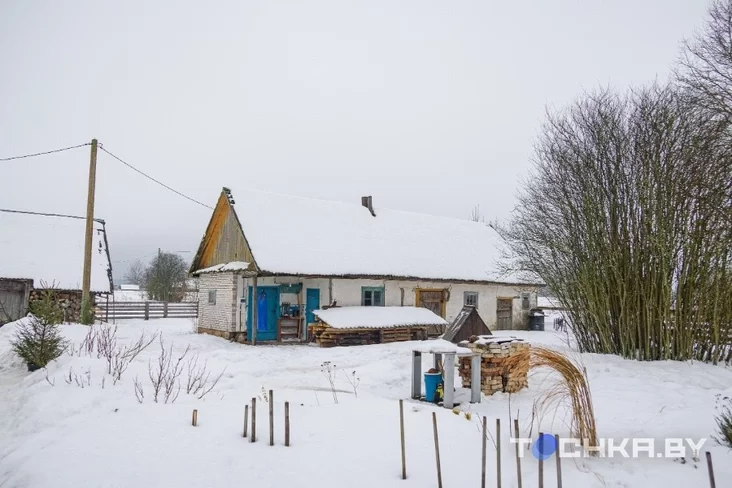
In a short time, they installed a well, sewage, a kitchen, and a bathroom. Almost everything with their own hands.
"We hired people for professional work, such as plumbing and electricity, the rest we did ourselves. We worked from morning till night. But in a private house, there's never a moment when everything is finished. There's always work," says the head of the family.
Who ate all the blueberries?
The most difficult aspect turned out not to be the household side, but the situation in the labor market.
"Here, a salary of 800-1200 rubles is considered normal. Finding 1500 is already good luck. And it's not an office job: hard work without a schedule," Andrey shares his impressions.
Alena tried to get a job in a local laboratory, but it didn't quite work out.
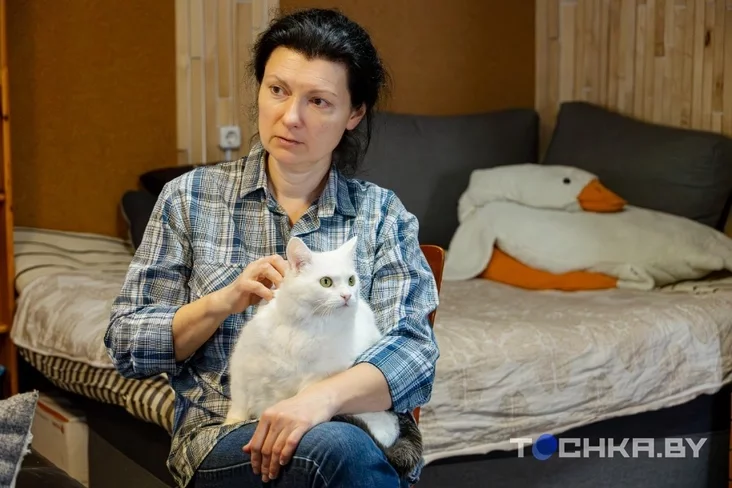
When it became clear that there would be no stable work, they decided to rely on themselves.
The family's main project now is blueberries.
"These are long-term investments. The first few years you only invest: planting, care, fertilizers, mulch. If you don't do something, there will be no harvest," Alena explains.
Last year, they didn't even advertise the sale of berries. Everything was snapped up anyway.
"The district ate it, we didn't really keep anything for ourselves. The bushes are still young, so that's how it is," the Belarusian woman recalls.
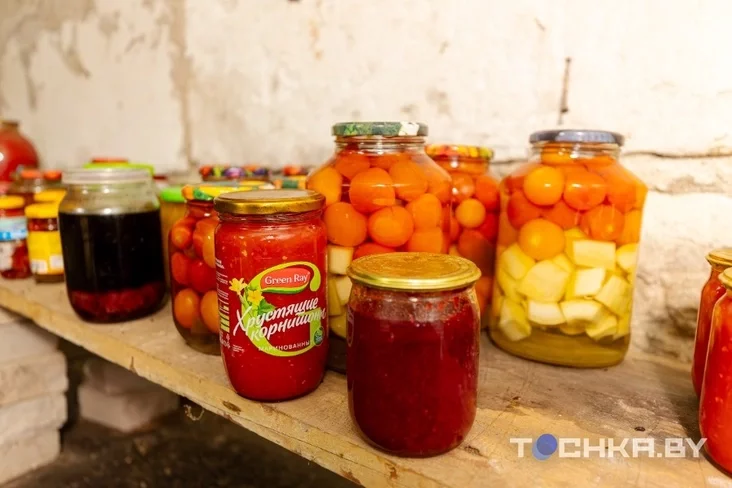
Lavender grows nearby. For now, the plot is small, but the plans are big — photoshoots, processing, bouquets, oil.
"Everything grows slowly in the village. And you learn patience," Alena notes.
Bread, cheese, and word of mouth
In the couple's yard, chickens and ducks have already settled in — the farm is gradually expanding. There are plans to populate the homestead with larger "residents."

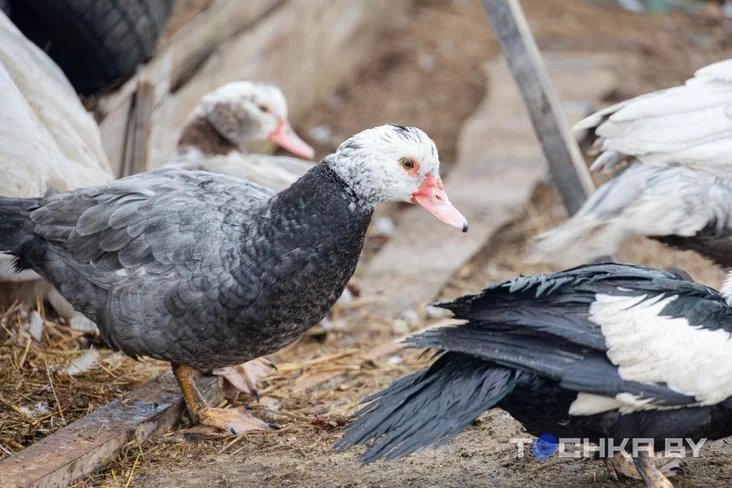
"More desires than time. It's good that there's a restraining factor — a realist husband," Alena smiles.
The family's main financial support is not the garden and poultry. Gradually, another direction grew out of everyday necessity — homemade products, which now bring a stable, albeit small, income.
It all started simply — with a loaf for themselves.
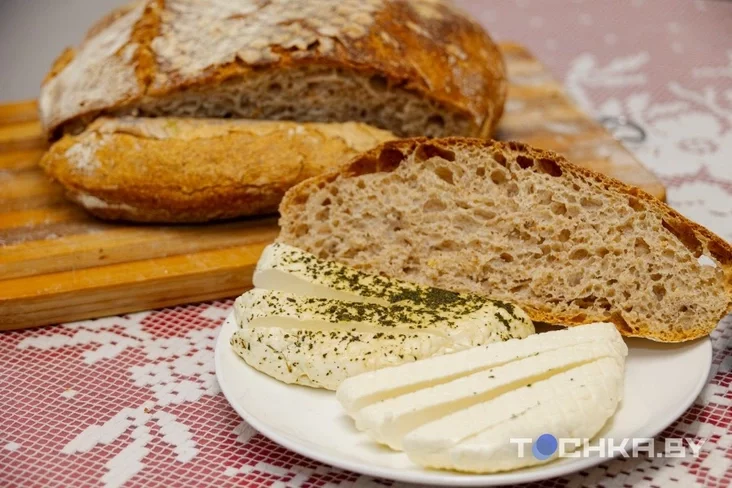
"I baked bread for the family. Then acquaintances started asking. Now there are several regular customers. Bread is eaten every day, cheese too," Alena explains.
They buy milk from local residents — a small network of suppliers has gradually formed.
"This is not a business in the classical sense. Rather, it's self-employment and a conscious choice in favor of quality products," Andrey explains.

The hardest part, according to the couple, is not producing, but selling.
"There aren't many people here. Every client is through acquaintances; word of mouth solves everything. If volumes grow, we'll have to travel, look for markets. That's also work," they say.
Wilderness, but not isolation
Despite the difficulties, the couple does not want to return to the city.
"Even the silence didn't bother us. After the city, it's wonderful: dark, empty. It's peace in its natural manifestation. And for noise, you can always go to the city," Alena asserts.

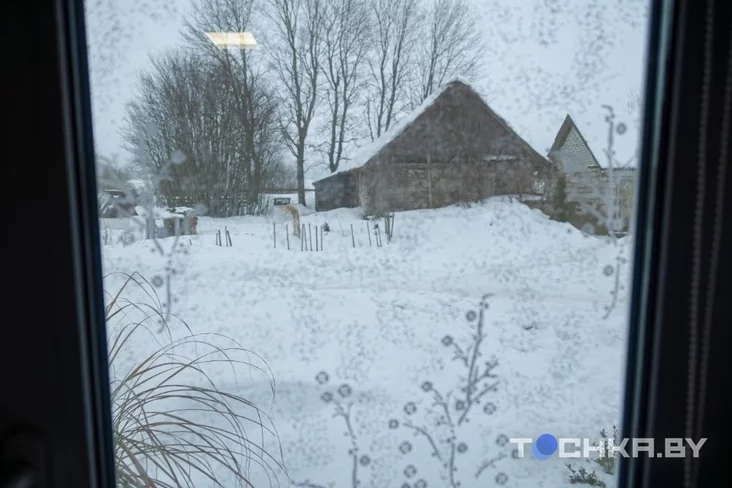
At the same time, the village is not cut off from the world. There is a school in Vishneva: children are brought by bus and taken back.
An outpatient clinic operates, and an ambulance arrives. Mail and deliveries reach directly to the house. Internet is stable.
"There are fewer everyday problems here than it seems. But you can't manage without a car," Andrey is convinced.

By the way, the village house has become a center of attraction for the entire family.
"The elder son lives in Minsk, but comes here whenever possible. He says you can breathe here. The younger ones live with us and go to school here," the man explains.
So why do people move here from the city?
And yet, among the main factors of village life are not just silence and nature.
"There is no stability here in a city dweller's understanding. The harvest can die, demand can disappear. At the same time, there is peace and contentment. Here is a home and land, wonderful, responsive people. So what else do you need?" Andrey says.
After a pause, Alena formulates it even more simply.
"We understood one thing: we are not needed anywhere. Only by ourselves and our family," she summarizes.
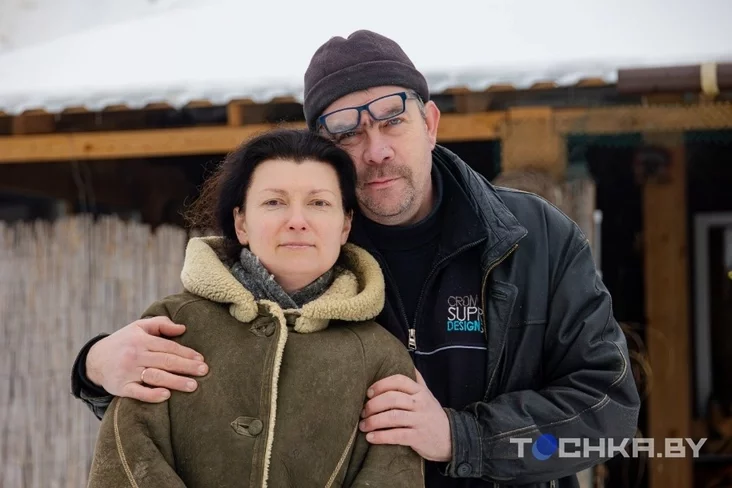
"That's why we live like this. Calmly, even if it's hard sometimes. With a stove, a well, and a ready backup plan for all eventualities. But this is our real life. And we like it," Andrey adds.
It gets dark early in the village. But in this darkness, a few lights remain in the windows — in the homes of people who choose to live on their own land.










In Poznań, a gynecologist removed the uterus and ovaries of a 24-year-old Belarusian woman without her consent. The doctor faces up to 20 years in prison










Comments