


Lukashenka's regime will temporarily become less aggressive towards its neighbors, but strategically will strive to acquire nuclear weapons
Mikalai Buhay analyzes Minsk's latest statements and steps.
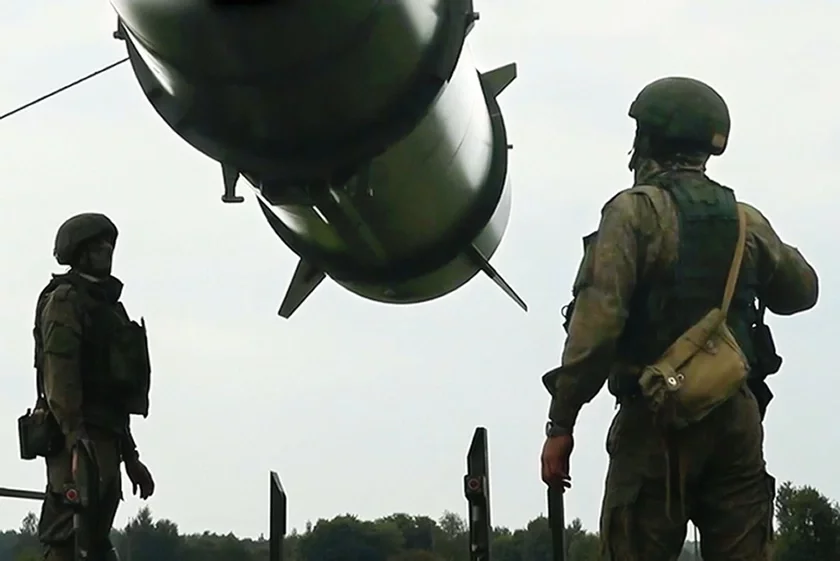
Iskander missile. Photo: Press service of the Russian Ministry of Defense AP Archive
To say that Lukashenka is uncomfortable with the news from Iran, Cuba, and Ukraine is an understatement. Minsk did not fully understand until the very last how to interpret the Trump administration's policy, and hesitated on how to present itself in the new alignment so as not to make a mistake. Following Moscow, Minsk hoped that Washington would still sacrifice Ukraine for the sake of dividing the world into spheres of influence, and that Europe would flinch. Lukashenka engaged in lengthy negotiations with Trump's representatives.
Washington and its allies, while Ukraine ties Russia's hands, are knocking out Moscow's allies one by one. A regime change in Tehran will not only leave Moscow without a flow of weapons but also cut off Russia from the south. Ukraine, meanwhile, holds the front and stoically endured the attempt at a 'Holodomor by cold'.
Minsk is also nervously watching European countries intensely arming themselves and strengthening their security forces. Europeans were exceptionally peaceful — until the attack on Ukraine. Until 2022, they kept their military arsenals minimal, thinking only of economy and culture. But life forced their hand.
People tend to interpret the actions of others according to their own depravity. Thus, Lukashenka's Minsk mistook peacefulness for weakness.
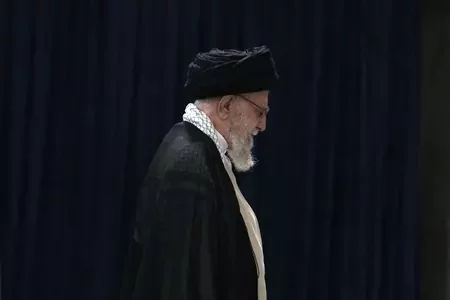
Lukashenka is not threatened by the fate of Maduro and Khamenei, and Astrashytski Haradok is not threatened by American missile strikes, because Belarus is now effectively part of Russia. Americans will not enter a part of Russia.
But the Americans have set new rules of the game, including for "medium-power states." If Americans do this, why can't others do the same?
"The attempt to physically eliminate Iran's leaders, even without a formal declaration of war, indicates the final entrenchment of terrorist practices in the politics of certain states. In this regard, the question arises: if one can do it, why should others limit themselves? And what will humanity ultimately come to?" — asks National Assembly deputy and regime mouthpiece Aliaksandr Shpakouski, essentially repeating the conclusions that the detested Yuval Noah Harari made in February 2022.
Turns out, it can work both ways, who would have thought.
For years, Minsk waged a hybrid war against neighboring states in Russia's interests — at least, it did as much mischief as it could. And now in Minsk, they've realized that a response could come. That Ukraine, Poland, and Lithuania, which until now had simply fenced themselves off from the harmful neighbor, might at some point start responding with force, hybrid or direct. That's why Minsk tucked its tail.

Security forces. Illustrative photo: Ministry of Internal Affairs press service
According to Shpakouski, through whom the security elite speaks, "now only the presence of nuclear weapons and the political will to use them can be a guarantee of sovereignty and security."
Minsk is clearly showing increasing interest in everything related to the nuclear topic. There are reasons to believe that Lukashenka's loyalists would like to have their own nuclear weapons, not just warheads deployed by Russia. Mikalai Statkevich in his recent alarming article, written from the perspective of a professional rocketeer, correctly poses the question: nuclear weapons pose a terrible threat to Belarus.
Aliaksandr Lukashenka's regime will not be able to create nuclear weapons itself, nor will it be able to buy and deliver equipment from North Korea without Russia's consent. Only Moscow can provide Minsk with nuclear weapons — openly or by creating the impression that Belarusians stole it from a Krychaŭ military depot. But is this realistic? I would not rule out such an option, as it would allow Belarus to be thoroughly "North Koreanized," which Moscow has consistently pushed Lukashenka's loyalists towards in recent years.
Now reading


In Poznań, a gynecologist removed the uterus and ovaries of a 24-year-old Belarusian woman without her consent. The doctor faces up to 20 years in prison




















Comments
Дадам: Падабенства лукашэнкаўскай Беларусі да Ірана ў тым, што яна палезла ў спіс ядзерных дзяржаў.
А ЗША такое не падабаецца.
Таму гэты "Арэшнік" (сапраўдны або імаверны-пантовы) можа не павялічваць бяспеку, як думаў Лукашэнка, а памяншаць яе. Ён думаў, што прымусіў сябе паважаць, а насамрэч намаляваў на ілбу мішэнь.
Расея - краіна-загадка, аднойчы можа забыцца і пераключыцца на свае праблемы і смуты. А Лукашэнка застанецца на імгненне адзін, зусім адзін. І тут нечакана мэта 1: Арэшнік, мэта 2: Іскандэры з Паланезамі, мэта 3: рэзідэнцыя.
Побач зь неадэкватнай імпэрскай рашкай Я.З. - гэта галоўны атрыбут незалежнасьці. На жаль, сёньня ў Беларусі вораг-акупант пры ўладзе. І ядзерная зброя ўжо ягоная, і прымяняцца будзе па яго правілах, але адказ будзе на беларускую тэрыторыю.