


We sort trash and give up gasoline cars — but wars rapidly devalue these efforts and set humanity back
While humanity strives to transition to a green economy and slow global warming, military conflicts lead to the opposite results. Here's how current wars harm the environment.
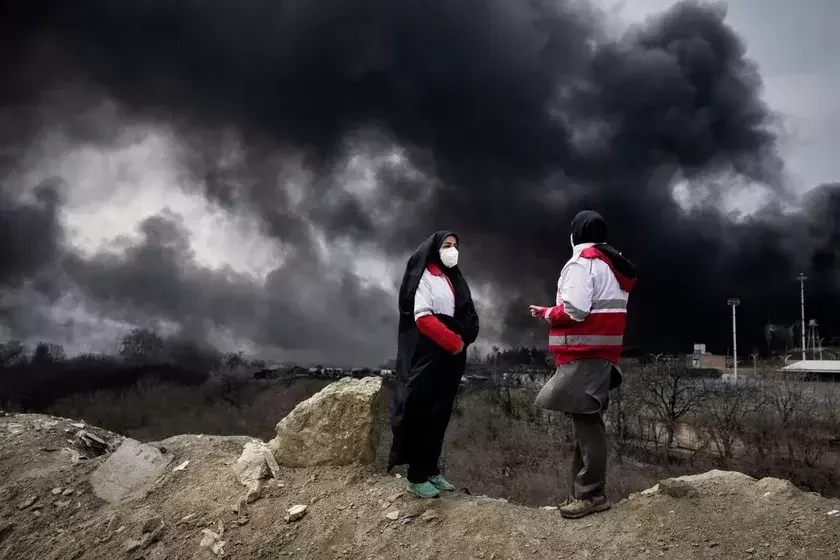
Tehran, March 8. Photo: AP Photo / Vahid Salemi
Current wars are more harmful than older ones
Military actions not only take and cripple lives, destroy infrastructure and the economy. War also has a very strong impact on the environment, nullifying many efforts to reduce harmful emissions.
Ecologist, expert of the "Green Belarus" alliance Uladzislau Shumak notes that the current wars in Ukraine and Iran are more harmful than previous ones.
First of all, this happens due to attacks on oil depots and refineries.

Photo: screenshot from video
«As a result of fires, a huge amount of combustion products enters the environment. In Iran, because of this, the sky was black even during the day. When oil or oil products are burned, not only carbon dioxide, which is considered more or less chemically neutral, although it affects climate change, but also other very harmful combustion products enter the air.
These are soot particles, sulfur and nitrogen oxides, which, when mixed with water and moisture, produce acid rain. In addition, a huge number of other volatile organic compounds appear. These include benzopyrenes with carcinogenic effects, and heavy metals: mercury, vanadium," says the ecologist.
Problem over thousands of kilometers
Uladzislau Shumak notes that these dangerous substances are already being incorporated into air currents in the lower layer of the atmosphere, allowing them to spread over thousands of kilometers.
All of this poses great risks to human health: not only those living in close proximity to the fires, but also those who fall into these air currents.
«This is irritation of the respiratory system and a direct impact on the cardiovascular system, as well as the accumulation of carcinogens in the body with long-term health consequences. It was the attacks on Iranian oil storage facilities that showed that a huge amount of soot is released into the air. Soot particles are chemically neutral, but they accumulate in the atmosphere and heat it up.
Currently, the air from Iran is moving towards the Central Asian mountain ranges, covered with ice, so soot can settle on them and contribute to the melting of ice."
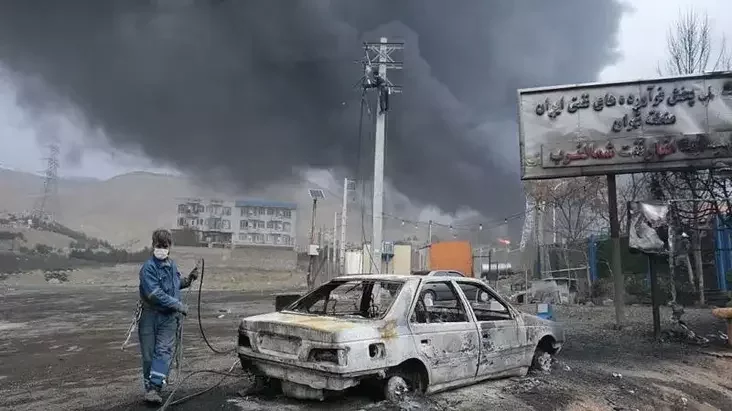
Photo: Getty Images
Therefore, these emissions have a strong not only local, but also regional effect. Combustion products are washed out of the atmosphere by rains, which is why real acid rains have fallen in various cities of Iran.
It should also be noted that during the war in Iran, fires also occur in other countries in the region. For example, as a result of strikes from Iran, refineries in Bahrain and Saudi Arabia burned recently.
How much war pollutes air and water
Speaking about the war in Ukraine, over four years of military action, greenhouse gas emissions are estimated at 311 million tons equivalent. This is roughly the same amount that all of France produces in a year. And it's almost 10% of the total emissions of all 27 EU countries in a year.
«Therefore, when we say that we care about reducing negative environmental impact, reducing our carbon footprint, war, in a sense, nullifies these efforts.
Thanks to the introduction of the European "Green Deal," the EU managed to reduce carbon dioxide emissions by 58 million tons equivalent in 2024. At the same time, military emissions in Ukraine increased by approximately 80 million tons," the expert points out.

Illustrative image. Photo: AP
It is important to understand that this statistic includes data exclusively for Ukraine. It does not account for emissions from military actions taking place on the territory of Russia, where oil depots regularly burn.
Earlier, Lyudmyla Tsyhanok (Ukraine), president of the International Association of Professional Ecologists, noted that one fire at an oil depot pollutes the atmosphere as much as all of Kyiv's transport in a month.
War also brings toxic environmental destruction through various dangerous and carcinogenic emissions.
«Water and soil pollution will have a much greater long-term impact on the environment than greenhouse gas emissions," says Shumak.
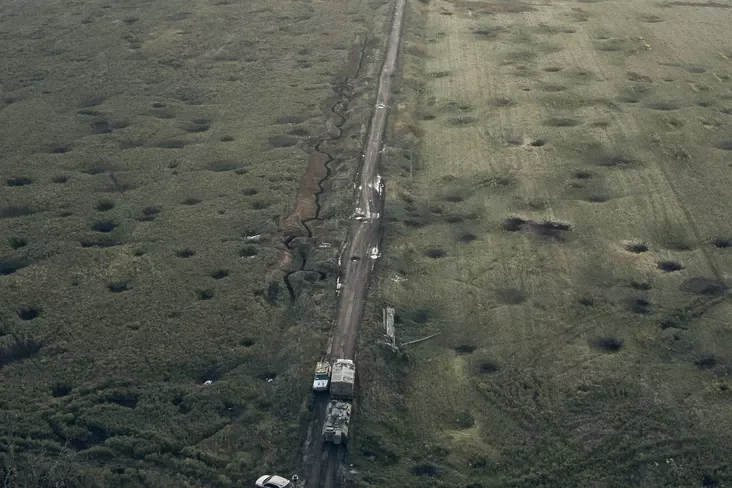
Photo: Konstiantyn Liberov / Associated Press
Water pollution has a wide regional footprint. For example, the entire Black Sea suffers from the war in Ukraine, and the Persian Gulf from the war in Iran.
In addition to direct environmental damage, military actions also bring indirect harm, as money that could be directed to reducing the carbon footprint goes to armaments. "For example, Poland begins to actively spend money on defense systems, and funds that could have gone to replace solid fuel boilers went to build fortifications on the border and armaments. And so, in essence, it happens in any country," adds the expert.
Therefore, large-scale modern wars, in environmental terms, set humanity back years, nullifying previous achievements in reducing environmental harm.
And no matter how hard people and countries try to influence climate change, reduce their carbon footprint by reducing greenhouse gas emissions or sorting trash — one or two major military conflicts do their bad work. And the new arms race caused by these conflicts only reinforces this negative effect.
Now reading






Babaryka to prison guards: "I had it, now I don't, but there's a chance I will. And you never had it, don't have it, and never will. And neither will your children"

Babaryka to prison guards: "I had it, now I don't, but there's a chance I will. And you never had it, don't have it, and never will. And neither will your children"



Babaryka revealed why he didn't seek support from Russia before the elections. And how they tried to fire him from Belgazprombank for the slogan "Long Live Belarus!"













Comments