


A record $300,000 raised in two days for Ksyusha from Mogilev's life-saving injection. Her mother gave her up to an orphanage, but strangers are fighting for the child's life
Such fundraising speed has never been seen in Belarus, and it's not about large donations, but thousands of small transfers. But the fundraising continues, as the cost of the necessary injection is $1.8 million.

Ksyusha Maiseenka is three and a half years old. She is a little girl from Mogilev, with big eyes and light hair. In 2024, Ksyusha was diagnosed with type two spinal muscular atrophy (SMA). This is a rare genetic disease in which neurons responsible for movement gradually die. Muscles become progressively weaker. The child loses strength, first in the arms and legs, then it becomes difficult to sit, hold her head, swallow food, breathe. And then death.
There are medicines in the world that can stop the disease. This is Zolgensma gene therapy, perhaps the most expensive medicine in the world. The child is cured literally with one injection. The problem is that its cost is about $1.8 million. And the Belarusian state is not yet ready to include saving children with SMA in the free medicine program.
The girl who has no one to knock on all doors for
In most similar stories, parents fight for the child's life: they launch fundraisers, create social media pages, look for bloggers, organize events.
Ksyusha's peculiarity is that she lives in a Mogilev orphanage. Her father died. And her mother couldn't cope with the burden of the situation and gave the girl to a state institution.
There's no help to expect from her parents, but other people are fighting for Ksyusha. A community of volunteers quickly formed around Ksyusha. They created chats, groups, and pages on social networks where they coordinate help.
It's not just about fundraising. Someone helps with spreading information. Someone looks for funds and organizations. Someone is ready to write letters to companies. Someone offers to organize charity events.
New ideas constantly appear in the chats. For example, a charity event is planned in a pizzeria in Polotsk on March 14: part of the money from pizza sales will go to help Ksyusha.
Others suggest doing a challenge on social networks, for example, giving up coffee, sweets, or certain purchases for a few weeks, and transferring the saved money to the fundraiser.
Someone makes videos for social networks, including in English.
Ksyusha, naturally, does not yet understand what is happening around her and why thousands of people are discussing her story in chats and trying to find a way to help. But these days it's really hard to open Belarusian TikTok or Instagram and not come across a repost of information about the girl.
$300,000 in two days
Approximately $299,253 was raised in the last two days. For Belarusian charity campaigns, this is an unusually high speed. There have been no analogues of such an informational — and monetary — avalanche yet.
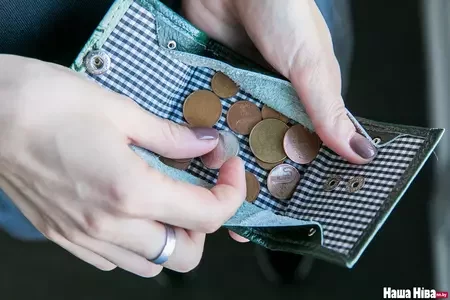
It is noteworthy that these are not large donations, but thousands of small transfers: 5-10-20 rubles or dollars. In the comments, people often write: "Sorry it's not much."
Nevertheless, from these "small" transfers, $335,000 has already been collected.
The fundraiser is supported not only by Belarusians. In the comments, you can see people from the European Union, USA, Kazakhstan, Russia.

Why the injection costs almost two million
Zolgensma is not an ordinary medicine. It is gene therapy that works at the DNA level.
With SMA, the SMN1 gene, which is responsible for producing the protein necessary for the life of motor neurons, does not work in a person. The drug delivers a copy of the healthy gene to the cells, and the body begins to produce the necessary protein. In fact, it is an attempt to correct a genetic error. The injection is given only once in a lifetime.
The cost of such treatment is so high because it was developed for decades, production is very complex, and the drug is intended for very rare diseases. Pharmaceutical companies want to recoup the money spent and currently do not offer discounts even for such exceptional cases.
Almost no time left
In Belarus, this injection can only be given while the child weighs up to 13.5 kilograms. Ksyusha currently weighs about 12.9 kg. This means that less and less time remains. That is why the fundraiser is called ultra-urgent.
Initially, treatment in Dubai was considered, but now it is almost impossible: due to the tense situation there, some patients were even forced to return home prematurely.
Therefore, doctors plan to administer the injection in Minsk — if the money can be raised.
Why the fundraiser goes to the mother's accounts
Many people wonder why the fundraiser goes to the mother's accounts if Ksyusha lives in an orphanage. The reason is the law. The girl's mother has not been deprived of parental rights, and although she gave up her daughter, she legally remains the child's sole legal representative.
State institutions, orphanages, or guardianship authorities do not have the right to open accounts for multi-million dollar fundraisers for gene therapy. By law, only a legal representative can do this.
If we wait for court proceedings and the appointment of a new guardian, it could take months. And Ksyusha simply won't have time to receive the injection.
To eliminate risks, volunteers organized a control system: they receive bank statements, publish daily reports, and all money after the fundraiser will be transferred to the clinic or the drug manufacturer.
The fundraiser continues, and each of us can help.
Details for assistance
MTS (balance top-up): +375292375886
Belarusbank:
BYN: BY21 AKBB 3134 0000 0237 7007 0000
USD: BY45 AKBB 3134 1000 0149 9007 0000
EUR: BY03 AKBB 3134 2000 0128 5007 0000
RUB: BY46 AKBB 3134 3000 0142 1007 0000


















Comments
Сорамна за рэжым, які эканоміць , на такіх дзецях. Лепей за любы флагшток, лекі для дзяцей.