


India conducts a unique experiment — paying millions of homemakers for their housework
The payments range from $12-30 – modest sums, making up approximately 5-12% of household income, but regular. And what's the result?
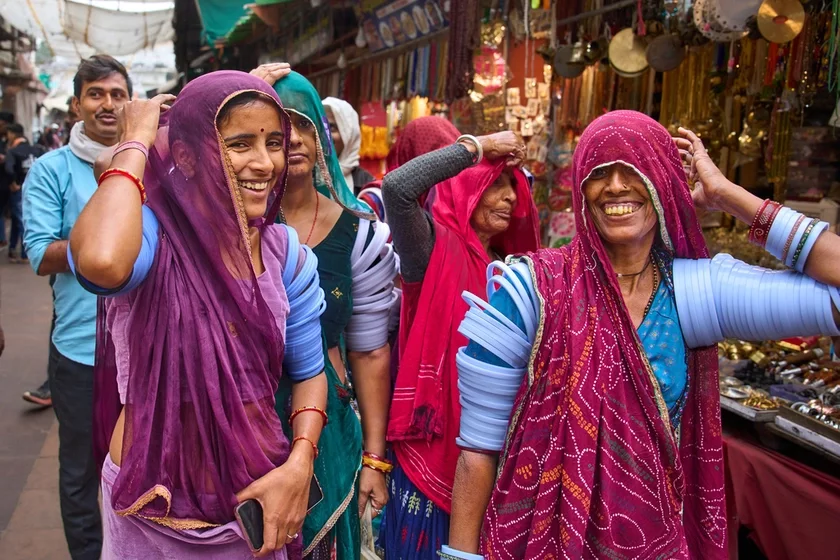
Illustrative photo: AP Photo/Rajesh Kumar Singh
The BBC reports on the experiment in India.
In a village in the central Indian state of Madhya Pradesh, homemaker Premila Bhalavi receives a small but stable sum each month. This cannot be called a salary, as she does not have official employment; rather, it is an unusual government aid.
One and a half thousand rupees ($16) is a small sum, but, according to the woman, it is enough to buy medicines, vegetables, and pay her son's school fees. In a broader sense, this aid is of immense importance: a predictable income, a sense of control over her life, and a feeling of independence – all these aspects of a woman's life are hard to overestimate, says Premila.
There are more and more women like Premila. Across India, 118 million women in 12 states are already receiving similar payments. Thus, India is conducting one of the largest social experiments in the world.
India, which has long provided subsidies for grain, fuel, and agricultural products, has unexpectedly gone further: it pays women of a certain age simply for maintaining a household, bearing the main burden of unpaid family care, and constituting an electorate too large to ignore.
The criteria for selecting recipients vary – age thresholds, income limits, exclusions for families with civil servants, taxpayers, or owners of cars and large land plots.
"Such cash payments signify a significant expansion of the social welfare systems of Indian states in favor of women," Prabha Kotiswaran, Professor of Law and Social Justice at King's College London, told the BBC.
The size of payments varies from one thousand to two and a half thousand rupees per month ($12-30) — modest sums, constituting approximately 5-12% of household income, but regular.
Since 300 million women now have bank accounts, the transfer process has become simple and fast.
Women usually spend this money on family and household needs — children's education, groceries, cooking gas, medical and emergency expenses, repayment of small debts, and occasional personal purchases such as gold or small treats to please themselves.
What distinguishes India from Mexico, Brazil, or Indonesia — countries with large-scale social payment programs — is the absence of any conditions: money comes regardless of whether a child attends school or on which side of the poverty line the family is.
Goa became the first Indian state to launch an unconditional cash transfer program for women back in 2013. But the real growth of this phenomenon began shortly before the 2020 pandemic, when the northeastern state of Assam introduced a payment scheme for socially vulnerable women. Since then, such programs have turned into a powerful political lever.
The latest wave of unconditional payments is aimed at adult women, and some states categorize their unpaid housework and family care as a separate form of employment. In Tamil Nadu, a state in southern India, such payments are called "rights grants," and in West Bengal, the contribution of women homemakers to public life is also officially recognized in the state's statutes.
In other states, this recognition is less formal: legislators assume that women will spend the money on family and household needs.
Such a step towards recognizing the economic role of women has become a tool in India's political struggle. In 2021, during local elections, actor and politician Kamal Haasan promised "wages for homemakers." And although his new party lost then, by 2024, promises of cash payments to women helped other political parties win victories in the states of Maharashtra, Jharkhand, Odisha, Haryana, and Andhra Pradesh.
In the recent Bihar elections, the political impact of cash payments was particularly evident. A few weeks before the vote in the country's poorest state, authorities transferred 10,000 rupees ($112) to 7.5 million women's bank accounts as part of an employment support program. More women than men turned up at the polling stations then, and it was they who decisively determined the outcome of the elections.
Critics called it outright "vote buying," but the result is clear: women helped the coalition led by the Bharatiya Janata Party (BJP) secure a convincing victory.
However, Bihar is just one element of a much larger picture. Across India, tens of millions of women regularly receive unconditional cash payments.
Maharashtra alone promises to cover 25 million women, and Odisha's scheme covers 71% of its female electorate.
Voter bribery?
In some expert circles, such programs are called populist "handouts" for voter bribery. They indeed create significant pressure on budgets: 12 states are set to spend about $18 billion on such payments in the current fiscal year.
According to a report by the PRS Legislative Research think tank, half of these states face revenue deficits — meaning they are forced to borrow money to cover current expenses without creating any assets.
But many believe that the popularity of such payments indicates a slow recognition of what Indian feminists have been saying for decades: the economic value of unpaid household labor.
According to the latest Time Use Survey data, in 2024, women in India spent almost five hours a day on such work — 7.6 times more than men. This disproportion largely explains the consistently low percentage of women employed in the labor market.
Data is still scarce, but some conclusions are already emerging. A 2025 study in Maharashtra showed that 30% of women eligible for payment did not register with the relevant department — sometimes due to document issues, sometimes because they considered themselves self-sufficient.
Among those who did register, almost all managed their own bank accounts.
A 2023 survey in West Bengal showed that 90% of women managed their bank accounts independently, and 86% decided themselves how to spend the money. Most used the payments for food, children's education, and medical expenses — this hardly changed life radically, but the regularity of payments provided a sense of stability and control.
More detailed studies conducted by Professor Kotiswaran and her colleagues show a mixed picture.
In Assam, most women spent the money on necessities. Many said that the sense of dignity this support gave them was very valuable, but almost no one linked it to the recognition of unpaid work, and most would still prefer paid employment.
In Tamil Nadu, women spoke of peace of mind, a reduction in family conflicts, and a newfound self-confidence. For them, the payments bring not only material but also emotional benefits.
In Karnataka, recipients said they were eating better, had more influence in household decisions, and would like an increase in payments.
At the same time, only a small fraction of women perceive these programs as compensation for unpaid family care work. The message embedded in the initiative by the state simply did not reach them.
Nevertheless, almost all noted that the money gave them the ability to question politicians and cope with emergencies.
In all studies, most women had full control over the payments.
Great Benefit
"The data shows that such cash payments are extremely beneficial for women. They allow them to meet their own primary needs and those of their families. They also restore dignity to women who would otherwise be financially dependent on their husbands for literally every small expense," says Professor Kotiswaran.
Importantly, none of the studies found evidence that these payments discourage women from seeking paid employment or reinforce traditional gender roles. These two points are what feminists fear most, according to a report prepared by Prabha Kotiswaran in collaboration with Gail Andrew and Madhusree Jana.
The researchers also found that the payments do not reduce the amount of unpaid housework done by women. But they do strengthen their financial independence and, to a moderate extent, their bargaining position within the family.
Scientists concluded that unconditional payments to homemakers are a useful but limited tool in a patriarchal society where money alone cannot eliminate structural inequality.
Now reading













Babaryka and Kalesnikava Spoke with Inga Ruginienė and Called on Lithuania "to Join US Diplomatic Efforts" and "Not to Miss the Window of Opportunity"











Comments
біялагічнай мэтазгоднасці.
калі грошай няшмат - іх трэба накіраваць на жанчын і дзяцей.
Старыя і хворыя, гэта ад залішкаў.