


The European Parliament approved the EU countries' decision to completely stop purchasing Russian gas from November 1, 2027. This step is a response to the Kremlin's so-called gas war, which led to Europe's biggest energy crisis since Russia's invasion of Ukraine. The next stage is expected to be a full embargo on Russian oil, writes the BBC.
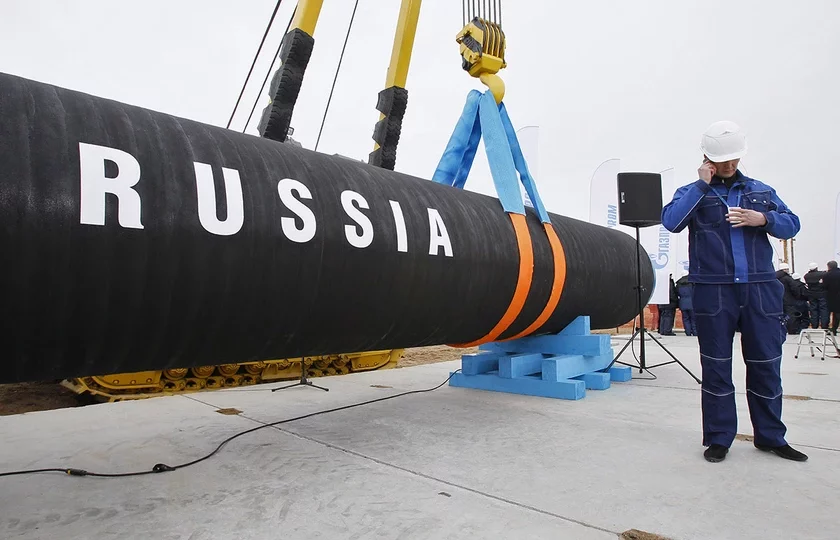
Photo: Dmitry Lovetsky / AP
500 deputies voted in favor of the new law, while 120 voted against. The document allows for a gas embargo to be introduced by a qualified majority decision, rather than unanimously, as was previously the case. This makes it possible to bypass the veto of countries like Hungary and Slovakia, which are reluctant to give up cheap gas supplies from Russia.
According to Finnish MEP Ville Niinistö, this is a historic moment, as the European Union is taking a major step towards energy independence and depriving Russia of the ability to use energy resources as a means of pressure.
Before the war, Russia supplied about 40% of the EU's gas needs. This share has now decreased to 13%. Some pipeline gas still flows through Turkey to Hungary and Slovakia, while liquefied gas goes to other EU countries. However, the EU plans to stop importing liquefied gas even earlier — from January 1, 2027.
According to European Commission estimates, the embargo will deprive Russia of approximately 10 billion euros in annual revenue. Currently, the EU pays Russia about 1.5 billion euros per month for energy resources, whereas before the war, this amount reached 12 billion. Brussels' goal is to reduce it to zero.
To achieve this, it is also necessary to stop importing Russian oil products. Although the EU barely buys crude oil, it has not yet completely stopped importing its refined products. Currently, about 90% of pre-war supplies of Russian oil and petroleum products are under sanctions.
The European Parliament insists that the European Commission submit concrete proposals for the introduction of an oil embargo by early 2026. Experts note that the EU could act more quickly and strictly, but even in its current form, the new law is considered a significant achievement, as it strengthens pan-European control over sanctions policy and limits the possibilities for individual countries to block it.
Now reading





General Staff analyst who drew the map "from where the attack was being prepared" ended up in the KGB pre-trial detention center for working for Ukrainian intelligence




















Comments
100500-я ілюстрацыя, што спадзявацца трэба ў першую чаргу на сябе, на такую Еўропу надзеі мала.