


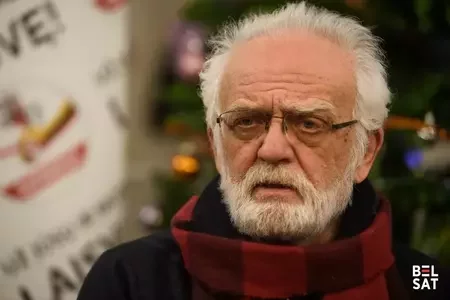
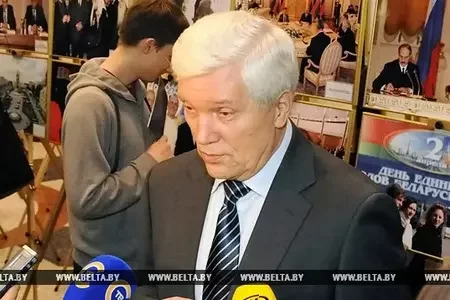
Ivan Kravtsov wrote a scientific article about love, in which he shared his own experience
The Secretary of the Coordination Council reflected on romantic relationships.

Ivan Kravtsov
Ivan reflects on why modern romantic relationships are often experienced as disappointment and loss. He argues that "love" is often understood not as a real connection between two people, but as a system of expectations and projections formed by past experience — primarily family and childhood.
And with the help of a partner, people often try to fill some "holes" in their lives — as it's commonly said, "to become one whole." This is precisely what the "soulmate" concept is built upon.
Kravtsov admits that he often copied his family's model in relationships: "The essence of my father's and my mother's relationship was that my father molded her according to a law, adjusted her to his likeness, and demanded submission. Where this law came from for him is a separate question. But with such a transference, I idealized the presumed partner as good material for work and at the same time had a desire to extend my own father's life, because I myself love him, obey his law, and try to share this burden, this weight, with someone."
Such relationships ended in disappointment, because at some point Ivan realized he was not living his own life.
He also had women who did not obey the rules of that game: "Such partners began to be perceived as those who possessed knowledge about me, about what I wanted, as bearers of the law's function, as those who filled my life with meaning and made me alive. But the truth is, it was just a mirror."
Sometimes Ivan would begin to suffer so that a partner would return and pay attention, or he would try to earn approval: "This perfectly corresponded to my relationship with my father. But here too, the transference quickly collapsed, because its realization essentially implied a romantic relationship with myself."
The main question Kravtsov asks in the text is: are we ready for relationships in which no one will rescue anyone? His hypothesis, based on his own experience, is that such relationships are possible if there are no expectations or demands from the other person.
Ivan recounts that he had such a relationship: "It was simply comfortable and good for us together. We traveled, and each had their own life, their own plans. And interestingly, it worked quite long."
The man considered this more of a friendship than a romantic relationship. And yet he still dreamed of love, the essence of which was precisely the same transference described in books. Now, however, he realized that he actually wanted to replay his childish, infantile situation again and again.
He is confident that people will not be able to completely get rid of transferences, but it is possible to do without the expectation that a partner should provide or rescue.
"And only then does a chance appear, remaining a person with a lack, to see the real other — one who will never match our expectations and will not cover our lack, but will expand the space of our life, rather than narrowing it by focusing on ourselves. Not to turn relationships into a repetition of what has already been lived, but to add something new — simply by being present," writes the Secretary of the Coordination Council.
-
«Fined 3600 Rubles.» A guy she dated and caught cheating filed a political denunciation against a Belarusian woman
-
When visiting China, be careful with sex. You might be filmed by a hidden camera
-
Author of 'Divine Zurab' Advertises Her Friend's Son from the USA: 'Hardworking, Not Spoiled, Own Business, Own House'





















Comments