


Young Zhоdzin family tells how they cut food expenses by four times
23-year-old Nadzeya Yakubenka and her 24-year-old husband Ulad live in Zhodzin. Both work in public catering: the girl is a chef at a local park-hotel, the guy is a pizza maker in a store. Not long ago, they spent 1200-1400 rubles a month on food. They couldn't save for anything. This continued until Nadzeya proposed an experiment: to review their food expenses and start saving for their own housing. Tochka.by found out from the girl how difficult it is to limit oneself, what can be bought for 300 rubles, and what habits help to stay within budget.

All photos: Pavel Rusak / Tochka.by
Grocery shopping as a quest
We meet Nadzeya at a store near her home. The girl confidently navigates between the shelves — without accidental stops near the sweets section.
The basket contains only what was previously noted on the phone.
The heroine calls grocery shopping a quest: to find what you need at the "sweetest" price.
She knows which store is best for buying eggs and where to go for pollock. If the desired promotional item is not available, Nadzeya calmly leaves empty-handed.

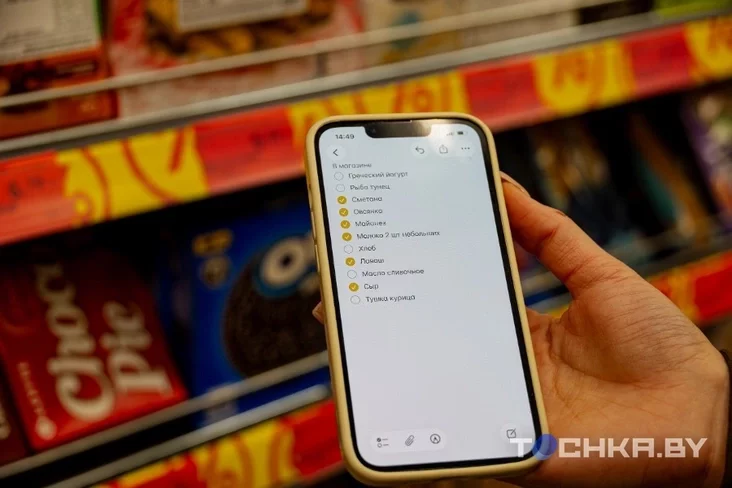
"Before, I was embarrassed to walk around the store and buy nothing. It seemed like people were looking at me strangely. Now I can calmly take nothing. It's like stepping out of your comfort zone," the girl says.
The young family has been living by new rules since January.
The reason is simple — fatigue from the feeling that money was "slipping through their fingers."
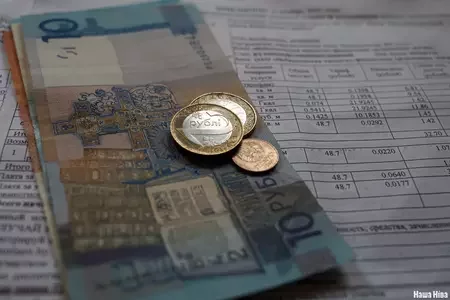
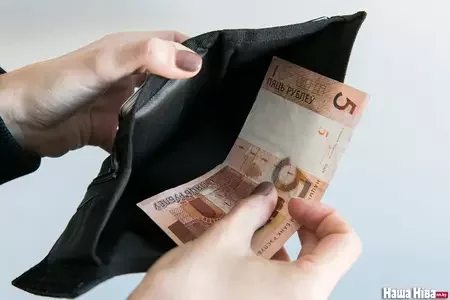
The couple's total income is about 4000 rubles a month.
"I analyzed all our expenses. We were spending 1200 rubles on food, sometimes even 1400 rubles. And we just lost it. We went to the store, bought groceries for 60 rubles - and realized that this was enough for a week. We multiplied it by four - that made 240 rubles a month. We decided to try," Nadzeya recalls.
Before this, the couple often bought ready-made food at the store or something tasty for the evening, ordered delivery, or went to cafes.
"On a Friday, we could buy beer, squid, dried striped fish, chips. And pay 50-60 rubles for that. Essentially, food for one evening. And now, with the same money, we eat for a week," Nadzeya says.
However, after a month, the budget was increased by another 60 rubles — they added dried fruits, nuts, and greens.
Diet for 300 rubles a month
They decided to kill two birds with one stone with the experiment: save money and make their diet healthier. Previously, according to Nadzeya, they ate "junk food."
Before the monthly shopping, the spouses make a list of basic products. The base is chicken, frozen fish, cereals, pasta, dairy products, seasonal vegetables, canned tuna, offal (Nadzeya's favorites are chicken hearts), bread, tea.
"We removed meat deli products, ready-made pastries, snacks, soda. If it's not at home - there's no temptation," the interviewee explains.
They only buy whole chickens — it's more cost-effective. And here the couple demonstrates their culinary professionalism: one carcass provides at least five full meals for two. Soup, stewed drumsticks or wings with potatoes, minced chicken cutlets from the breast, omelet with fillet, lavash with meat.


"If you look at the price per kilogram, a whole carcass costs about 6 rubles, while fillet is about 14 rubles. I cut it into parts: drumsticks, wings, thighs... Bones and skin for broth. The meat then goes into lavash instead of sausage. There's almost no waste," the chef shares culinary life hacks.
Nadzeya mostly cooks for the family. More often — for the next day, so that food is already waiting at home after work and there's no desire to order delivery. Cooking takes from one to three hours. The girl doesn't plan the menu for the week — she opens the fridge and improvises.
"I mostly stew everything. We hardly use vegetable oil — only butter. I used to buy ghee, but it's still expensive. I make all kinds of side dishes: green and regular buckwheat, bulgur. As for meat — mostly chicken. But now we've brought a boar from the village, we also get lard or 'finger-stuffed' sausage there," the interviewee says.
Nadzeya's parents live in the village. They help with produce from their garden. The girl understands: without this, the experiment's budget would have to be increased by approximately 150-200 rubles.
There are always supplies at home — cereals, meat. The refrigerator is never empty. At the same time, Nadzeya adheres to the principle: food should not be thrown away.

"This is, of course, already professional: I carefully monitor expiration dates. If I see that cottage cheese will spoil soon, I make cheesecakes," she says.
Nadzeya admits that she loves sweets: "eating a kilogram of marshmallows at once is easier than easy." But now the girl also bakes desserts at home.
For example, a cake, according to her, turns out to be about three times cheaper than in a cafe.
Rules of economy
The spouses buy only what they actually eat. They don't buy items just because they are on sale, and they don't chase brands.
Some products are ordered through delivery from large chains. Nadzeya regularly compares prices with offline stores and assures that basic items cost the same or less there. Plus, it saves time and reduces temptations to put extra items in the basket.
The family actively uses loyalty cards and bank bonuses.
The main shopping is done once a month, and once a week they add perishable products — for example, yogurt.
"Last time, the most expensive item was a pepper mix — 100 rubles per kilogram. That's if you calculate by kilograms. And if by the total in the check, then chicken — 5.5 kg for 35 rubles," says Nadzeya.
According to her, the new eating regimen is easy for her, but more difficult for her husband.
"He dreams of a sausage sandwich washed down with soda. He might say: I'll go out now, buy a shawarma on the way, and eat it in secret. But then he laughs: well, it's a joke, I like that we have money now. Before, he constantly said: there's no money, it's unclear where it goes. Now this motivates him," the interviewee shares.
Envelope system
Currently, food accounts for 5-10% of the family's income. The couple saves more than half. The goal of the entire experiment is to resolve the housing issue faster. For now, the family lives in a dormitory-style apartment provided by Nadzeya's work.
"We joined 'Housing Balance'. Now every month we have to pay as much as we used to spend on food. But we want to pay more, so that we pay it all off not in ten years, but in five," the girl calculates.
On payday, money is immediately allocated. First, mandatory payments: loans, utilities, savings account for the apartment. The couple divides these expenses between themselves, and their remaining budget is separate.


Nadzeya has an envelope system: "Gifts", "Health", "Vacation", "Emergency Fund", "Clothes".
There's even a separate category — for cat food. 100 rubles a month goes to Molly — the owner emphasizes that they don't save on their pet.
"For gifts — 10%, emergency fund — also 10%, for health (I'm currently treating my teeth) — another 10%. For clothes — a little less. But generally, I can transfer money from one category to another," the girl explains.
After such allocation, there is no free money left.
"I'm also saving for an iPhone, and my husband for his driver's license. But we still try to make each other happy. For New Year's, I gave him Marshall headphones, which he dreamed of, and he gave me a leather bag," Nadzeya says.
Over the past year, the girl quit smoking. Previously, this habit cost about 200 rubles monthly. Nadzeya also gave up alcohol and focused on her health. She says the changes affected more than just finances.
"What I like most about this experiment is that I'm in control of my life. Before, I felt like I was just drifting: work - home. Now there's a goal. It's very energizing," the heroine says.
TikTok and hate
Nadzeya shares her experiment on TikTok. The girl completed blogging courses and is remotely pursuing higher education in "internet marketing."
"The first videos that 'went viral' for us were about how we went to get in the state queue for housing. We were something like 6800th there. We realized that we were unlikely to get anything that way, we needed to look for another method," the interviewee says.
The subscribers' reaction varies: from support to skepticism. Some don't believe the couple eats on 300 rubles, others call the girl "shameless" for taking food from her parents.
"Some even write: why are you showing this, now they'll cut all our salaries," Nadzeya says.


Advice to "earn more" doesn't bother her.
"At the moment, my salary is the maximum I can get in Zhodzin. And, as the experiment shows, you can save even with this amount," Nadzeya believes.
According to her, even if their income increases, the spouses do not yet plan to increase food expenses. It's better to save more.
Now Nadzeya and Ulad are confident: they will endure as long as necessary. The main thing is that it's clear what all this is for. As long as there is a goal and mutual support, this regimen is within their power.
Now reading










Working in Poland or Lithuania? Support "Nasha Niva" — it's completely free for you, and we will be able to do more for Belarus and Belarusian culture!

Working in Poland or Lithuania? Support "Nasha Niva" — it's completely free for you, and we will be able to do more for Belarus and Belarusian culture!


Which intelligence service had the best information from Belarus in February 2022 and who told Budanov that the main Russian strike would be on Hostomel. A major publication has appeared


















Comments
Кожны год чэк на адны і тыя ж прадукты здзіўляе і кошык спажыўца вельмі зменьшваецца.
Адсюль і дэвальвацыя кожныя 5-10 год ў лукашызму.
Грошы лепш купіць ў валюце.
За кватэру лепш раней не плаціць. Інфляцыя робіць пакупку таней.
Не вядома навогул што будзе з гэтым жыллем пры лукашызму і Масковіі якія толькі і робяць вайну за вайною.
А так жадаю пары посьпехаў і шчасця ў жыцці. Перажыць лукашызм і пуцініз з масковіяй.
Замест дарагой кавы бясплатны цыкорый збіраю ў палях увосень. Замест дарагой гарбаты - ферментаваны скрыпень - збіраю ў палях у сярэдзіне лета. Маладая ігліца замест дарагога авакада. Адзенне на секондзе на вагу. Бяру некалькі лёгкіх рэчаў замест адной цяжкай. Прынцып шматслойнасці. Некалькі элементаў адзення грэюць лепш за адну рэч.
Не працую, бо няма сэнсу марнаваць час на працу, калі ўсё бясплатна. Або амаль бясплатна.
Згодны з аўтарам эсэ, што людзей падманваюць вялікімі дозамі цукру і раблю паслухмянымі рабамі.