


"People need warmth." How a Warsaw shelter welcomes Belarusian ex-political prisoners
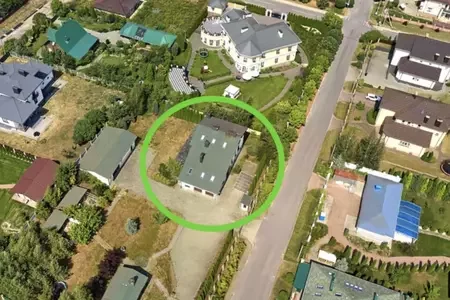
Hanna Fiadaronak is the co-founder of the "Prytuli Myane" (Shelter Me) foundation. Together with administrator Alesia, they manage the shelter, which has been operating for almost four years in one of Warsaw's residential areas. The woman told and showed Euroradio journalist Taras Tarnalitsky how the institution works on the day its new residents move in.
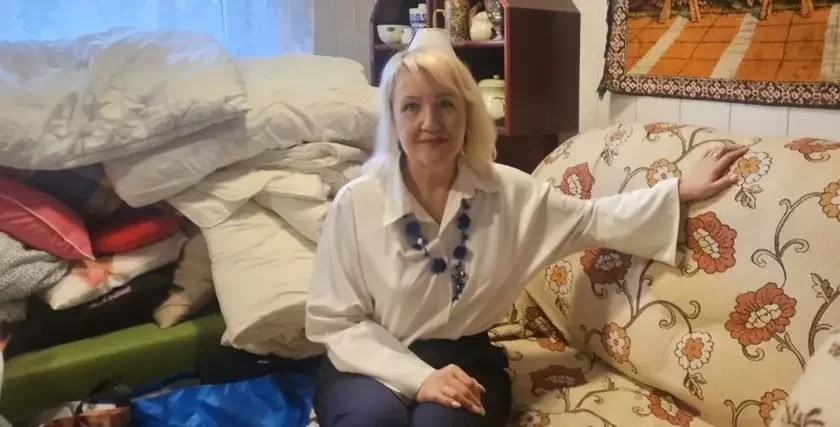
Hanna Fiadaronak at the "Prytuli Myane" shelter. Photo: Euroradio
"Don't mind the chaos, it's like a war zone here," the woman apologizes with a laugh, whose home the journalist visited in the middle of Sunday. The conversation room indeed resembles a warehouse: pillows, blankets, linen, but there's no need to apologize — the house's occupants are preparing for the arrival of political prisoners who came to Warsaw from Ukraine after the major release on December 13.
"I've gotten used to this rhythm"
"Our shelter is not a hostel; people live here for free. We have a rule: two months of free accommodation. This time is usually enough for a person to apply for legalization, get the necessary documents, find a job, and their first housing. We accommodate three people per room to ensure comfort, as it's crucial for them to experience humane conditions after prison bunks. We can accommodate a maximum of 18 people, as we only have two bathrooms and one shared kitchen."

Hanna Fiadaronak in one of the shelter's rooms. Photo: Euroradio
The shelter building has its own history: initially, it housed the "Country for Life" foundation, and when the war started, our first residents were mothers with children from Ukraine. Later, Belarusians fleeing Ukraine passed through us, and since late 2023, we have completely focused on Belarusian political prisoners and those leaving due to repression.
Maintaining such a house costs a huge amount of money. Rent is 12,000 zlotys (about 3,000 dollars) per month, not including enormous utility bills. We are very fortunate that we are currently supported by the International Humanitarian Fund (IHF), which has provided funding for a year in advance. However, space is still limited, and we have already met with the Warsaw city hall, requesting a larger building. They promised to consider this issue, but only in 2026.
As for me personally, I work as a volunteer at the foundation. To earn money for living, I work as a cleaner in offices after my main work at the shelter. It's physically demanding, but I've gotten used to this rhythm.
I understand these people well because I went through the same thing myself. In early 2021, I fled Belarus in the middle of the night, brought out by Vitebsk human rights defenders. I had nothing with me: no socks, no change of clothes. I lived in a hostel in Kyiv on bunk beds, six people to a room. In 2020, I myself was "detained for days," and those days were enough for me to understand what it's like to be behind bars.
In my opinion, as long as Lukashenka doesn't stop trading people, our work will be needed. He still has about seven million "goods" left in Belarus, and with such maniacs, one can only speak from a position of strength.
"Wartime regime" during the arrival of political prisoners
"When it became clear that people would be coming and needed to be met, my administrator Alesia and I were in Vilnius [at the awards ceremony] by personal invitation from Sviatlana Tsikhanouskaya. Veronika Stankevich from the 'Volnyja' (Free Ones) organization wrote to us: 'Girls, come,' because we needed to prepare for the settlement."

One of the shelter's rooms for ex-political prisoners. Photo: Euroradio
We returned late on Thursday evening, and since then, we've been working in a "wartime regime" for three days straight. Someone always lives in the shelter, so we had to urgently free up space: we asked those whose two-month stay was ending to leave. We only kept a family with a three-year-old child and three guys who recently got out after four years in a penal colony.
This release was not a surprise to us — we expected and anticipated it. Now, all human rights organizations are working very smoothly: some meet people, others provide legal assistance, and our duty is to give these people a roof over their heads.
"People mostly just want to hug"
While our foundation is in the process of court registration, we don't have an official account, so I simply posted on Facebook that we needed help — and the response from Belarusians was incredible.
People bring everything: blankets, pillows, groceries. Yesterday, they brought us another fridge, and now they are all full of food.
Both famous people and former residents of the shelter are helping. Pavel Latushka personally ordered 10 sets of bedding for us, and musician Pit Paulau promised to hold a house concert before the New Year.
My friend Dzianis is organizing a sauna with bath brooms for former political prisoners. I believe, as the saying goes: "Feed the guest, treat them to a sauna, and only then ask about their business."
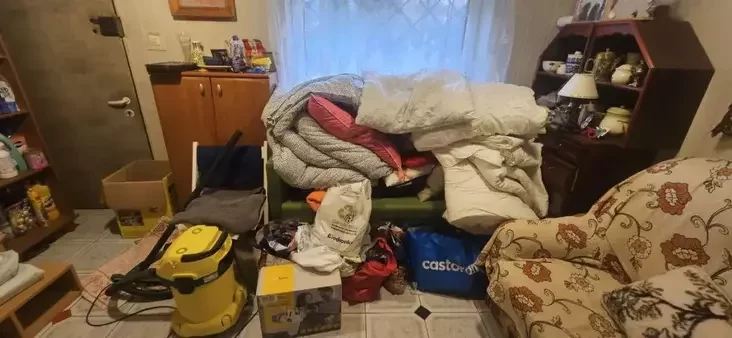
Shelter's linen storage. Photo: Euroradio
The guys who lived with us before are also supportive: Hleb, who now lives in Gdańsk, came for tea and left a hundred zlotys, and Mikalai, who works in construction and has three children, brought flour, sugar, and canned goods. This solidarity simply brings you back to life and makes you believe in something humane.
Despite the large number of items brought, some issues remain unresolved. Here's what we currently lack:
- Men's clothing and shoes. We have a storage, but it's mostly women's items, and there's no men's clothing at all, even though many people arrive without any belongings;
- Laundry dryers. We need a way to dry a large quantity of bedding and clothes;
- Food for the future. Although the fridges are full now, people will live with us for two months. We ask them not to spend the money that human rights defenders collect for them, but to save it for future housing, so we try to provide food ourselves through people's help;
- Personal medications. We are only just settling in and don't yet know all health needs, but medications may be needed later.
And most of all, people just want to hug — it's very important for them to feel that they were expected here and that they are needed.
"She felt that she was truly alive"
"Working [in the shelter] is psychologically very difficult. Each new person brings their own pain. Sometimes, men sit across from me, tell their story and cry, and I cry with them."

One of the shelter's rooms for ex-political prisoners. Photo: Euroradio
But seeing people change for the better — that's happiness. We had Dima, he was 53 years old. He arrived so confused that when I said the word "PESEL" (Personal identification number for Polish residents), he looked at me like an alien. Two months later, he was unrecognizable: working at a car service, rented a room, and waiting for his family to arrive.
Or Tania Krapinievich, "Belarusian Teacher of the Year." She said that only on the fifth day after leaving the shelter, walking down the street under the sun, did she feel that she was truly alive. Now she teaches mathematics at a Polish school and speaks Polish better than me.
Attention from special services and personal security
"Our shelter is a closed territory; only residents have keys, because the safety of political prisoners is my priority. But I have no illusions: the special services know our address perfectly well. When my relatives in Belarus were searched, a TV report showed a story about 'Hanna Fiadaronak's lodging in Warsaw.' There are already 19 criminal cases opened against me there, my house and property are under arrest."
The special services don't contact me directly. They know I have a "long tongue" and will never stay silent, I'll say everything immediately. They conveyed through acquaintances that I should "shut up," but I'm in a free country and will say what I want. I'm not afraid of their surveillance because I don't consider them that powerful or smart — they simply don't have enough money to monitor everyone.
Now reading






Head of Criminal Investigations at the Ministry of Internal Affairs saw the KGB pre-trial detention center's exercise yard from his office window, and then became a prisoner himself














Comments