


After a patriotic outburst from Belarusians at the Philharmonic, composer Molchan's widow forbade everyone from performing Yanka Kupala's "Malitva"
The concert marking the 85th anniversary of Uladzimir Muliavin had an unexpected continuation. Aleh Molchan's widow was outraged by the performance of the famous "Malitva" and imposed a complete ban on the use of her husband's musical legacy, attempting to remove all recordings of the Philharmonic performance from the internet.

Iryna Vidava, widow of Aleh Molchan, author of the music for "Pesnyary's" "Malitva". Screenshot of video
On January 12, a ceremonial evening dedicated to the 85th anniversary of Uladzimir Muliavin, founder of "Pesnyary", took place at the Belarusian State Philharmonic. Muliavin's daughter, Maryna Muliavina, served as the general producer of the program celebrating his anniversary.
Fragments from "Pesnyary" programs were performed by the Zhynovich National Academic Folk Orchestra and singer Piotr Yalfimau.
At the climax, when Yanka Kupala's "Malitva" resonated from the stage, the audience rose in a single patriotic outburst.
However, not everyone shared this patriotic enthusiasm of the Belarusians. Singer Iryna Vidava, widow of Aleh Molchan, the composer of the music for "Pesnyary's" "Malitva", spoke out against it.
On January 15, the day "Nasha Niva" published news about the incident, Vidava published a categorical statement on her husband's personal website prohibiting the performance of Molchan's creative legacy.

Piotr Yalfimau at the concert for Uladzimir Muliavin's 85th anniversary. Photo: BelTA
She accused Yalfimau of "years of disrespect" for copyright and forbade him from performing Molchan's music in any form.
Moreover, Vidava took care to ensure that already uploaded video recordings from the concert at the Philharmonic disappeared from the web – she filed copyright infringement complaints on YouTube, which led to the blocking of some videos.
The conflict indeed has a long history. In 2011, Aleh Molchan personally forbade Yalfimau from performing "Malitva" after he sang it at a festival in Maladzyechna "without prior agreement and without indicating authorship." A similar incident also occurred with the song "Stasia."
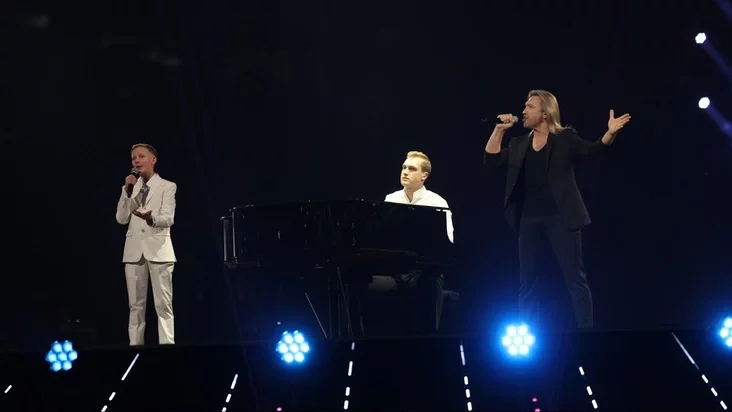
In January 2025, Piotr Yalfimau performed "Malitva" at Minsk-Arena accompanied by Kolya Lukashenka. Screenshot of video
However, this principled stance has an interesting peculiarity: it works selectively. Exactly a year ago, in January 2025, Piotr Yalfimau already performed "Malitva" before thousands of spectators at "Minsk-Arena" during the final concert of the propaganda "Unity Marathon". At that time, the composer's widow did not make any claims, perhaps out of fear, as Kolya Lukashenka accompanied Yalfimau on the piano.
"I forbid in any form". What made it to the blacklist
In her statement, Iryna Vidava emphasizes that since Uladzimir Muliavin's heirs refused to conclude a joint agreement with her for managing rights, she personally disposes of her husband's share.
And her decision is unambiguous — a ban on the performance of songs to which she holds proprietary rights, not only by Piotr Yalfimau, but by any other performer without Vidava's written consent.

Iryna Vidava and Aleh Molchan. Photo: A. Volkau
The list of prohibited works includes:
"Malitva";
"Chyrvonaya Ruzha" (Red Rose);
"Liavonikha";
"Slutskiya Tkachykhi" (Slutsk Weavers);
"Chestst Tsiabe, Maryya" (Honor to You, Maria);
As well as pop hits: "Stasia", "Kuma", "Khrystos Uvaskros" (Christ is Risen) and others.Vidava went even further, prohibiting "secondary use" — meaning the broadcast of Yalfimau's performance recordings on television and radio.
"Leather S&M outfits" and the war for "Malitva"
Piotr Yalfimau is not the only Belarusian musician who suffered for performing "Malitva".
In July 2009, music critic Siarhiej Budkin published a devastating review of Iryna Vidava's solo album "IV", produced by Aleh Molchan, on the pages of "Nasha Niva".
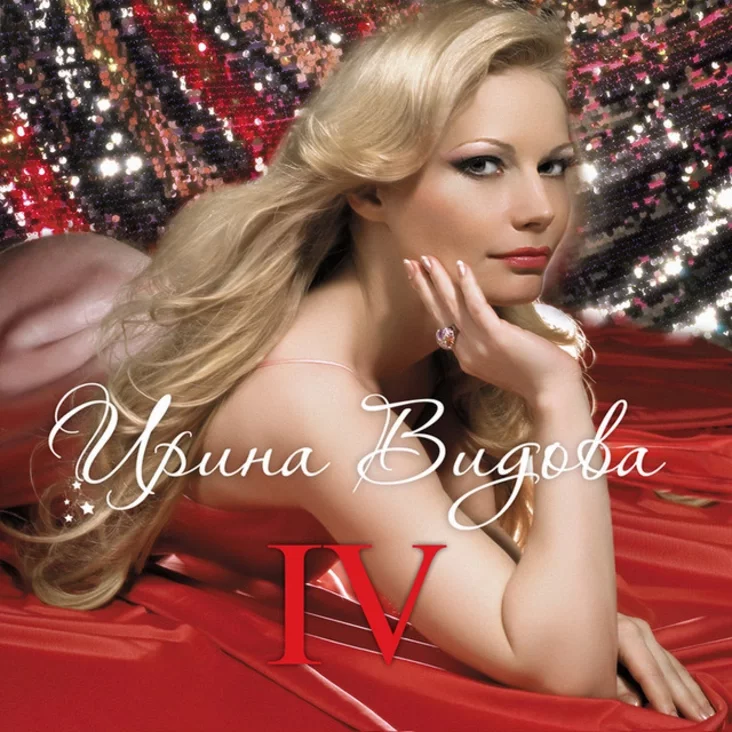
Album cover of "IV" by Iryna Vidava.
The journalist called the work a "faded photocopy of secondary Russian pop" and a "provincial circus". He was particularly scathing about the singer's image, mentioning photos on the cover "in leather S&M outfits", and expressed surprise that the author of the great "Malitva" would waste his talent on such material.
Several years later, in 2014, the Molchan family had an opportunity to get revenge for the offense. Aleh Molchan sued Nasta Shpakouskaya, the leader of the rock band Naka. The reason was the performance of "Malitva" at the "Re:Pesnyary" project, which was organized by the same Siarhiej Budkin.
At that time, Vidava reinforced her claims, partly with the position of Muliavin's family: his widow Sviatlana Muliavina-Pienkina and children Maryna, Volha, and Valery. Now, in 2026, Muliavin's family finds itself on the other side of the barricades.
The court case then set a precedent. Shpakouskaya tried to argue that "Malitva" is a spiritual anthem created in a state ensemble under Muliavin's leadership, and that it should not be the private property of one person.
"It became a spiritual anthem because Muliavin, our bard, sang it, not because Molchan wrote or sang it. And now we will all depend on a person who decides how much to pay," the singer said at the time.
However, Aleh Molchan took a firm stance: music is his property, and "unauthorized" arrangements spoil the work. He demanded compensation of about $1000, which greatly exceeded the usual rates. The court sided with the composer but ordered half the compensation to be paid.
Diligent guardians of intellectual property
After a resounding victory in the case against the Naka band, Aleh Molchan's career took a specific turn. In the information space, he began to appear not so much as an author of new hits, but as a person promoting legal responsibility for copyright infringement. In the same year, 2015, he was elected chairman of the authors' council of the National Center for Intellectual Property (NCIP).
Having received an official position, the composer launched a large-scale legal campaign. Under his leadership, dozens of lawsuits were won against cable operators who had not paid royalties for years. This allowed royalty collections at the NCIP to increase by 30%.
In 2018, Molchan reached an international level, becoming president of the Eurasian Confederation of Copyright Holders' Societies.
A symbol of this stage was the medal of the World Intellectual Property Organization (WIPO), awarded to the composer shortly before his death in 2019.
The irony of fate: the composer's only known award was given not for his contribution to national musical culture, but effectively for his successes in the legal field and the creation of legal precedent.
Receiving the award on behalf of her husband, Iryna Vidava articulated their family credo: "Aleh, through his example, often at the cost of his own health, showed that one's rights can and must be defended."
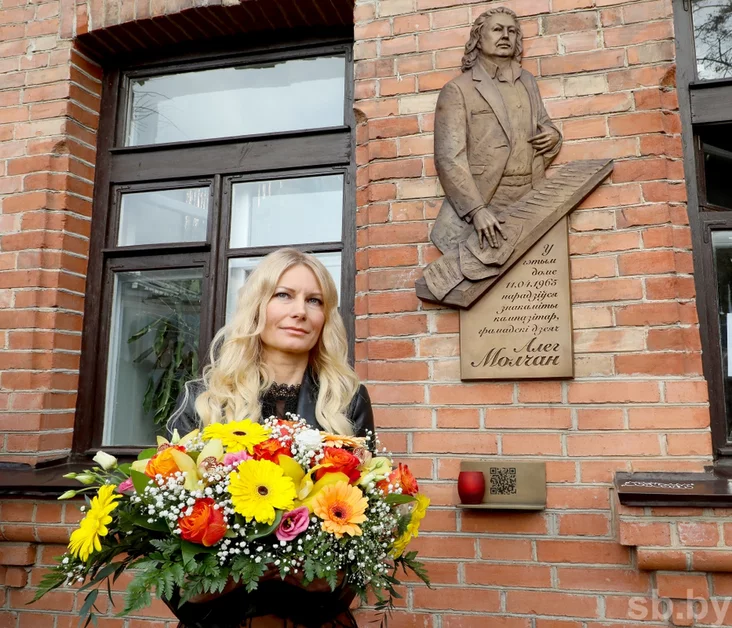
Iryna Vidava next to the memorial plaque in memory of Aleh Molchan, unveiled in October 2020 on Rakauskaya Street. Photo: SB. Belarus Today
After her husband's death, Iryna Vidava not only inherited his legacy but also took his place in the system, heading the authors' council of the NCIP. She held this position until 2022, when Iryna Darofeyeva replaced her.
Music held hostage by law
The situation around "Malitva" appears paradoxical. On one side are figures of the first magnitude: Yanka Kupala, whose words have long been in the public domain, and Uladzimir Muliavin, whose brilliant performance and powerful voice made the work iconic.
On the other side is the Molchan family, who, armed with copyright, like gentry with the right of liberum veto, can overshadow not only the anniversary of the great Bard but also effectively bury a work of national significance, guided either by their own commercial interests or personal grievances.
And although formally the widow acts within the bounds of law, this struggle seems petty and even shameful when the rights holder goes so far as to block concert videos uploaded to the internet. These videos are filmed by ordinary people who have no connection to event organization, but simply came to enjoy Muliavin's work and honor his memory.
Such aggressive enforcement of rights leads to all creative work associated with Aleh Molchan becoming toxic. The risk of a lawsuit, a YouTube block, or a demand for large compensation for performing a famous song outweighs any artistic expediency. Instead of popularizing her husband's legacy, the widow's actions lead to the opposite effect.
As a result, "Malitva" performed by Muliavin risks becoming a monument to an uncompromising struggle for "intellectual property," where the right to prohibit the performance of a work proved more important than the right of Belarusians to hear a wonderful piece.
«Nasha Niva» — the bastion of Belarus
SUPPORT USNow reading




Halina Dzerbysh told the prosecutor: "When I die, I will come to all of you at night." And life has already caught up with her judge and witnesses. The story of a pensioner who was given 20 years in a penal colony

Halina Dzerbysh told the prosecutor: "When I die, I will come to all of you at night." And life has already caught up with her judge and witnesses. The story of a pensioner who was given 20 years in a penal colony






«I just don't understand, who was the nuclear power plant built for?» No topic has caused such emotions for a long time as the power outage at Lukashenka's command















Comments
Што тычыцца астатніх твораў беларускіх паэтаў, то новую музыку да іх можа напісаць хтосьці іншы.