


The main Iranian negotiator with the USA could have been the country's parliament speaker Ghalibaf. What is he known for?
The White House views Iranian Parliament Speaker Mohammad-Bagher Ghalibaf as a potential partner for negotiations, and possibly a new leader of the state, American Politico reported, citing sources. Earlier, other publications named Ghalibaf—a high-ranking official, but not a representative of the inner circle of the assassinated Ayatollah Khamenei—as the primary negotiator from the Iranian side.

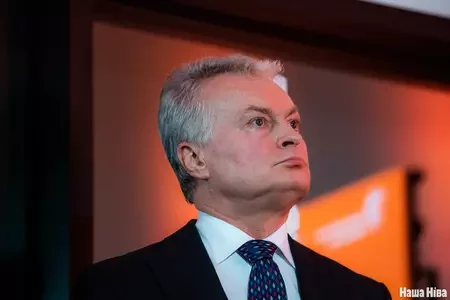
Photo: Morteza Nikoubazl/NurPhoto via Getty Images
The speaker himself officially stated that reports of contacts between Tehran and Washington were "fakes." What is Ghalibaf known for, and why has he now come to the forefront, writes the BBC.
According to two Politico interlocutors in the US presidential administration, 64-year-old Iranian Parliament Speaker Ghalibaf is perceived by some officials in Washington as a partner who could lead Iran and negotiate with the White House.
The American administration's interest in negotiations with Iran indicates its desire to find a way out of the deadlock that the current military conflict quickly turned into, causing global market turmoil, rising oil prices, and inflationary risks, notes Politico.
"It's about putting someone in, like Delcy Rodriguez in Venezuela, and saying, 'We'll leave you in power; we won't remove you. You'll work with us, you'll make a good deal,'" explained one administration official in a conversation with Politico, explaining why Washington's choice fell on a representative of the current Iranian establishment.
Many in the White House consider the Venezuelan experience—when Vice President and Nicolás Maduro's right-hand woman, Rodriguez, took the place of the Venezuelan president captured by Americans—a suitable model for possible developments in Iran. Therefore, the option of opposition figure Reza Pahlavi returning from exile is not being considered, according to Politico's sources.
"Lord, no... He grew up abroad. That's the last thing we need. It would lead to chaos," said one of Politico's interlocutors.
Earlier, several publications—the British Guardian, Israeli Ynet and Jerusalem Post, as well as Reuters and Axios—also reported, citing anonymous sources, that Mohammad-Bagher Ghalibaf participated in negotiations with Americans on the Iranian side.
Trump announced on Monday that the US had held "very good and productive" talks with Iran on a "full and comprehensive settlement of hostilities in the Middle East," and said that Washington would suspend attacks on Iran's energy infrastructure for five days. Trump did not specify who exactly from Iran participated in the negotiations. The US was represented by special envoy Steve Whitkoff and the president's son-in-law Jared Kushner (who had also negotiated with Iran before the war; the last meeting shortly before the start of hostilities took place in Geneva).
Tehran officially denies that negotiations with the US took place. Ghalibaf himself, in a post on the social network X, ridiculed statements about the start of negotiations as an attempt by Trump to calm the markets.
"No negotiations with the US were held, and fake news is being used to manipulate financial and oil markets," he wrote. However, unofficially, Iranian authorities acknowledge contacts with Americans—a high-ranking representative of the Iranian Foreign Ministry told CBS News, BBC's American partner, that Tehran had received "proposals" from the US, which Iranian authorities are now considering.
At the same time, the denial of the very fact of negotiations may be related to fear for Ghalibaf's life. Iranian authorities fear that negotiations with the US on a war settlement are a trap, the Wall Street Journal wrote, citing Iranian officials and Arab officials. Tehran fears that any meetings could lead to an assassination attempt on Ghalibaf's life.
IRGC veteran and presidential candidate
Ghalibaf is known for his authoritarian tendencies, and although he long ago exchanged his general's military uniform for civilian clothes, he always openly expressed support for the regime and remained one of the most ardent supporters of the Islamic Revolutionary Guard Corps.
Ghalibaf, born in 1961, is in every sense a "son of the revolution." He joined the IRGC at the very beginning of its existence in 1980 and rose through the ranks during the bloody Iran-Iraq War, becoming one of the most prominent commanders. At 22, he became a division commander, and he received the rank of brigadier general before he was 30. From 1997 to 2000, Ghalibaf served as commander of the IRGC Air Force, then headed Iran's police force. His military past remains the foundation of his influence.
However, the late Ayatollah Ali Khamenei never fully trusted him, and within the regime, there were suspicions that Ghalibaf was a "wolf in sheep's clothing" waiting for the right moment, noted Kasra Naji, special correspondent for the BBC's Persian Service.
Ghalibaf is a well-known and influential figure in Iran, but he does not belong to the top echelons of the ruling elite and has long had a reputation as a person whose mistaken decisions prevented him from rising higher in his career, agrees Amir Azimi, news editor of the BBC's Persian Service.
After serving as police chief, Ghalibaf ran for president of Iran in 2005. At that time, he enjoyed widespread support among Iranian youth, who were impressed by his style: fashionable Western clothes and sunglasses, and Ghalibaf himself was considered a modernizer, Azimi recalls.
However, his orientation towards change alienated the conservative clergy, which ultimately led to his defeat in the elections by a more conservative candidate—Mahmoud Ahmadinejad. Mojtaba Khamenei—then a young cleric, and now the new Supreme Leader of Iran—supported the radically minded clerics. As a result, close relations did not develop between him and Ghalibaf.
Ghalibaf eventually became the mayor of Tehran in the same year—for 12 years, he governed the city until 2017. He was praised for developing the northern districts of the capital but criticized for neglecting the southern, poorer ones. He was also accused of corruption and organizing the sale of land to regime representatives.
Ghalibaf ran for president three more times: in 2013, he took second place; in 2017, he campaigned but withdrew his candidacy; and in 2024, in elections scheduled after the death of Ebrahim Raisi in a plane crash, although he was considered a favorite in the race, he only took a disappointing third place. Masoud Pezeshkian won then.
Why Ghalibaf seems to some White House officials a capable negotiating partner is not entirely clear. For example, Ali Vaez, a senior Iran analyst at the International Crisis Group, considers it unlikely that Ghalibaf, who is fundamentally committed to preserving the Islamist system, would offer Washington any significant concessions.
At the same time, Ghalibaf's choice could be a consequence of the chaos in Iran's political system due to the aftermath of Israel's campaign to eliminate the country's leadership, notes the Guardian. The successor to the assassinated Ayatollah Mojtaba Khamenei does not appear in public. According to some reports, he is in a coma.
President Pezeshkian lacks competence in nuclear program negotiations, and the military does not fully trust him. The head of Iran's Supreme National Security Council, Ali Larijani, was assassinated—Iran lost one of its most experienced and influential politicians at a critical moment for the country.
Ghalibaf replaced Larijani as Parliament Speaker in 2020. After his death, Ghalibaf took responsibility for developing strategic decisions, three high-ranking Iranian officials told the New York Times.



















Comments