


The film "The Class Teacher": we watched it to understand how "they" want to see "us"
None of Alexander Lukashenka's sons, grandsons, or granddaughters went to work in an agrotown, none became a mechanic, none became a teacher. They live between Drozdy, Dubai, Beijing, big stages, and concert halls. But the new Belarusian film "The Class Teacher" is not about such a life, but about the real one — about how the "common people" should live. So, how?
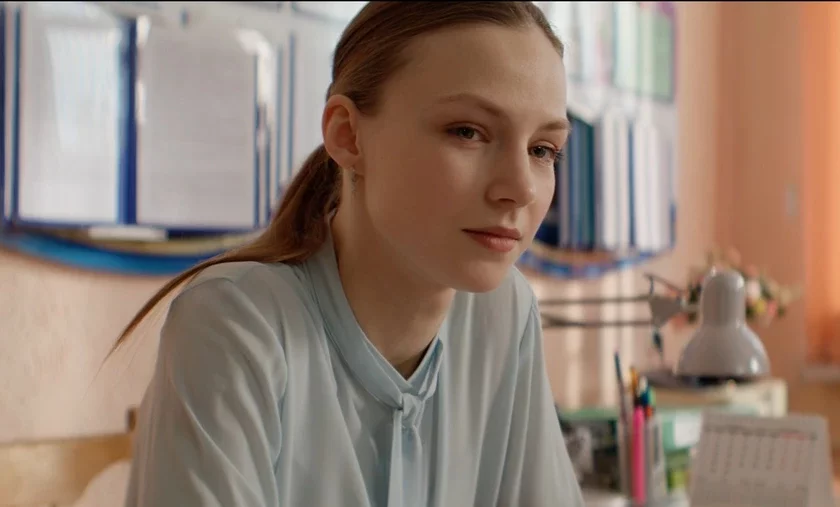
Screenshots from the film throughout
From the first seconds of the film, you understand that this is the right picture, about the right values. The abundance of red-green flags in the frame makes your eyes flutter.
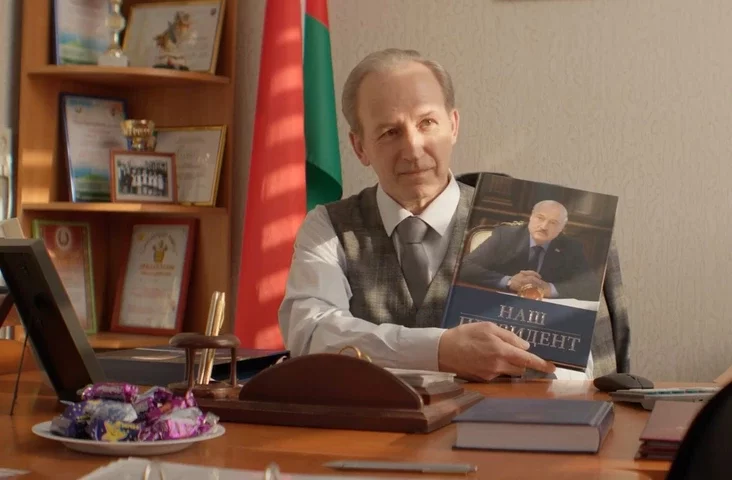
The plot and character development are not the main thing when, in 90 minutes, you need to squeeze in children singing the anthem in unison, the newly established National Unity Day, and advertise a book about Lukashenka. And, of course, thank the politician for "us flying into space."
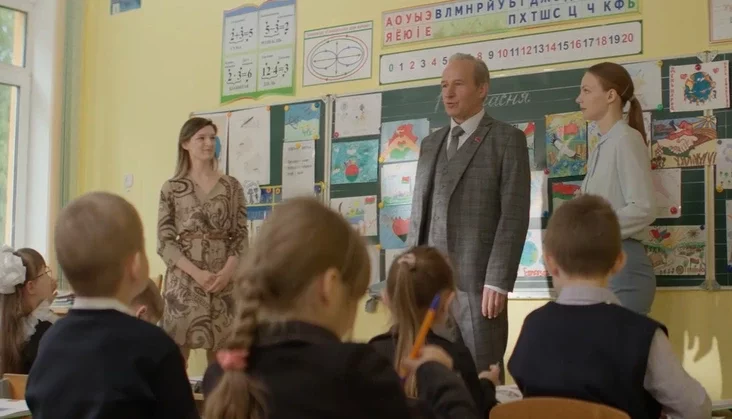
The main character of "The Class Teacher" is Tatiana Vasilevskaya (played by Irina Moroz), a graduate of the Belarusian State Pedagogical University (BSPU).
She is supposed to motivate prospective students to enroll in pedagogical institutes. But wait!
One of the best graduates of her course, she expects to stay in Minsk for her mandatory job placement — at the same gymnasium where she did her practical training. The job placement process looks like outright mockery. The Minister of Culture, Ruslan Chernetsky, was also given a role in the film. It must be admitted: in the image of a boorish official who openly mocks a girl who was just called the pride of the university, he looks very organic.
The head of the placement commission (played by the Minister of Culture) enjoys ridiculing the young teacher, who can barely hold back tears at the prospect of going to an agrotown.
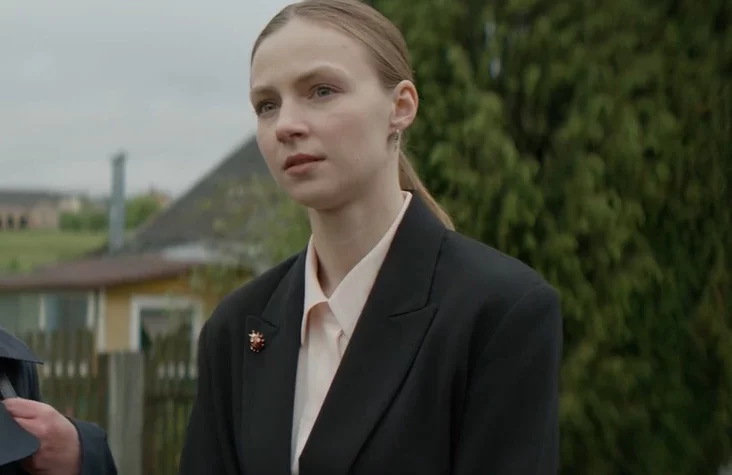
Why does she have to go there? No one explains. The main message: the state said "You must!" — therefore, you must.
Tatiana doesn't find support in her own family either. Where the young girl's father is — it's unclear, but there is a mother and a rather young sister.
Her mother shrugs off her elder daughter's problems and even laughs at them.
"At least you'll breathe clean air!" — the woman transporting her daughter to her assigned workplace categorically declares.
The main character tries once more to find support from her mother in a difficult moment — she asks her to take out a loan to pay back the tuition fees and allow her daughter to leave her mandatory placement. But the screenwriter decided that this was a good moment to dissuade prospective students from studying abroad.
Therefore, the woman responds by criticizing a generation "that only drains money from their parents." She mentions Tatiana's friend who went to study in London, and now her mother is forced to support her there. She complains that everything in the West is "too rosy."

The plot's twists and turns are not very clear. Why does the IT teacher immediately fall in love with Tatiana when, during their first meeting, the girl shouts at the dormitory commandant because she was assigned to live in a block with a young man?
Why does the class teacher, who was assigned the 11th grade, decide to start getting on the graduates' nerves, while easily giving tens to everyone else for answers to a simple quiz — to the whole class?
Why do those graduates turn against the young teacher and skip classes when their main goal is to finish their last year and get good grades in their certificate?
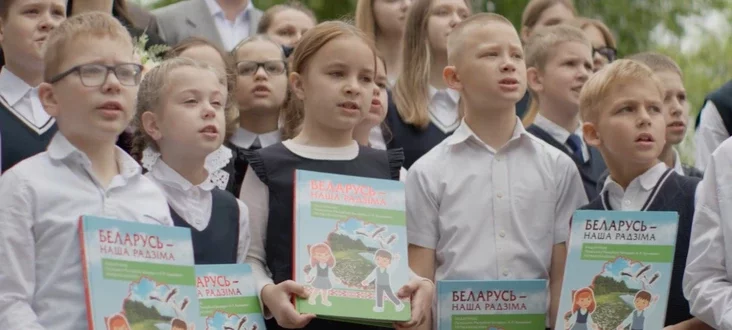
The director tries to mold the former class teacher into an ideal one. She managed to make the class very friendly but was forced to leave school due to oncology. And the children supposedly don't want to see anyone but her. But it all looks so unnatural that it's simply impossible to believe in such a drama. (And may everyone have such dramas in a country where a quarter of the country is in prison, a quarter is preparing to be, and in the third quarter, the cows are shitting themselves and the milk truck has cancer.)
Of course, Tatiana has to turn to her predecessor for help. The girl honestly talks about her dreams of working in Minsk and tutoring to earn decent money. But her predecessor mocks the young colleague. Again, it turns out that the generation is not right, and one should work for a high idea, not for money. (It's a pity that Viktor, Dmitry, and the folk poet Syalyuk with Baskov and the owners of logistics centers and "Tabakerkas" don't know this.)
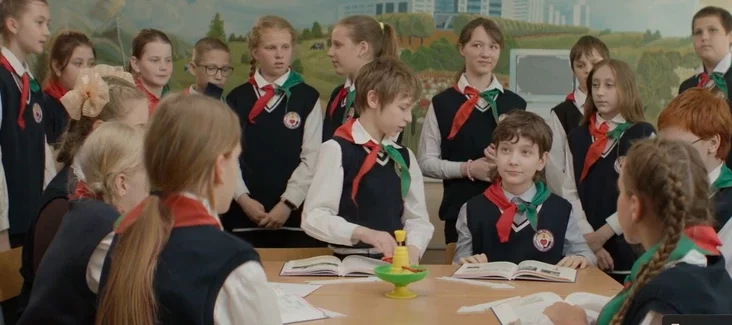
By the way, it's interesting to see who is in Tatiana's class. In her 11th grade, there are only seven students. Among them are two candidates for a gold medal, one fan of Chinese culture, a beauty who dreams of first getting into "Miss Belarus" and then captivating some prince from the UAE. There is also a boy who is thinking about law enforcement agencies.
The boy who wants to become a star is played by the popular Russian blogger Kirill Malyshev. In real life, he collects millions of views on TikTok and Instagram, dressing up as women with large fake breasts (an image à la Verka Serduchka). And it's hard to forget this persona when you see Kirill in a modest Belarusian school uniform.
For inclusivity, a student in a wheelchair was added. He, by the way, couldn't walk for six years due to an injury in sports orienteering competitions (not hockey — there are no injuries in hockey) — teachers conducted lessons for him at home. But after just a few months with the new class teacher, he suddenly starts walking. Why? There are zero explanations for this. Perhaps viewers are supposed to believe in the magical power of either the job placement system or the book "Our President."
Accidentally or not, director Kirill Khaletsky also shows how a modern school reacts to life-threatening situations for children.
For example, when one of Tatiana's students falls through the ice in winter, and she heroically rescues him, none of the teachers at school even think of calling an ambulance, as stipulated in the instructions. The boy is generously given a blanket and tea, while the pedagogical staff is busy discussing whether Tatiana should be somehow punished.
And it is precisely after this incident that she decides to abandon the idea of being reassigned. Why? Who knows.
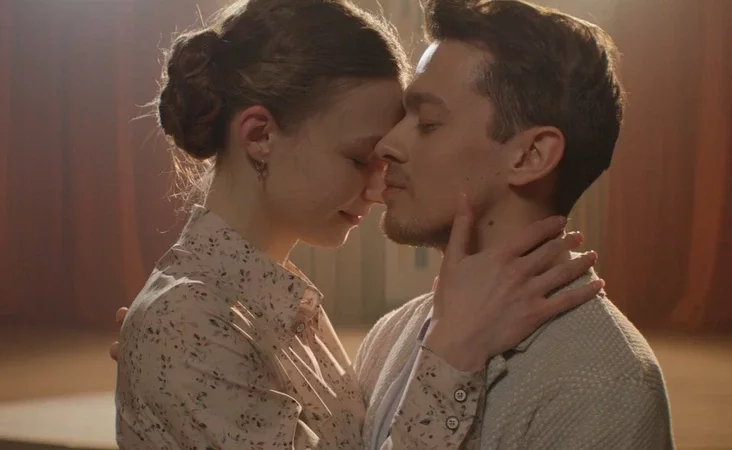
Perhaps the reason is the dancing with the IT teacher in the assembly hall next to the red-green flag. Her beloved, by the way, subtly promotes working in an agrotown. He says he wants to create some elective course, and the school principal agreed: "Why should I move somewhere when they are meeting me halfway?!" Well, really, it's such a rarity — they allowed an elective course.
Will "The Class Teacher" be able to motivate Alexander Viktorovich, Viktoryia and Valeryia Viktorovna, Yaroslav Viktorovich, Nastassia, Darya, and Alexandra Dmitrievna, and Nikolai Alexandrovich to become teachers and go work in an agrotown — only until the end of their lives, please? Will anyone give up studying in Beijing and doing business in Dubai? Don't make me laugh. Because even an ideological film must be made with quality.

































Comments
Ніякай вытанчанасці ці добрай іроніі. Нейкая незразумелая спроба ахаяць і зняважыць амаль усе, што магчыма? Але навошта? Фільм гэта робіць сам.
Можна ж пачытаць/паглядзець Доліна, каб навучыцца пісаць водгукі на дрэнныя фільм.
Зрабіць дрэнны водгук на дрэнны фільм - самая легкая справа. Але і тут аўтар не здолеў.