


Palm oil and glaze instead of chocolate. How Russian candies are squeezing Belarusian ones off store shelves
Social media users were outraged by the prices of domestic candies in Belarus: many reach 50 rubles per kilogram. "Radio Svaboda" looked into how the prices of domestic and imported sweets differ and if there is a difference in their composition.
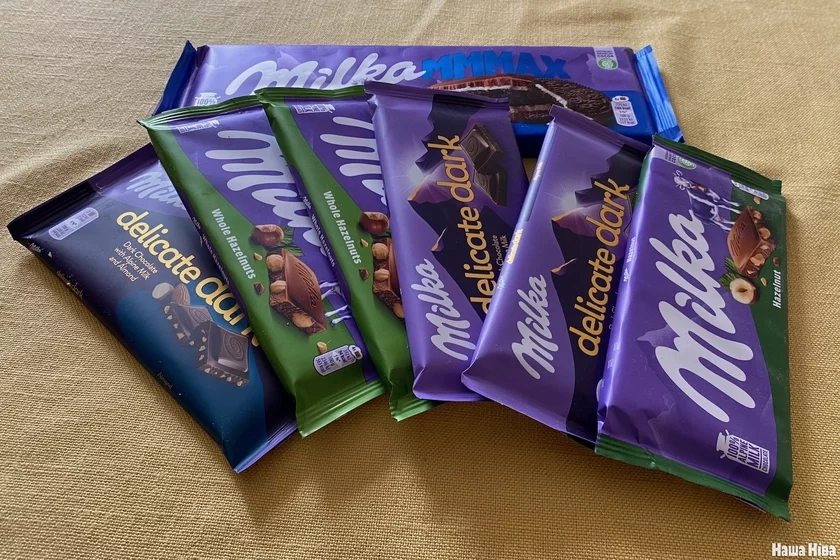
Illustrative photo. Photo: "Nasha Niva"
Prices for Belarusian confectionery products are being discussed on Threads social network. Users are outraged that foreign candies are often cheaper than Belarusian ones. Is this really the case?
Belarusian candies and Russian analogues
The Belarusian brand from "Kommunarka" — "Ptushynae Malako" (Bird's Milk) candies — cost 33 rubles 75 kopecks per kilogram. The composition looks natural: no palm oil or confectionery fats, but there is cocoa butter and regular butter — natural products. The composition also includes emulsifier E476, which is used as an additive to chocolate and is not recognized as harmful.
The Russian analogue of this candy, "Ptitsa-sladunitsa" (Sweet Bird), is sold at a discount — 13 rubles 89 kopecks per kilogram, meaning 2.4 times cheaper. However, its composition differs. Palm oil is used as a substitute for cocoa butter and milk fat, and instead of chocolate, there is confectionery glaze. The composition of Russian candies includes several E-type emulsifier-stabilizers.
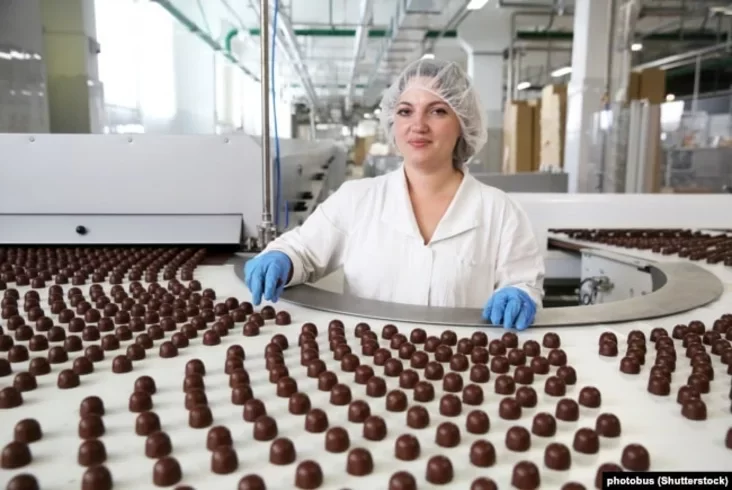
Candy production at "Kommunarka", archive photo
Belarusian "Kokosik" candies from the manufacturer "Shakaladava" cost 22 rubles 45 kopecks per kilogram. The Russian analogue, Miss Ko-Ko from the Russian manufacturer "Sladunitsa", is cheaper by 4 kopecks. Both contain palm oil, and glaze instead of chocolate. However, the Belarusian version has natural coconut flakes and less fat.
The Belarusian brand from "Kommunarka" — chocolate candies with nuts "Lyubimaya Alyonka" (Beloved Alyonka) — cost 51 rubles per kilogram at Green hypermarket.
Nuts candies from the Russian manufacturer "Nestle Russia" are sold at a discount for 39 rubles 24 kopecks. The difference with the Belarusian analogue is 11 rubles 76 kopecks, or 22%. Before the discount, the price was 45 rubles 15 kopecks, i.e., 5 rubles 85 kopecks less than the price of "Lyubimaya Alyonka".
Their compositions are similar: both contain chocolate and nuts. If compared in more detail, the Belarusian version has "confectionery fat", which can be a mixture of vegetable oils. The imported candies indicate "vegetable oil". But in both cases, the specific oil is not specified.
"Kommunarka" has repeatedly stated that they do not use palm oil in their products. However, they admitted that such oil might be present in "confectionery fat", as it is not made at the factory but imported. The ingredient "vegetable oil", indicated in the composition of Russian candies, may also contain palm oil.
What people choose
The e-dostavka service for the query "candies" returns 41 Belarusian-made items and 29 Russian-made items. There are very few European brands, and they cost incomparably more. For example, German Ritter Sport chocolate bars can be found in stores. Prices start from 11 rubles. In neighboring EU countries, these chocolates are cheaper; in Lithuania, for example, they cost 2.89 euros, or 9 rubles 88 kopecks at the current exchange rate.
A set of German Toffifee candies at Green is sold for 11 rubles 99 kopecks for a 125-gram box. In Lithuania, these same candies cost 10 rubles in Belarusian money.
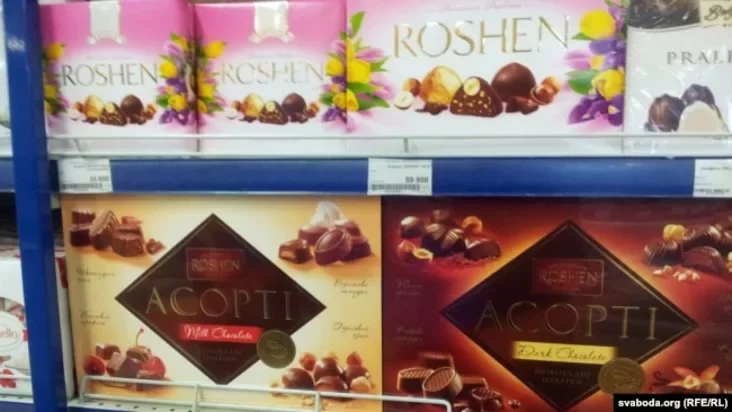
There are no Ukrainian candies in Belarusian stores now. Archive photo
"Radio Svaboda" anonymously surveyed consumers about which candies they buy. Many noticed that Belarusian confectionery products have become more expensive. However, most respondents say that they still buy Belarusian brands, "though less often — due to prices."
And Russian candies, according to interlocutors' observations, started appearing a couple of years ago, mostly in the cheap segment, and they "are inferior in quality and taste."
According to Belstat statistics, average prices for chocolate-glazed candies increased by 23.4% year-on-year (this January compared to last January), and chocolate became 18.3% more expensive.
"Logistics can affect prices"
Anastasia Luzgina, a senior researcher at the Beroc research center, names two reasons for the higher price of Belarusian confectionery products: logistics and quality.
"Somewhere, the price can be lowered by cutting costs without compromising quality. In Belarus, this cannot always be done in a timely manner, especially at a state-owned enterprise. Logistics also plays a role; there may be difficulties with ingredient supply now. Imported cheaper candies may be of poorer quality: whether they contain, for example, palm oil, or if the composition is more natural. On the one hand, production efficiency affects the price, and on the other, the supply routes for ingredients," says the expert.
In 2023–2025, cocoa bean prices — one of the main raw materials for chocolate and candies — rose sharply. This was due to crop failures in West Africa. In early 2026, cocoa bean prices began to decline.






































Comments