


"Monthly payment will amount to 340 rubles." What will happen with mobile internet in Belarus?
The editorial office of "Onliner" received numerous messages from Belarusians discussing the upcoming innovation. The talk is about the "initial volume of data transfer services without speed limitation," which is mentioned in the resolution of the Ministry of Communications and Informatization No. 38 dated December 22, 2025. It amounts to 30 GB per month without speed limitation, which then drops to 1 Mbit/s.

The introduction of an "initial volume" does not mean that unlimited data tariffs "over-the-air" will become a thing of the past, but certain changes will still occur. From a technical point of view, unlimited plans will not disappear: you will be able to download as much as you want, but in certain cases at a low speed — 1 Mbit/s. And there remains the possibility to buy additional traffic at unlimited speed, however, this entails additional costs.
Apparently, such a nuance does not particularly scare users who need mobile internet as a supplement to wired internet. This is supported by MTS statistics: as the company told "Onliner", on average, mobile internet users of the operator consume about 20 GB of traffic per month.

"However, the consumption of each specific subscriber is highly personalized and depends on watching video content, activity in streaming services, social networks, and other applications. User habits also influence it: for example, sharing traffic in modem mode or timely switching between mobile network and Wi-Fi," MTS added.
The situation is slightly different for mobile internet users for whom it is the only way to access the network. This can refer to areas remote from large settlements: starting from villages and ending with gardening cooperatives. It is not excluded that modern cottage developments, where "fiber optics" have not been installed for subjective and objective reasons (it's expensive or the time has not yet come), can be included here.
The most active users in "Onliner"'s chatbot were "heavy" subscribers of the Unet.by operator, which provides mobile internet services.
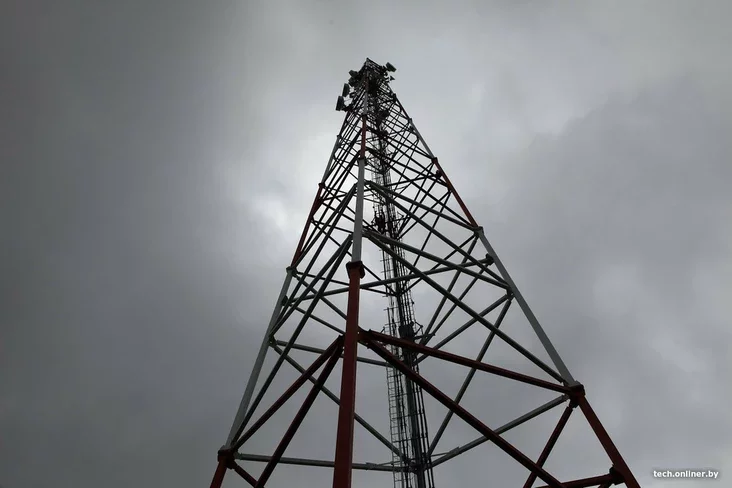
"We also have an operator that provides mobile internet: Unet.by (also known as anlim.by) — today a message came about a change in the cost of tariff plans, and now it turns out that from the first of February the cost of one GB of traffic will increase 5.5 times," one of the readers wrote to the editorial office.
Another Belarusian describes a similar situation:
"I live outside the city in a gardening cooperative and use 4G internet from Unet. In fact, it is implied as stationary internet. My contract specifies the address where I will use it, and I am tied to nearby base stations. I cannot insert the SIM card into a phone and move around. Yesterday, due to the changes, they updated the tariffs. As a result, with my consumption of about 800 GB per month, only 'Anlim Pro' suits me. The monthly payment will amount to 340 rubles. Currently, the 'anlim' tariff costs 49.90. The result is an almost sevenfold increase in cost. And I am not alone.
We have many regions in the country where wired internet connection is absent. As a result, people use mobile internet as stationary. We tried to install fiber optics, but it's almost impossible. 'Beltelecom' requires 100% connection of all members of the gardening cooperative with a three-year contract. But these are unrealizable demands in advance. Plus, laying cables underground. And that's another level of complexity. A similar story with A1."

As soon as messages from Unet.by subscribers began to arrive, "Onliner" checked the operator's new tariff plans, which come into force on February 1. Indeed, "Anlim Pro" will cost 19.9 rubles as a tariff fee and 0.39 rubles for each incoming gigabyte: it comes out to slightly less than 340 rubles with the mentioned 800 GB of traffic. And, as the company noted, only a few percent of the total customer base consume more than 700 GB per month.
And is 800 GB a lot? On the one hand, yes, significantly more than what "average" users consume. However, much also depends on what the internet is used for. If the user is a gamer, for example, downloading one modern game can take 200 GB, or even more. Likes to watch movies? Downloading one movie in high quality is 20-30 GB, one series episode is 1.5-3 GB. That is, it's quite easy and quick to spend 30 GB.
As for IPTV and popular streaming services, consumption will be about a gigabyte per hour for SD-format content, high resolution can raise consumption to 3-5 GB or more per hour, in 4K — about 7-10 GB. It turns out that if you prefer Full HD content on, say, Netflix, one movie will "eat" about 9 GB.

These calculations, of course, apply not only to one operator, but to any other, regardless of the connection type. But, as follows from the messages to the editorial office, the greatest concerns of users are precisely the significant increase in their costs for habitual content consumption in conditions where wired broadband is unavailable.
As Unet.by journalists were told, mobile internet consumption among the company's clients "varies greatly: from a moderate 100-300 GB (which includes over 80% of the 4G subscriber base) per month to significant volumes of 600-800 GB or more."
"Despite the small size of the document, the changes are significant. However, we are confident that this will positively affect the quality, speed, and development of the 4G/5G network," adds a company representative.
According to him, the mobile internet market will become more transparent, and the "previous model, where 'the majority paid extra for the minority,' is being revised, and everyone pays for their own volume of traffic."
The interlocutor believes that the changes could lead to a redistribution of subscribers among operators.
"But in general, all players will be forced to adapt to the new rules – both operators and clients. This will especially affect users who consume a lot of traffic. For them, the cost of the service will noticeably increase. So, in general, I can say that at first it will be difficult to get used to the new realities, but they will definitely lead us to faster wireless internet."
He noted that the changes in the long term will help improve infrastructure and communication quality, especially amid increasing network load. MTS shares a similar opinion.
"The adopted measures can potentially help balance the load on base stations and more fairly distribute network resources, which will ultimately affect data transfer speed. Mobile internet consumption will become more conscious: part of the traffic will 'flow' into the fixed network, while other users will prefer tariffs with a guaranteed volume of traffic included in the subscription fee," the press service told "Onliner".
Journalists also inquired whether tariff plans with included traffic exceeding 30 GB would disappear or if their price would change. The company replied:
"Since 2022, the size of the subscription fee for MTS tariff plans for the mass segment has been fixed by agreement with the Ministry of Antimonopoly Regulation and Trade. Therefore, tariff plans with traffic exceeding 30 GB included in the subscription fee will remain available for connection, and the size of the subscription fee for these and other tariffs will not change."

Now reading







He bequeathed Karina Shuliak 50 million, and her father flew with him on a helicopter a month before his arrest. What else became known from the Epstein files
He bequeathed Karina Shuliak 50 million, and her father flew with him on a helicopter a month before his arrest. What else became known from the Epstein files


"You can't get anything from me, but people suffered." A retired couple has been unable to deregister a large family of emigrants from a Minsk apartment for the second year




















Comments
1 Мбіт/с гэта толькі тэкставыя дадзеныя можна будзе перадаваць.
Сайт надвор'я будзе запампоўваецца хвіліну, а то і больш.
Те, кто тратит много трафика для бизнеса( помню, одна риэлторша из пригородного коттеджа жаловалась, что не может вести бизнес из-за плохой мобильной связи), тоже должны сами нести расходы, а не большинство субсидировать их расходы на бизнес.
Жалко только жителей отдаленных деревень, но без фильмов и игр тоже никто не умер, это будет не самый страшный недостаток жизни в деревне по сравнению с плохим доступом к медицине и продуктам питания