


Police found an unexpected reason to fine a Minsk resident for a social media video
This story could have been just another viral video, but it became another case of how social media is used against its users. A resident of the capital decided to share a funny video, but unexpectedly found himself in a police office.
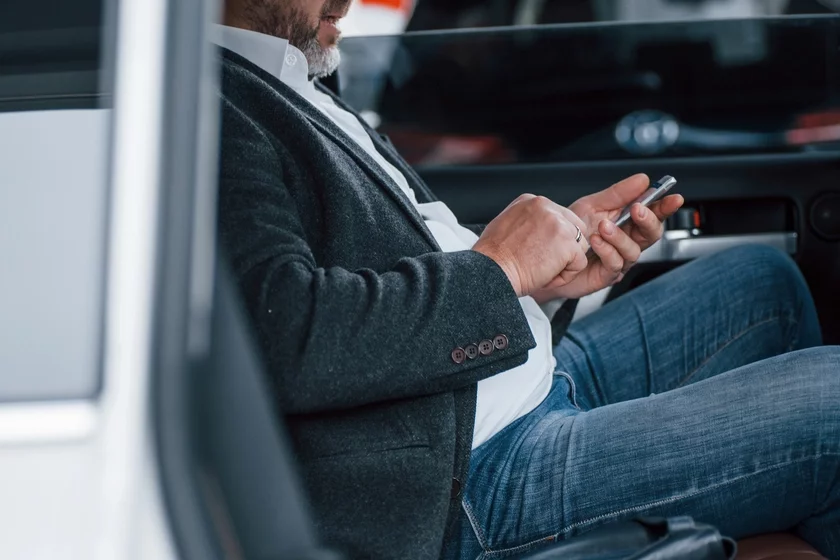
Illustrative photo. Photo: vecteezy.com
Andrei (name changed) found himself in an unexpected situation simply by posting an entertaining clip on a social network. Details of the story became known to the Tochka.by journalist .
One evening, the guy and his friend drove to the city center. His friend was driving, so Andrei allowed himself the pleasure of drinking some beer. The acquaintance, who took on the role of driver, created the necessary conditions: parked the car and turned on music.
At some point, a man in a full-body costume passed by and started dancing to the rhythms from the car. The guys decided to film the cheerful passerby with a smartphone.
«I wasn't drinking in the video, the bottle was barely visible. A person watching the video wouldn't immediately understand what drink I had in my hands,» Andrei recalls.
Everyone laughed and went their separate ways. And the passerby was even rewarded for his dancing — 10 rubles in tips.
The result was a funny video, and Andrei posted it on his social media page. Then he finished the 0.33 liters of beer in the car, and after stopping for a snack, went home.
The next day, the guy was woken up by a call from the District Department of Internal Affairs. The voice on the other end, after introducing himself, said there were questions about the posted video material: the dancing person was suspected of using prohibited substances.
Andrei began to defend the unintentional hero of the video and emphasized that the man was in an absolutely adequate state. They managed to exchange a few words, and the actor in the full-body costume was not against appearing on other people's social media.
The conversation with the police officer ended there.
But an hour later there was another call, and the law enforcement officer insisted that the content creator still come in and give testimony regarding the "dancer."
«I arrive by four in the afternoon (they told me to come as soon as I could). They lead me to an office, seat me, and write something silently,» Andrei describes the situation. At some point, he asked why his presence was necessary.
And then it turned out that the author of the video was being held accountable for drinking alcoholic beverages in a public place.
«Don't worry, we'll just issue a report now, it will be a warning, no fine,» explained the employee of the District Department of Internal Affairs.
Andrei read it: everything was indeed limited to just a warning. He signed and left. They didn't bother him anymore.
But the active social media user couldn't imagine that his case could be considered drinking alcoholic beverages in a public place.
What violations are most often recorded through social media?
In Belarus, you can indeed receive a fine or other administrative and even criminal penalty based on a video recording that has appeared online.
According to Art. 6.3 of the Code of Administrative Offenses, evidence includes any factual data on the basis of which the presence or absence of an offense can be established. Their source can be any information carrier: photo and film materials, audio and video recordings, and the like (Art. 6.11 of the Code of Administrative Offenses).
The video can be sent to the police by eyewitnesses, or the officers themselves can find it on social media.
Before imposing a fine, police officers must identify the offender, the time, and the place of the recording.
Most often, recorded traffic violations lead to fines. These include aggressive driving, running a red light, parking on a lawn, and so on. Liability is also incurred for hooliganism (fights, vandalism), sale of prohibited goods, and copyright infringement.
And for drinking alcohol (including low-alcohol beverages and beer) in public places. Under Article 19.3 of the Code of Administrative Offenses, this can be punished with a fine of up to 8 basic units (at the time of writing — Br360).
What is considered a public place in Belarus?
Andrei doubted that the bottle in the video could be identified as beer. Besides, he wasn't drinking during the filming. But most of all, the hero was surprised that a personal car is considered a public place.
However, according to the police, this is the case if the car is, as they say, in plain sight, in this case — in a publicly accessible parking lot.
Public places are any territories open for free access and presence of people. In particular, train stations, streets, parks, shops, theaters, courtyards, and entrances to residential buildings.
Private living quarters and fenced areas attached to them are not considered such. Also balconies and loggias, but actions there must not disturb the peace of neighbors.
Moreover, publicly accessible social media pages themselves are essentially considered public spaces. Videos posted there become publicly available evidence, "Tochka" explains.






























Comments
Может там коньяк ? Или настойка опиатов ? Сразу срок за наркоту . Парень должен в суд подать за клевету , превышение полномочий , подрыв делового авторитета и моральный ущеоб .