


Fyaduta: Bulgakov and Akhmatova would understand why their monuments are being torn down in Ukraine
"You know, the people dying in Ukraine are worth more than monuments."

Alexander Fyaduta answers audience questions during a meeting at St. Alexander's Parish. Warsaw, December 27, 2025. Photo: "Belsat"
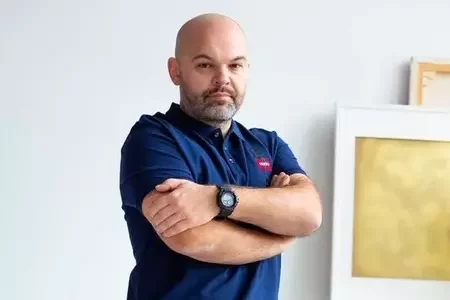
Alexander Fyaduta, a former political prisoner and renowned Pushkin scholar, was asked in an interview with "Radio Svaboda" how his attitude towards Russian culture changed after the start of the war.
"One of the first pieces of news I received, already when I was in Poland, was that in Kyiv (...) monuments to Bulgakov and Anna Akhmatova were starting to be torn down," the former political prisoner recounted.
Fyaduta wrote to his friend in Kyiv that he could understand the position regarding Bulgakov, as the writer's novel "The White Guard" is indeed anti-Ukrainian. However, he considers Akhmatova a victim of the Soviet regime. To this, he received the reply:
"Last night, four people died in Kyiv. Let's first stop the war, and then we'll deal with women who suffered under Soviet rule."
Fyaduta emphasizes: after this, he had no questions, despite loving both writers.
Another episode the literary critic mentioned concerned his friend from Kyiv, who was forced to burn books and sheet music to heat his home. Fyaduta wrote to him: "Vitya, you burned paper, but the music remained."
"Attitude towards culture is not attitude towards Putin. Those people whose monuments are being torn down today in Kyiv would not have said a word, understanding that their country is waging a war, and this war is not just. I think that both Bulgakov and Akhmatova would have understood everything. These are people who were truly bearers of culture," Fyaduta expressed his opinion.
He urges distinguishing between the attitude towards culture and the attitude towards the authorities who started the war:
"Let's distinguish one from the other. And let's distinguish the sign of imperial ambition (as it is now customary to say, but in reality, a sign of the spread of one country or another in the world) from genuine reading, listening to music, visiting the theater or cinema, or appreciating painting. Let's distinguish."
The former political prisoner argues that he is forced to agree with the saying "when cannons roar, the Muses are silent," because every day he learns about how many people are dying in Ukraine.
"You know, those people who are dying — they are worth more than monuments," Alexander Fyaduta concludes.



























Comments
Давайце "знак імперскасці" адрознім, ізалюем і закапаем на самае дно кантэйнера з радыёактыўным смеццем.
Толькі скажыце як.
Не профі, але мог бы паразважаць з Фядутам пра дынаміку ад "залатога веку" да "сярэбранага веку".
Ды паразважаць пра іх я магу, але адрозніваць ня ведаю як.
Аляксандр Фядута - філолаг, прафесійны пушкініст, аўтар дысертацыі "Пушкин и читатели", таксама не здолеў нават падказаць.