


What is more valuable for people, sex or intimacy? Researchers convince that intimacy wins, because it cannot be bought
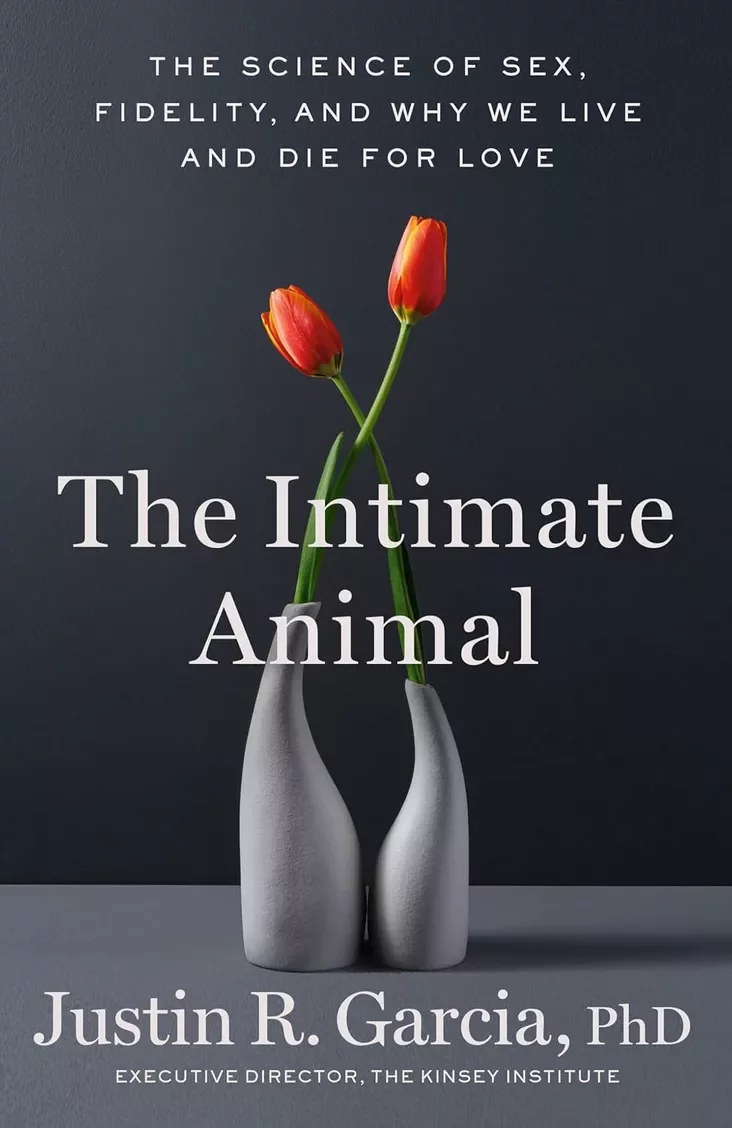
American evolutionary biologist and sexologist Justin Garcia argues: the key to understanding human relationships is not in the sexual instinct, but in a much less obvious, but stronger need for intimacy.

Photo: pexelscom
School biology teaches us a simple truth: sex is necessary for reproduction, gene transfer, and species survival. It would seem everything is logical and clear — hormones and natural selection govern our lives. However, human relationships are much more complex than a simple reproductive mechanism.
In the study "The Intimate Animal," which The Times draws attention to, Justin Garcia argues: in addition to the primal and universal drive for sex, which defines how people act and interact, there is intimacy. It is just as necessary for our survival and well-being.
Garcia defines intimacy as "a pleasant and soothing feeling that arises from a close connection with another person." And this feeling, he claims, is not accidental — it has deep evolutionary roots.
Human reproduction is one of the most complex processes in the animal kingdom. Compared to most mammals, humans give birth to children who remain helpless for an extremely long time. Infants require constant care, and their first years of life become physically and psychologically exhausting for mothers. In such conditions, survival was possible only through stable bonds with others, primarily the child's father. Thus, the tendency towards social monogamy emerged.
As Garcia emphasizes, humans belong to a very narrow circle of mammals — only 3-5% of species — characterized by stable pair bonds. However, over time, these bonds extended far beyond raising children. Approximately 12,000 years ago, with the transition to agriculture, relationships between partners became institutionalized: marriage appeared, closely tied to property, land, and resources.
Humans, Garcia writes, are prone to social monogamy, but not necessarily to sexual monogamy. The desire for variety, novelty, and experimentation often contradicts the need for stable intimacy, love, and emotional security.
Sex has long ceased to be exclusively a means of conception. Garcia refers to a 2007 study in which people were asked: "Why do people have sex?". 237 distinct motives were received — from getting a promotion to the trivial "got carried away by the moment."
The simple joy of sex is why people cheat on long-term partners, he argues and explains: after repeated exposure to the same stimulus, humans and other mammals tend to react less strongly. We get used to good things, and they stop bringing us the same feelings of satisfaction.
However, most people manage to ignore their deep-seated desire for sexual variety and exploration, left to us by evolution, and remain in comfortable, committed relationships. Why? Because intimacy wins, Garcia argues.
And this is confirmed by data. In a 2019 study that surveyed 64,000 women from 180 countries, it was found that kindness and support were much more important to them than a partner's wealth, status, or height. These are traits that cannot be obtained from a casual one-night stand.
Particularly illustrative for Garcia was his experience visiting a legal brothel — solely for research purposes. Among the most expensive services there was the so-called "full Girlfriend Experience" costing up to 20,000 dollars. "Sex is not necessarily a part of it," an employee admitted. "But you can expect amazing hugs." As Garcia emphasizes, people were buying not bodies, but intimacy.
Even the missionary position, which originated two million years ago when proto-humans began walking on two legs, in the author's opinion, indicates that humans evolved to engage in sex not only for conception but also in search of intimacy, self-disclosure, and even relationship maintenance.
Now reading











Rheinmetall proposes to prepare hundreds of modular hydrogen fuel production plants. They could be a lifeline in the event of a severe war with Russia

Rheinmetall proposes to prepare hundreds of modular hydrogen fuel production plants. They could be a lifeline in the event of a severe war with Russia











"Do you want your legs to give out, like Ihnatovich's?" Losik recounted how he crossed paths in prison with those convicted of Dzmitry Zavadsky's murder.

















Comments