


"You Came Here as Suckers, But You'll Become Predators." How Minsk Scam Call Centers Operate
Several individuals who, at various times, worked in one of Minsk's fraudulent call centers agreed to share an inside look at their operations.

Onliner.by reports on how pensioners were persuaded to take out microloans, how employees justified their actions, and why no one feared eventually being held accountable.
On February 17, a large-scale operation to eliminate a network of fraudulent call centers took place in Minsk. According to data from the Ministry of Internal Affairs and the Investigative Committee, searches were conducted in four offices and at dozens of addresses of the suspects. Nearly 200 people were present in the premises during the law enforcement visit, and 55 alleged leaders and most active participants were detained.
The scheme operated on the principle of a so-called "Forex kitchen." This is a model where the company merely simulates trading on financial markets. Clients are shown platforms, charts, quotes, and "balance growth," but their money is not transferred to real exchanges and does not participate in actual transactions. The funds remain in accounts or crypto wallets controlled by the fraudsters, and all trading exists solely on the screen.
As long as the client makes new deposits, they are shown profits. However, as soon as they try to withdraw money or stop replenishing their account, problems begin: either the withdrawal amount is insufficient and more funds need to be added, or a commission or tax must be paid. Eventually, when there's nothing left to extract from the person, communication is severed.
They Said They Were Calling from London
Among the addresses mentioned by sources is an office at 26 Mestroyskaya Street (which also appeared in the video from the Investigative Committee). According to former employees, the structure operated through several legal entities and regularly changed names. Initially, it was "Royal Capital," then "Smart Connection"; at various times, they were known as LimeFX, CapitalProf, Umarkets.
For potential clients, the company presented itself as international and, depending on the audience, claimed to be "located" either in London or Moscow — the actual Minsk office, naturally, was not mentioned in this geographical narrative.
There could have been many more brands; names changed as needed. The "rebranding" itself was simply explained to employees as being done for "developing new markets," "updating positioning," and "expanding the product line." However, our sources believe that the change of facade often occurred after a large number of negative reviews appeared or websites were blocked.
Vadim (name changed) was the first to describe working inside this office. In 2020, he took a job there as a sales manager and worked for about three months. According to him, a full understanding of what was truly happening didn't come on the first day, or even in the first month. But once the complete picture emerged, he decided to leave.
Hiring: "International Company" Seeks Stress-Resistant Individuals
Job vacancies were posted on official employment platforms — and then, as now, their traces can be found in archives. The wording appeared highly respectable: sales manager, financial consultant, client relations specialist. There was no mention of call centers, much less anything criminal — only investments, Forex, development, and international markets.
Candidate requirements were quite simple: literate speech, communication skills, stress resilience, ambition. Experience was welcomed but not mandatory: they would teach everything. A fourth-year student looking for their first job would hardly notice anything suspicious.
— How did I get hired by them? It was all quite standard: I posted my resume on the platform, HR called, and invited me for an interview. She explained they were a Forex company looking for a sales manager; the job involved calling people who had left a request for feedback. The work itself consisted of delivering an oral presentation on the company's services. The process was this: they recruited a group for training, after which you passed an exam, and if everything went well, you were hired. The terms included a $400 salary plus bonuses for each deposit a client made. For 2020, these were not bad conditions. A couple of days after the interview, I was invited for training, — Vadim recounts.

Staff turnover in the company was high, and this didn't particularly bother anyone. Training sessions were launched regularly, in groups of 8 to 20 people. Some dropped out during the preparation phase, some failed the final exam, and some quit within the first few days of work. Despite this, the flow of new candidates never diminished: vacancies were updated, groups were recruited, and the process continued almost like an assembly line.
Training: Two Weeks and a $100,000 Fine
— Training lasted two weeks — from ten in the morning to six in the evening, almost a full workday. The room resembled a school classroom: desks, a blackboard, a projector. The first few days were dedicated to theory. We were taught what Forex is, how currency pairs work, what influences quotes, and why it's important to follow the news. Special emphasis was placed on the company's long-standing, legal, and transparent operations. They spoke of foreign offices, licenses, and an international history, visually reinforced by websites displaying certificates.
After a few days, script memorization began. Future salespeople were taught not just to talk about the product, but to extract maximum information about the client.
— We spent entire days gathering in groups, taking turns practicing scripts on each other, throwing various objections back and forth, and learning how to handle them. The trainer walked around the room, listening to conversations, pointing out mistakes, giving feedback, and occasionally calling individuals for one-on-one practice sessions.
The purpose of the scripts was to uncover the client's needs: whether they wanted to buy a car, go on vacation, or save for their children's education. If the client couldn't answer, it was still necessary to elicit this information, as that need would later be leveraged to overcome objections. We also inquired about the person's profession and income level. Then we would give a brief presentation on what Forex is, explaining in simple terms how easy it is to make money there. The simpler the explanation, the better. For instance: "You bought tomatoes for 5 rubles; tomorrow they cost 3 rubles more, so you sell them for 8 and keep the profit. It's the same on Forex, just with currency."

— After all of this, we would tell them that upon making a deposit, each client would be assigned their personal expert. We claimed all our experts were financial geniuses with vast experience, who would teach them investments from scratch, share their analytics, and provide trading advice. And, supposedly, with these experts, our clients, even without any experience, would earn enough for an apartment within months. Ultimately, the goal was to convince the client to make a minimum deposit of $500 to start earning faster with an expert.
Almost everyone recalls the polygraph as a distinct stage. Future salespeople underwent it on the fourth or fifth day of training. Candidates were led one by one into a separate room, had sensors connected, and were asked questions.
— The polygraph was definitely not just a formality. The questions were mostly routine: whether I had a criminal record, if I had stolen anything, if I used alcohol or drugs, or if competitors had sent me to them. I distinctly remember a heightened interest in whether I had friends or relatives in law enforcement, and a question about sexual orientation.

— All of this happened in such a daunting atmosphere that I felt like I was being interrogated. The polygraph examiner could ask the same question several times in a row, raising his tone each time — even to the point of shouting. You felt as though you weren't hiding anything from him, yet your heart pounded as if it would burst.
Rarely, but it happened, that people failed the polygraph or simply refused to take it. In such cases, a security guard would appear and practically escort the candidate out onto the street.
— After the training, there was an exam: two test calls with the team leader (head of the team), where they posed as clients, posed questions, and our task was to close them. Afterward, everyone received feedback on their exam. Those who succeeded were hired. The rest were politely dismissed and wished good luck. There was no second chance.
During the training, there wasn't the slightest suspicion that this was any kind of scam.
Everything appeared exceptionally clean and transparent; I didn't even think to read reviews. The company seemed legitimate, not hidden in a basement, officially hiring employees, and the trainer's remarks about an office in London and operations since 2008 inspired confidence.
Work Process: "Picked Up the Handsets, Dialed the Number"
After the exam, the newly minted managers entered the main hall — that same noisy office with dozens of desks, headsets, and loud music.
— On the first day, we were told to invent surnames for ourselves; if desired, we could even change our first names. The explanation was that clients who didn't follow the expert's advice and lost money through their own fault might start searching for us on social media and harass us. It sounded logical.
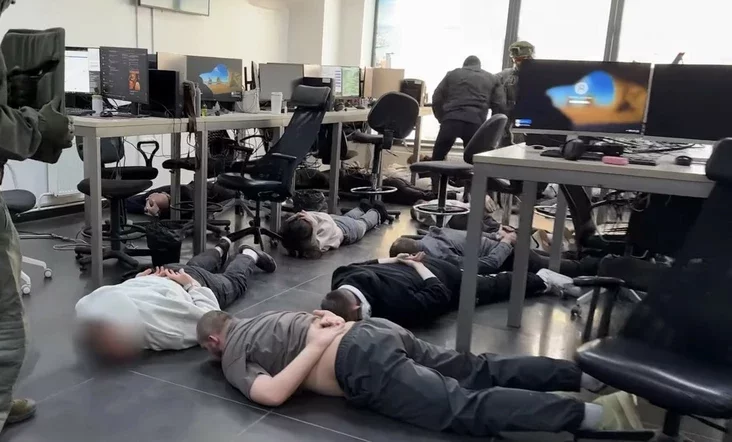
We primarily worked with Russia and Ukraine, and less frequently with clients from Uzbekistan, Kazakhstan, and EU countries. Working with Belarus was strictly forbidden. We were not allowed to say that we were located in Minsk or that we were from Belarus at all. To Russians, we had to say we were in Moscow; to Ukrainians, we said we were in London (they were called from British numbers). The explanation given was always the same: supposedly, if we told the truth, clients who lost money might come to the office and break the windows.
Loud music constantly played in the hall — so loud that managers literally had to shout into their headset microphones. This made their voices sound more insistent and confident, and also allowed them to remain alert and energetic. Moreover, due to the constant "thump-thump," it was difficult to discern exactly what colleagues were telling their clients.
— The workday began at nine in the morning with a team meeting, where the manager delivered a speech to the entire primary sales department — those whose job was to guide new leads to a starting deposit of $500. Beginners were initially given practice using a database of "rejects" — people who had already been called before and flatly refused to invest. Working with this database was very difficult, as these individuals had already been called 10-20 times before us. As soon as they heard which company I was calling from, they immediately shouted, cursed, demanded that their numbers be removed from the database, and hung up. Because of this, my mood during the first few days was extremely depressed; I felt imposter syndrome.
Also, on the first workday, we were given an NDA to sign, which stipulated a $100,000 fine for disclosing commercial secrets to third parties.
Clients: Not Exactly Those Who Dreamed of Investments
The leads, according to Vadim, were far from the investors who dreamed of the Forex market. Most often, these were people who had downloaded a free e-book on earning money online, registered for a financial literacy webinar, or left their phone number on an economic news website. Formally, they showed interest in the topic of money, but rarely in currency trading itself. However, within the system, such contacts were considered potential clients who needed to be "warmed up" and led to transfer funds.
— Then they started giving me fresh leads — five or six a day. Some wouldn't pick up the phone, while others would answer, saying they just wanted to read a book and weren't interested in Forex — such people would refuse to talk. Overall, I managed a full dialogue with only two or three. Many declined cooperation when they heard the minimum deposit amount of $500; others insisted they needed to think, consult, or read reviews — we were forbidden to let such people off the hook.

Team leaders forced us to push them to the very end; they listened to our conversations and shouted at us not to let them go, sometimes even standing behind us and whispering what to say into our free ear. Phrases like these were used:
- "Your friends don't want you to be successful; they're jealous of you, so they'll talk you out of it";
- "Your wife doesn't believe in you; she won't let you get into investments if you tell her";
- "In reality, you don't want to think — you're afraid, you're in a comfort zone that prevents you from changing your life. If you don't give me your consent now, you'll remain poor forever."
The biggest problem was reviews. As soon as a client typed "LimeFX" into a search bar, they would immediately find dozens of websites with negative reviews about the company. In most cases, even after a good dialogue with an interested client, when we called them back, they would call us scammers and hang up. Of course, in such situations, we were taught to say that competitors wrote the reviews. But if a client checked the reviews, they were almost certainly a lost cause.
The objection "No money" was considered not a client's problem, but a manager's failure. Employees were taught to help them find funds: to recall savings, borrow from acquaintances, or contact a bank or microfinance organization.
Team leaders explained that everyone has money: people eat, they live on something. It was required to pressure clients, create a sense of urgency, and compel them to find money while still on the phone with them.
First, we suggested they recall any hidden savings or pawn something. Then other options were brought up: borrowing from friends or relatives (of course, clients were forbidden to disclose the real purpose of the money, instead told to say something like their car broke down or their neighbors were flooded). If even that didn't work, loans and microloans were pursued.
Every manager who had worked there for at least two months knew by heart all the loan services and banks in Russia, Ukraine, and Kazakhstan: their terms, where to get a microloan with a bad credit history and existing debts, and where loans were issued to pensioners. Sometimes managers would personally call banks and inquire whether they would grant a loan to a 72-year-old pensioner or someone with an overdue loan.

Those who were too afraid of the risk of not repaying the loan were offered two-week deposit insurance. The idea was that even if the client lost this money trading within the first two weeks, the insurance would fully compensate them. This created an illusion of security for the client, a guarantee that even if the investments "didn't work out," they would still be able to repay the loan through the insurance.
After the client made the minimum deposit, they were transferred to the retention department. These were the "personal experts" who were supposed to teach trading, oversee transactions, and help clients earn money.
— In reality, the purpose of this department was to continue extracting money from the client. They would advise on trades using fabricated charts, show the supposed growth of purchased assets, and illustrate large profits on the balance — essentially, they created the illusion for the client that they had turned $500 into $1000 in just three days.
Then, clients, emboldened by their supposed success, would be pressed to invest even more. For example, they would be told that they had insider information about Pfizer having completed clinical trials for a COVID vaccine, that it would soon be publicly announced, and their shares would increase tenfold. However, the entry threshold for these shares was higher, requiring the client to invest more money. People, as a rule, fell for it and found the required sums.
Legends circulated about the best retention managers, and they were held up as examples to everyone. For instance, one such specialist managed to get a grandmother, who had taken out five microloans for her initial deposit, to replenish her balance by $100,000 a month later. It turned out she had sold her apartment.
If a client demanded to withdraw money and refused to continue trading, money was extracted even from them. For example, if a client had $2300 in their balance, they would be told that withdrawing money required an international transfer, and the minimum amount for that was $3000. This meant they needed to add another $700 to withdraw their funds. If they refused to pay extra, they would be offered to quickly earn that $700 through trading, and their balance would then be wiped out.
Atmosphere: "You Came Here as Suckers, and Here You Become Predators"
The average age of employees, according to our sources, was not high — mostly between 20 and 30 years old. Many were students or recent graduates, some came from retail sales, others were looking for their first serious job. Energy, ambition, and the desire to earn money quickly — all of this perfectly aligned with the cultivated image of market sharks.
— The team fostered an atmosphere of sharks, lions, and other predators, and the film "The Wolf of Wall Street" was like a Bible to us. Many, including myself, reveled in feeling like characters from that movie.
Loud music played in the office; all managers shouted into their microphones, sometimes hiding under their desks if the client was hard to hear, working while standing, gesticulating wildly, and even playing mini-golf during conversations.
Management fueled this, speaking in quotes from the movie: "Pick up the handsets, dial the number," "There is nothing noble in poverty."
On the first day of work, we were given "homework" — to watch "The Wolf of Wall Street" and "Boiler Room." The image of con artist brokers is heavily romanticized in those films, so many felt not like phone scammers, but like the characters from those movies — just as cool, successful, attractive, and energetic.
Team leaders publicly humiliated those who showed no results and praised the most productive. This was done at those same morning team meetings. If you sold well, management would shake your hand, chat with you in the smoking area, and even allow you to drink beer during work. Those with no results were not greeted, were forced to work standing, and were not allowed on smoke breaks.
And since results were inconsistent, the attitude towards you changed every month.
For example, today you're at the top of sales — management and the "cool" employees consider you "one of their own," and you're publicly praised. But a month later, if there's no result, you're publicly humiliated, spoken to in raised tones, not greeted, and forced to stay after work. This was very psychologically taxing and motivated one to achieve results at any cost to rejoin the company of the cool guys and girls.

Yes, there was a division between the "cool" employees and "consultants" — which is what they called weak managers who couldn't sell. This attitude was so contagious that I myself would disdain talking to "consultants" and subconsciously viewed them as inferior. Even though I was always an underdog in terms of results.
Personally, my main motivation wasn't the money, but rather the goal of escaping the "consultant" label and joining the ranks of the "cool guys," so that management would see me as one of their own. Management also fueled this, often stating in meetings: "You all came here as suckers, but here you become predators."
Earnings: What They Paid For and How Much
The financial incentive structure was simple and clear, and by market standards, it appeared quite attractive. The salary for primary sales operators started at approximately $400–$500, plus bonuses for each "deposit," meaning for each client who deposited the minimum $500.
— I had a salary of $400 plus bonuses for each deposit. Within a calendar month, additional payments were made:
- for 1-3 deposits — 80 rubles each;
- for 3-5 deposits — 160 rubles each;
- for 6-8 deposits — 240 rubles each;
- for the 9th and subsequent deposits — 320 rubles each.

There were days when tequila shots with lime and salt sat on the manager's table, and anyone who secured a client could take one. Sometimes it was announced that anyone making a sale by the end of the day would immediately receive $50.
There was also a wheel of fortune, which was spun after a successful sale — you could win money, shorten your workday, or get a bottle of whiskey.
The minimum salary came via card — about 250 rubles, with the rest paid in envelopes, in both currency and rubles. Every month, a very large man would arrive in a big car with Russian license plates and a bag; the office director personally met him. After that, we were given envelopes with our earnings.
In reality, we didn't see huge money there. The best salespeople made eight sales a month; 10-11 was already a rarity. So, it turns out that the best salespeople earned about $1000 at that time.
Of course, that's money, but it was definitely impossible to get rich from primary sales. The average result for the office was three to four sales per month per manager.
We were told that a manager became profitable for the company if they secured four deposits a month. The first two months were a ramp-up period, after which deadlines were imposed.
Employees from that department always dressed well, carried new iPhones, always arrived by taxi, and many rented apartments in Lebyazhiy near the office. So they clearly earned significantly more than us.
During my time there, every day featured various games, tasks, and goals that allowed for additional earnings: making the most sales, making the first sale, or making the biggest sale. When someone secured a deposit, their team leader would shout across the office: "Let's support Vanya!"
People would start drumming their hands on the tables, the manager who made the deposit would ring a bell, after which everyone applauded, management shook their hand, and they were allowed a short break.
When Conscience Awakens
— No one explicitly told us it was a scam. During training, we were thoroughly indoctrinated — almost all newcomers believed they were working for an honest and transparent company. Understanding came with time: when you witnessed the work of the retention department, read reviews, or were forced to persuade a pensioner to take out a microloan.
I remember reaching an elderly man with lung cancer.
He had no money, and I asked the team leader to remove him from the database, to which I was rudely told: "The problem isn't his; the problem is yours because you're not getting results. Solve your own problems, then think about him."
And I was forced to call him and tell him that our experts had insider information that would allow his $500 to be transformed in a couple of days into an amount that would cover his treatment in Germany.
Moreover, I was to tell him that his only chance to survive was to make a deposit today, as it would be too late for the insider deal later. I couldn't bring myself to do it, and as a result, the team leader transferred this grandfather to a more aggressive manager. But, thank God, his wife talked him out of making the deposit.
If a client on the other end of the phone was ready to make a deposit, but the manager's conscience kicked in, the team leader might say something like: "Well, we're not entirely beasts, of course, we'll withdraw something for this grandmother; we won't leave her without money for medicine." But whether they actually did this or not — I cannot say for sure.
You'd have to be incredibly naive to work there for even a month and not realize it was a scam. I'm certain everyone understood this, but we were forbidden from discussing it. Sometimes I managed to talk to colleagues about how they felt and if they were okay working there. Most found excuses for themselves. The options I recall include:
- "When I come to the office, I become not some hypothetical Ivan Petrov (as in real life), but Ivan Volkov (a pseudonym for work). Everything that happens at work is done not by me, but by him."
- "If I don't close the client, my colleague will call him and close him anyway. The client will still be scammed — the only difference will be that someone else, not me, will get the money."
- "I'm just doing my job; I can't know exactly what happens to them after the deposit. No one told me they're then abandoned; these are just assumptions. If people are scammed, that's on the company management's conscience, not mine."
Security: Cameras, Guards
No one feared that sooner or later they would have to answer for their calls before the law. We didn't work with Belarus, so we believed no one would be interested in us. The ultimate beneficiary was not Belarusian companies, but some offshore entity that received client money into its accounts, and we were supposedly a simple outsourcing call center that couldn't know whether our client was defrauding them or not.
They reasoned this way (clearly mistakenly): after all, real phone scammers couldn't possibly occupy a large office in the center of Minsk and recruit employees through official platforms. Even if we were doing questionable things here, we were likely operating within legal boundaries by exploiting some loopholes in the law; the authorities couldn't be unaware of us, and management must have foreseen everything.

On the other hand, we saw how the security service operated. The entire office was under camera surveillance; entrances required passes. To enter the open-plan area, one first needed to pass through the main entrance with a pass, then through a second door with a fingerprint scan. All equipment was centrally controlled. The system administrator could, at any moment, remotely deactivate any employee's CRM account, work email, "phone," and work chat. All of this could be done in a minute. Accordingly, at any moment, he could completely wipe information from all computers in the office, camera recordings, and all other traces of our activities.
Security personnel were always stationed at the entrance. If, for instance, a plumber or coffee machine technician came to the office, security staff would constantly follow them and keep them within sight. If a dismissed employee came to collect their salary, they would also be escorted to accounting and then to the door. I once accidentally saw video from street cameras on a monitor, indicating they also monitored the business center's perimeter.
Therefore, there was always a feeling of absolute security: even if it turned out that we were doing something highly illegal and they came to arrest us, they would be spotted a kilometer away, and by the time they broke down the doors, the system administrator would have wiped all data from the computers. The idea was that when the patrol entered the open-plan office, they would find nothing but empty computers, and management would tell them something like: "We were just selling vacuum cleaners here."
"I Thought: What a Jerk I Am"
The work quickly turned into an exhausting assembly line. According to Vadim, managers were required to make around 300 calls a day and spend a minimum of three hours "on air" on the line. Those who failed to meet the quota could be held in the office by team leaders until late in the evening.
— Metrics were often "pumped up" artificially: calls were logged or airtime was inflated through hopeless conversations. And due to regular Saturday shifts and constant pressure on clients, there was almost no time left for personal life.
I also had two consecutive cases where clients were in very difficult situations. For example, there was an elderly woman from a village whose house roof was leaking, and she almost cried into the phone, saying she didn't know how she would survive the winter because there was no money for repairs. The team leader actively monitored my interaction with her and insisted that I convince her to take out a loan for a deposit, claiming our experts would quickly help her earn the necessary amount and, eventually, enough for a new house.
Later, I encountered a wheelchair-bound disabled person who had suffered a stroke and had speech problems. The team leader very insistently told me to carefully guide him toward taking out a microloan. To my great relief, he refused. After that, I couldn't compose myself for a long time; it was a terrible feeling: I was driving home from work and all the way I kept thinking, "What a jerk I am."
Given the lack of time for a personal life, constant pressure from management, and the realization of what I was truly doing, I decided to leave.
What Was Under the Hood
Another interviewee — a specialist who claims to have maintained part of the infrastructure — spoke about the internal IT aspects. According to him, it was almost an international syndicate, not merely a few offices in Minsk.
— The network is built through dozens of legal entities in various countries. Each office might have had its own legal entity, and in parallel, there were separate companies responsible for IT support, hosting, accounts, and administration. The infrastructure was established in advance and had been in use for years — the Belarusian offices were merely a part of a broader system that had previously operated in other countries.
The interviewee claims that similar call centers operate in Ukraine, Portugal, the Philippines, the UAE, Russia, and other countries.
— Technically, launching a new office appeared as a connection to an already existing "shell": accounts were created, internet and internal service access was configured, and telephony and CRM were connected. If for any reason a project didn't succeed or the parties couldn't agree on profit distribution, the office could close within a few weeks. Yet, the IT platform itself would continue to exist.
Website names were registered by the hundreds. If one domain was blocked, operations simply shifted to another pre-purchased one, often with the same name but in a different domain zone. The blockages themselves were a normal operational occurrence. Today the site would be accessible at one address, tomorrow at another.
Payments for infrastructure — hosting, domains, cloud services — were, where possible, made via cryptocurrency. This simplified transactions and reduced reliance on bank blockages.
— What about the red button?
— The offices utilized remote power control devices — essentially smart outlets or controllers that allowed the power supply to workstations and network equipment to be disconnected. In parallel, a monitoring system existed that, upon receiving certain signals, could initiate the shutdown of servers or network nodes.
Work computers were encrypted, meaning that after power was disconnected, it was impossible to boot the system without entering an individual password. Furthermore, passwords were unique for each device and stored centrally, with access restricted to a limited number of individuals.
In addition to physically disconnecting power, the system was designed to sever the VPN channels through which the offices connected to the main infrastructure. This meant that if a trigger was activated, the office could be almost instantly "cut off" from the servers.
— Did the system administrators and IT specialists understand what the office was doing?
— Employees in technical positions didn't delve into the specifics of the call center's operations. Each of us was responsible for our own segment, and our tasks involved setting up accounts, servers, and the network. No one ever told us that it was a scam.
But personally, I began to suspect that something strange was happening. I calculated that the profits from honest Forex trading simply wouldn't be enough to cover the expenses of maintaining several offices, a large global staff, equipment, and ongoing IT services. Moreover, we were paid significantly above market rates: hypothetically, if an average system administrator earned $1500, we were immediately given $2500. The salary was fully legal ("white"), with taxes and deductions to the Social Protection Fund.
"I Rang the Bell. And That's What's Killing Me." Pavel's Story
While Vadim left relatively quickly, Pavel (who requested his surname not be published) stayed considerably longer. He joined the office about six years ago, when he was 20. He recounts almost the same experiences as Vadim: an official job posting, an energetic youth team, promises to "help people earn money," scripts, pressure, and a cult of results. The difference is that Pavel didn't just "look and leave" — he became part of the machine. But the most unpleasant part began afterward: the feeling of guilt still haunts him.
— At first, I believed the narrative and tried to think I was doing useful work. But over time, I started to notice strange details. The documents on the website weren't licenses but some kind of "certificate" in the style of "Horns and Hooves" (a metaphorical phrase for a shady company). With legitimate brokers, you see a registration number and can verify the license in a registry, but here the scan was so blurry that the numbers were illegible. And the addresses listed on the websites were either in Saint Vincent and the Grenadines or the Marshall Islands — these are offshore havens.
Reality finally caught up with Pavel when he began to understand what happened after a deposit was made and how clients were discussed internally.
— I remember approaching the team leader and asking: "Tell me honestly: are we scamming people?" And the answer was... it devastated me. He said: "Look, if you don't take his money now, someone else will." Meaning, they'll take it one way or another; it's just a question of who. That's when I understood that the managers knew everything.
I started experiencing stress, my eye twitched, and I began drinking heavily just to forget what I was doing. It was impossible to sleep normally. You'd lie there, dreaming that you were calling someone and conning them out of money. And in this dream, you felt stuck, unable to wake up until your alarm rang.
So I tried to warn people. Once, I leaked information to a review website: I wrote that it was a scam, where the company was located, and how they operated. And the team leaders saw it. I don't know how, but they did. And they simply erased the review. Then I tried to talk to colleagues: asking if they were okay with it. But I received all the same excuses in return: "If not me, then someone else," "The money will be stolen anyway," "It's not us, it's the retention managers who will scam them."
The most terrifying realization comes when it dawns on you that every ring of the bell you made signified someone's broken life. And that bell was struck 6-10 times daily. And, it seems to me, 80% of the employees perfectly understood what they were involved in.
The Minsk office has now been liquidated. An investigation is underway, and the first results will be announced soon.
Now reading


















In Poznań, a gynecologist removed the uterus and ovaries of a 24-year-old Belarusian woman without her consent. The doctor faces up to 20 years in prison















Comments