


It is commonly believed that true, passionate love is a rare phenomenon, almost a unique event in a person's life. But is that really true? A large-scale study involving more than 10,000 people aged 18 to 99 allowed us to look at romantic feelings through the prism of statistics. And the numbers obtained make us think.
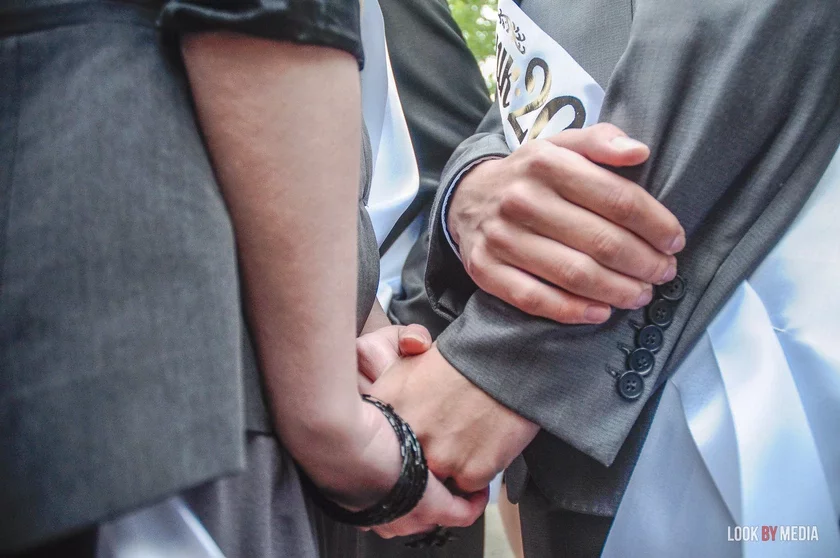
Illustrative photo: LookByMedia
According to psychologist Robert Sternberg's classic triangular theory of love, it consists of intimacy, commitment, and passion.
Passionate love is a form in which passion comes to the forefront. It is characterized by heightened physiological arousal, intense longing for the loved one, and their idealization.
By its nature, this feeling is unstable: it can flare up at the beginning of a relationship, and over time change, giving way to a more calm form of romantic attachment.
For decades, researchers have studied the mechanisms of passion — its influence on the brain, behavior, and emotional state. Numerous works exist on how this feeling arises and how it manifests. However, the question of how many times a person experiences passion in life remained almost unexplored: previous works were usually based on small samples and did not provide a complete picture.
To fill this gap, American researchers analyzed the responses of 10,036 single adults in the USA. Each was asked a direct question: how many times in your life have you experienced passionate love? Respondents had to give a specific number.
After processing all responses, it was found that, on average, each person experiences such an experience 2.05 times — slightly more than two instances per lifetime.
A more detailed picture looks like this: 27.8% of respondents reported experiencing passionate love once, 30.3% — twice, 16.8% — three times. Four or more such episodes were noted by 10.9% of participants. At the same time, 14.2% of adults stated that they had never felt such a feeling in their lives.
The authors emphasize: the absence of such an experience is not a deviation or pathology. This is quite a common phenomenon that fits into the natural diversity of romantic biographies.
Overall, the results show that passion is episodic and unstable in nature. It is not a constant state but arises during specific periods of life. Researchers also point to the possible influence of memory: the brightest or most recent relationships may overshadow previous ones, affecting how people evaluate their past romantic experiences.
Demographic differences were also found, although they turned out to be small. Men, on average, reported a slightly higher number of instances of passion than women (2.01 vs. 1.83). This was most clearly manifested among heterosexual participants: in this group, men reported more experience of passionate love than women. No significant gender differences were found among gay, lesbian, and bisexual participants.
Age was also linked to the number of instances, but the connection turned out to be very weak. Older participants reported a slightly greater overall experience. The authors explain this primarily by the fact that people who have lived longer had more time and opportunities for relationships. The small effect size may indicate that new episodes of passionate love occur relatively infrequently in old age.
However, the study has limitations. It only involved single adults from the USA, so the results cannot be automatically extended to married people or other cultural contexts. Additionally, the concept of *passionate love* was not specifically defined in the survey, so participants might have understood it differently.
Nevertheless, this is one of the most extensive studies attempting to answer a simple but fundamental question: how many times in life does a person experience passion? And the data obtained do not support the widespread belief that passionate love is a feeling that everyone necessarily experiences more than once.
Now reading















In Poznań, a gynecologist removed the uterus and ovaries of a 24-year-old Belarusian woman without her consent. The doctor faces up to 20 years in prison





















Comments