


In old Brest, the ruins of the Bernardine convent will be preserved
The ruins are located on the territory of the Brest Fortress, and they will be conserved thanks to the state program "Cultural Space". State television noted that the conservation is being done to save the last vaults and corridors, and it will also help explore the cultural layer around the former monastic complex, writes Radio Svaboda .
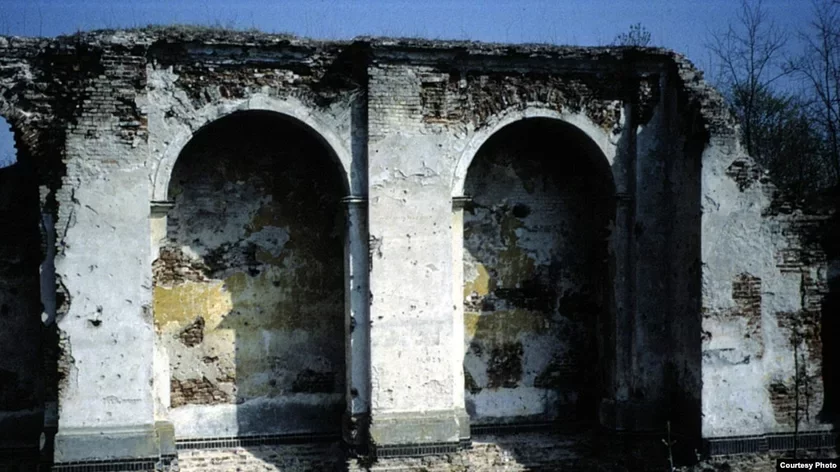
Remains of the Bernardine convent in Brest. Archive photo
The remains of the former Bernardine convent are visible to those who pass through the southern gate to the "Berestye" museum or the Kholm Gate of the Brest Fortress.
The ruins were episodically remembered. In the early 90s, specialists turned to the Central Military Historical Archive in Moscow. The preserved drawings of the convents there helped archaeologists begin excavations.
Volodymyr Kazakou, architect, director of "Restavratsiainvest" LLC, spoke about the excavations:
"We had a task: first, to identify the church, find its foundation to determine its dimensions. Practically all crypts were found. There was no first-floor vault; everything there was filled in. Then we got a complete picture."
In 1992, under the leadership of archaeologist Valentin Sobal, excavations were carried out in the ancient Zamuhavetsky suburb of Brest and revealed features of the spatial structure of the Bernardine convent and church. This building was still considered for priority restoration in the early 2010s.
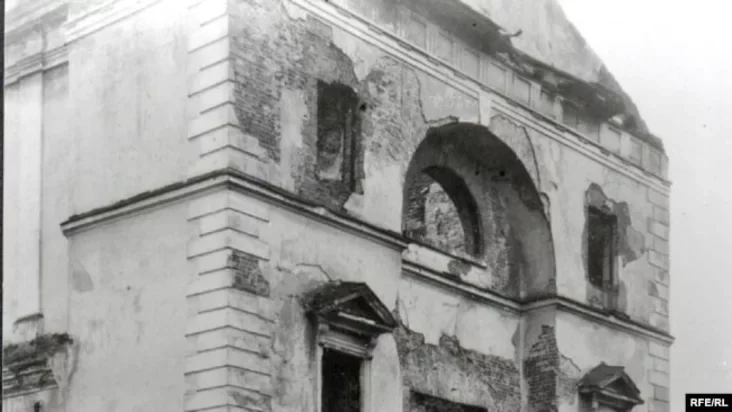
This is what the church of the Bernardine monastery in Brest looked like
Vitaly Pilipovich, archaeologist, deputy dean of the history faculty of Brest State University, also spoke about the research of the territory:
"In 1993, this area was explored. Besides the church itself, objects from an earlier period were found here, as we know that before the stone church and then the stone monastic complex were built, there was a wooden church. 100% people lived here, as objects from the XI-XIII centuries were found."
But then the funding for the excavations was stopped. Even so, historians learned more about the convent each year. For example, it was revealed that until the early XIX century, the women's monastery and church coexisted with a men's monastery. The monastic complex in the Vilnian Baroque style was a mini-city with its own apothecary garden.
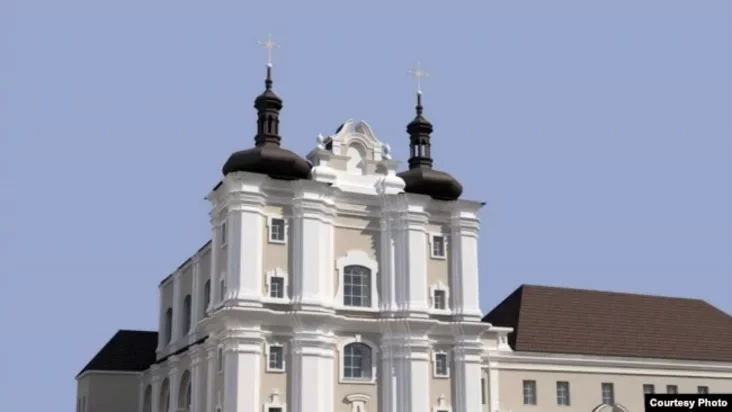
Reconstruction of the church, project
When Brest came under the rule of the Russian Empire, the buildings were transferred to the Alexander Brest Cadet Corps, and later a hospital was located there. And during World War II, one of the medical-sanitary battalion units was stationed here.
In spring, work will begin to clear the territory around the remains of the convent. The structures of the first and underground floors will be reinforced. Archaeologists and historians believe that all prerequisites exist to resume excavations: the cultural layer, 3 meters deep, surely hides many discoveries.
In the XIX century, by order of Russian Tsar Nicholas I, Brest was almost completely destroyed. Residents were evicted, and numerous churches, cathedrals, palaces, and monasteries were rebuilt into barracks and fortress towers, Brest historians previously stated.





































Comments