


"They brought my wife and said they would torture her." A couple from Ukraine shared a horrific story of persecution in Belarus
In the spring of 2025, Ukrainian citizens Volha and Mikalai (names changed for the safety of a child located in Russian-occupied territory of Ukraine) arrived in Belarus from a European country where they had lived since 2023. Soon after their arrival, they were arrested. "Viasna" spoke with Volha and Mikalai about what they had to endure behind bars in Belarus before being handed over to Ukraine.

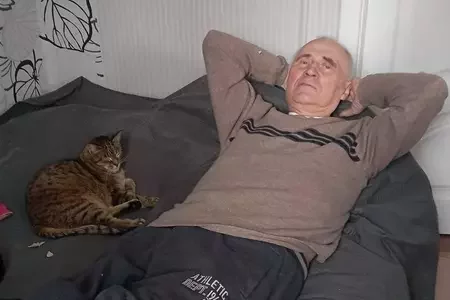
Illustrative photo
The city where the spouses lived in Ukraine is now occupied by Russia, and Russian military personnel are in their home. Therefore, they planned to move to a village in Belarus, find simple work, and be able to meet their son, who is also in Russian-occupied territory and can only travel with a Russian passport.
But Volha and Mikalai were detained soon after their move. They were accused of espionage, terrorism, and other grave political crimes. For half a year, they were held in inhumane conditions without parcels, clean linen, or hygiene products. Mikalai was tortured by suffocation, forced to sign accusations, beaten, abused, placed in "press-cells," and blackmailed with sexual violence against his wife to such an extent that he stopped speaking and began to experience psychological problems.
After the torture and psychological pressure endured in Belarus, the man stutters severely and speaks with difficulty. The couple is now undergoing rehabilitation with the help of Ukrainian specialists.
"An officer in a mask put a pistol to her head"
Mikalai and Volha arrived in Belarus in the spring of 2025. They were arranging employment and registering with the migration service. Mikalai believes that suspicion arose because he and his wife, both having higher legal education, were seeking work in a collective farm in one of the villages.
In Ukraine, Mikalai was an officer of the Ministry of Internal Affairs. In June, Volha recalls, her husband received a call from the migration service asking them to come and sign papers.
"When we were going there, I had a bad feeling. As a former officer, I understand who is brought in through the central entrance. I told my wife: we are about to be arrested. And she took the last two steps and said: 'Who needs you!' At that very second, special forces with weapons jumped out. She was put facing the wall. One officer in a mask put a pistol to the back of her head, and another aimed a weapon at her back, towards her heart. I saw this from below — I was thrown to the floor and my head was twisted so I could observe everything. My arms were twisted at the shoulders. When they put handcuffs on me, they loudly asked for my surname and citizenship," Mikalai recalls.
The man's phone was immediately confiscated, and he was led outside, twisted so his face was almost on the asphalt. The couple was put into an unmarked minivan. Mikalai was placed on his knees between the seats, his head pressed to the floor, while Volha was seated next to him. But their journey by car lasted only about two minutes.
"It was somewhere nearby. We were taken out of the minivan and led into some building's basement. Me into one room, him into another. They sat me on a chair and told me to look at the wall. There was a masked person in the room with me, but he didn't speak to me. Then I listened to my husband being interrogated, but I didn't hear the specific questions.
After that, they came to me and said that my husband had confessed to everything: that we allegedly came to record the disposition of Russian equipment in the region, for which we took appropriate photos at the station. Then, they told me, we allegedly wanted to derail a train and finance extremist activities in Belarus. We were accused of allegedly working for Ukraine's special services. In short, we were spies, terrorists, extremists. But there was nothing to build the accusation on. They found a photo of my husband against the background of the station - he took it as a souvenir," Volha recounts.
"They hit me in the stomach and on the head — simply, without explaining anything"
At this time, Mikalai was in the next cell. He recounts in detail what was happening behind the wall, away from his wife:
"They brought me to the basement, made me kneel, one leg over the other, hands cuffed behind my back, and told me to stand like that on the concrete floor. I stood like that for about two hours, probably. Two masked officers walked around. If I tried to change my posture in any way, I would get a blow either to the stomach or to the back of the head.
After a strong blow to the head, I fell. They tried to make me stand back up, but I couldn't kneel. Then they brought an iron chair and sat me on it. They tied my legs to the chair with restraints, and my hands were still cuffed. I sat like that for another six hours.
I asked them to loosen the handcuffs, but they just laughed. And then it turned out that on my right hand, they had tightened them so much that the handcuffs broke. They didn't know how to remove them and said: we'll saw off your hand now. At this time, they hit me in the stomach and on the back of the head — simply, without explaining anything.
After about another two hours, an officer in a mask came and said: "We know everything, you are a spy, we looked at your phone." He also said that my wife had allegedly told everything. He promised to release her if I would testify that I was a spy. I said that I was not a spy and never had been. But they shouted that they knew everything and my wife had told everything.
They also said that one son was arrested in Russia while he was traveling by train to Belarus, and another was kidnapped by the FSB in one of the European countries. Well, that's delirium!
Then they again said that I was working for the Ukrainian special services. They asked if my wife knew about it, or if she was also working with me. I said it was complete nonsense, but no one believed me.
A few hours later, they came again and started beating me, asking the same questions. They were trying to get passwords, meeting places, aliases, curators, assignments – and it all went in circles."
So Mikalai was interrogated and beaten until late evening, after which he was taken for a polygraph test. This interrogation, according to the man's estimate, lasted about four hours.
"It turned out, according to the polygraph results, that I work for all special services — from the SBU to the intelligence of several European countries. In the morning they took me to the police and said: he's so stubborn, we'll have to work differently."
Volha, like her husband, was also sent for a polygraph interrogation:
"There was also constant pressure on me. They told me that my child was arrested and was with FSB officers, that he was being beaten and mocked there. Therefore, I had to confess to the actions I was accused of. I said that this was complete delirium and nonsense. No one listened to me, and I was hooked up to the detector. They asked me questions: for which special services I work, what information I transmitted..."
Whether I passed this polygraph or not – I don't know. They put handcuffs on me and transferred me to the temporary detention isolator (ITZ). Around nine in the evening, I was placed in solitary confinement. But why I was detained, what happened – in essence, no one ever told me."
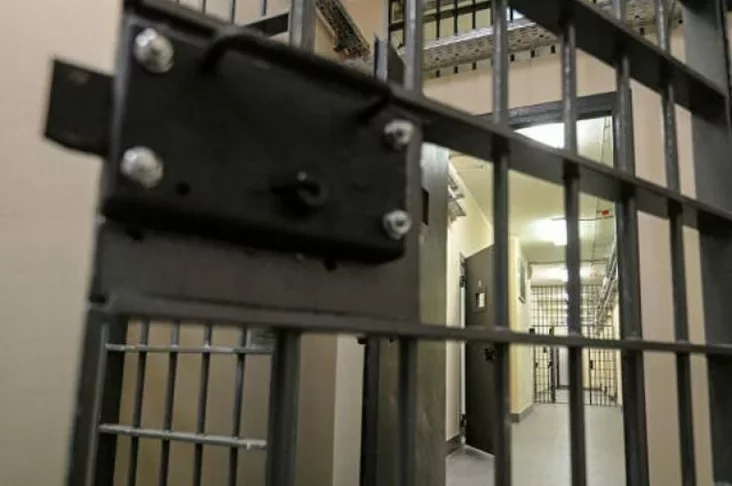
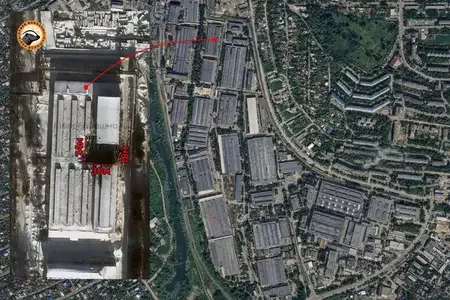
Illustrative photo
"Every day they took me to the basement and tortured me"
The next day, the interrogations and pressure on Volha and Mikalai continued. The woman recalls:
"The same masked people arrived. I understood it was the State Security Committee (KGB). Another interrogation. I told them everything from 2014: how I lived in Russian-occupied territory, then in another part of Ukraine... They listened to me, recorded everything, and sent me back to the cell."
At this time, Mikalai was told that his wife had already been released. When the working day began at the police station, he was again taken to the basement.
"They brought me to a small cell without a window or a washbasin — just a hole for a toilet and a bunk attached to the wall. I was there until mid-June. Every day they took me to the basement for interrogation and tortured me. They stripped me... And my body couldn't take it... Then I cleaned it all up with my clothes. Then they brought me back to the cell."
The couple was held in the isolator and brought out for interrogations in a way that they wouldn't cross paths. In the ITZ, Volha was not given a mattress or a pillow, and she had no access to water either:
"They kept me in solitary confinement, where there was only a chair in the middle of the cell. The bed was fastened to the wall: they lowered it at ten in the evening and raised it at six in the morning. Every morning began with listening to the anthem of Belarus: nose to the wall, hands behind my back. They gave me two liters of water in a bottle for the day and said: if you want - drink, if you want - wash. They also opened the window for me, so it was cold. June was very cold in Belarus, so I got sick there."
In mid-June, the convoy guard told Mikalai that his wife should be released.
"I thought: I'll hold on a bit now, the main thing is for them to release her. When we were detained, I asked about a consul or a lawyer, because we are citizens of another country. But the officers just laughed and replied that I would never see anyone."
"You, 'khakhlushka,' are lying, we don't believe you"
Volha was indeed held for about a week and then released, with all personal belongings taken from her upon detention returned. She was told that her husband was free. But when she returned home, everything was locked, and her husband was nowhere to be found.
"I went to the married couple from whom my husband and I used to rent housing, because there was nowhere else to go. They advised me to go to the police in the morning and report my husband missing — let them search. In the morning, I did just that. A migration service employee, who handled our registration, called somewhere. But an officer with handcuffs arrived and said: 'You're coming with us'," Volha recalls.
The woman asked on what grounds she was being detained again, but no one explained anything to her. She was searched again, all her belongings were taken, and she was driven to one of the regional centers of Belarus. In June, Volha was brought to a temporary detention isolator. It was a weekend, so the woman remained in the dark the entire time.
"On Monday, a KGB officer arrived and took me to their building. There, he said that I was facing 24 years of imprisonment for espionage, extremism, and terrorism. Allegedly, they had all the evidence that my husband had confessed to everything, and I now needed to cooperate with them, otherwise my child would suffer greatly, because he would be "degraded" and beaten. What they said was horrific.
I informed them that my husband, son, and I are not spies and do not cooperate with any intelligence agency in the world, but they put me on a polygraph again — checking every word I said. The KGB officers told me: "You, 'khakhlushka', are lying, we don't believe you." Is it all because I have a Ukrainian passport? What if it were from another country?" the woman says, still bewildered.
"They put a plastic bag over my head and tightened it"
At this time, Mikalai was also brought to the regional center, but immediately after being processed at the ITZ, he was taken by KGB officers. The man recounts with difficulty what happened to him next:
"In the KGB building, they took me to the basement again. The chief came to me, another officer, and people in masks. They told me that they already knew everything and had allegedly been following us as soon as we arrived in Belarus. They insisted that I tell everything myself, and they would compare it with what they already knew. And they said that if I lied, I would go to prison with my wife and son. I tried to explain that I hadn't done anything, but they wouldn't listen."
Mikalai was offered to be exchanged for a Belarusian intelligence officer, to which the man replied that he had no operational value and their counterparts would laugh at them.
"Torture in the basement started again... They put a plastic bag over my head and tightened it. I'm sitting in my underwear on a chair with handcuffs attached through the chair's backrest, they tighten the bag around my neck, and I can't breathe. When the bag stuck tightly to my face, making it impossible to even sigh, I shook my head, but it didn't help...
When I lost consciousness, they tore the bag and hit my ears many times. Simultaneously, they slapped both ears and the back of my head many times. I fell off the chair, but they lifted me up and it all started over many times.
They took me up to an office and asked if I would continue to remain silent. But I hadn't done anything. Then they told me to think about it until tomorrow and returned me to that small cell in the ITZ. Loud music was constantly playing there. They stripped me and took off my shoes, so I walked barefoot on the concrete floor.
I was kept there for about 90 days. Every other day I was tortured in different ways and taken for interrogations. And when they realized I wouldn't say anything, they brought my wife and said they would now torture her. I begged them not to torment her. To this, the chief said they wouldn't torment her — they had found another use for her.
He started showing me photographs allegedly of her — of a woman resembling my wife. He also promised to show me a video and said she was beautiful — "such a commodity, a 'khakhlushka-pae*ushka', is valuable to us, at least we'll have some fun."
Then they started pressuring me that my son was also arrested. This went on for a very long time. They didn't let me sleep; I was woken up three times a night."
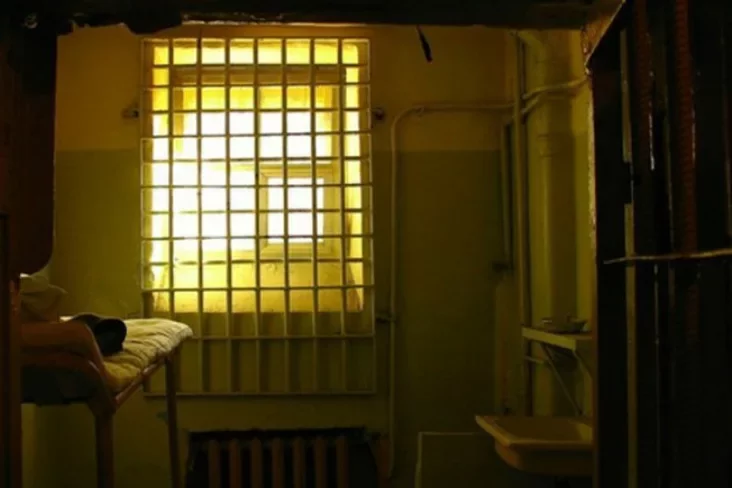
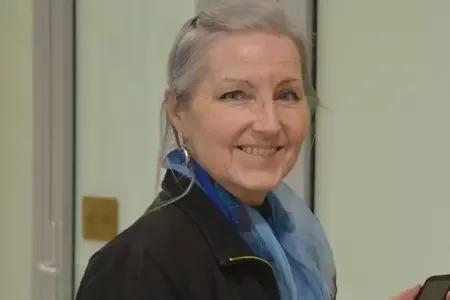
Illustrative photo
"If I don't sign that I'm a spy, she'll die on the operating table"
In the ITZ solitary confinement cell, where Mikalai was held between interrogations and torture, harsh conditions were created, similar to those for his wife.
"They turned on the water in the solitary confinement cell once every few days so I could clean up. But I simply didn't eat — you understand... I had no toilet paper.
I asked the guard for soap to wash the toilet, so at least I could drink water from it. They constantly intimidated and threatened me. They took me to the KGB constantly. After some time, they said that my wife urgently needed an operation, and if I didn't first sign that I was a spy, she would die on the operating table. But if I admitted even this, they would save her. Then I agreed to sign, because I knew that in 2016 she had already undergone an operation and almost died then. This was their first victory," the man recounts.
Volha says she indeed had an operation and remembers it:
"In the regional center, they took me for a gynecological operation. Ideally, I needed hospitalization, but the convoy officers who accompanied me to the hospital refused because there was no one to guard me. They cut and cleaned me in a gynecological chair and then sent me back to that prison. They told me that since I didn't have medical insurance, no one would pay anything for me. But the duty officer brought pills and said I would have to take them — I don't know who bought them for me."
"I started hearing sounds and losing my mind"
The woman was held in the ITZ in one of Belarus's regional centers in unsanitary, inhumane conditions:
"In the isolator, they gave me a piece of laundry soap, a small piece of toilet paper. They have some calculation — I just don't understand who calculated it this way — that a person is allowed one and a half meters of toilet paper per day. And as for food — what kind of food is there in prison..."
During all this time, the woman was in solitary confinement, which, according to her, began to affect her psychological state:
"I started hearing sounds and losing my mind. They might have gotten scared for me and transferred me to a cell with other girls. There were nine girls, detained for "days" for drinking alcohol, hooliganism, etc.
Once I asked to see the head of the ITZ so he could explain what exactly I was accused of. When I came to him, he told me (literally): "You're a f***ing terrorist, and your husband too, you're done for, you'll soon be completely useless to me here, and nothing is provided for you: no parcels, no calls, no lawyers, you are a nobody here and have no name." He said that no one would tell me where my husband was either."
Volha was held without parcels or packages, without clean linen or hygiene products. Several times, they came to her with interrogations and clarifying questions.
"One day, they took me to an office. In the office where I was taken, some guy was sitting. He asked: "Do you want books?" Because they hadn't given me anything. Of course, I wanted books. Then he told me to write on a sheet of paper: "I'm alive, everything is fine with me." With this sheet, he made me stand against the wall and photographed me. I asked where this photo would go. To which he replied that they were looking for me, but he couldn't say anything more. I asked to talk to my child, but he said that I couldn't have anything — everything was forbidden to me: lawyers, a consul, absolutely nothing. He said: you are a terrorist — nothing is provided for you."
In total, the woman was held in temporary detention isolators for half a year.
"During this time, they took me to the shower about six times — and to the yard the same number of times. Everything was forbidden to me: communication, correspondence... All my clothes were torn. When they transferred me to the girls' cell, someone gave me underwear, someone else a toothbrush. They tried to help with something, because I arrived in rags. My underwear was so torn that I tried not to wear it at all anymore.
I was in the isolator the entire time, but they constantly searched me, every day I had to strip naked and squat. At the same time, no one explained anything to me — how long I would be there, what I was accused of," Volha recounts.

Illustrative photo
"He said they gifted my wife to the railway administration for the weekend"
All this time, Mikalai's interrogations and torture continued.
"One day, a KGB officer told me that he had taken my wife to a KGB guesthouse, supposedly a holiday home. And now she was serving everyone there... And he started showing me a relevant video..."
Mikalai's next encounter with this officer took place in early August. Until then, the man had been taken for interrogations by other officers.
"That officer came and said that I had allegedly done this and that [espionage, terrorism, etc. — editor's note]. I told him that I hadn't done it. Then he asked: "Do you want to save your wife from what she's doing? Then sign!" But I said I didn't believe them.
He smiled and said that it would now be Railway Worker's Day and they had gifted my wife to the railway administration for the weekend. They took her to the bathhouse. He said he would bring me a video of what she was doing there... And he left. I almost lost my mind during those days.
A few days later, he came and started showing me videos where my wife was allegedly with those men... I don't even want to talk about it... The officer said: "Look how much she likes it." I wanted to answer him something, but instead, I just mooed... I stopped talking altogether then."
Mikalai recalls that there were more interrogations after that. The man insisted that he didn't believe it was his wife in the video and hoped she had been released. But in September, they brought him her photo with a letter, written in her hand: "I'm alive, everything is fine with me."
"But in the photo, her face was like that — her gaze was turned away. The officer told me: "Look, she doesn't even want to look at you, you're useless to her." In the photo, she was in a dress over her bare body. He said she was just after a shower... You understand, it all seemed so real?! I already started having a mental breakdown. They treated me with something and gave me injections, but nothing helped. The ITZ staff wanted to take me to a psychiatric hospital, but the KGB didn't allow it."
"I can't imagine what you need to do to a person to make them stutter like that!"
According to Volha, she was constantly blackmailed during interrogations with her allegedly arrested son:
"They asked me to make calls to my husband's friends from my phone. I agreed on the condition that I could call my mom. I asked to call in front of them and just say that I was alive. The main thing was that she shouldn't worry.
They took me outside and said it was in case they asked to turn on the camera, so they would see that I was free. From talking to my mom, I understood that my child was free and no one had taken him anywhere. And the masked people were lying.
They pressured me with my child. The officers wrote messages that I was supposed to read to my husband's friends, and dictated what to tell them. I was supposed to extract information from them that we were agents. Naturally, people listening to me thought I was crazy because I asked such strange questions."
During one of the subsequent interrogations, Mikalai was promised once again that his wife and her son would be released if he agreed to admit guilt and be imprisoned alone.
"I agreed. But in the indictment, they constantly changed either the dates, or the location, or what exactly I had done. They changed everything completely at least four times. And when they finally gathered everything to make it somewhat plausible, they promised me a meeting with my wife. They told me that if I signed everything, she would definitely be released. I agreed. In mid-October, they organized a five-minute meeting for us in the ITZ. She cried and asked me to sign everything, because she couldn't stand being there anymore. I said I was doing everything to get her released. They took her away, and I signed everything."
Volha says she didn't recognize her husband at the meeting and doesn't understand what needs to be done to a person to reduce them to such a state:
"My husband started stuttering after everything. When I saw him in the ITZ, I only recognized him by his clothes. I can't imagine what you need to do to a person to make him stutter like that! People in the fourth stage of oncology look like that... What they did to him is just a nightmare! While they only broke me psychologically, they also broke him physically. They broke our lives and erased half a year from it."
In mid-October, Mikalai was placed in a so-called "press-cell" in the ITZ with other inmates who cooperate with the authorities.
"There were seven inmates who knew I was a political prisoner. They tormented me day and night, as they pleased."
In early November, the man was taken to a KGB investigator, who said that an investigative action with witnesses and lawyers would now take place.
"He told me that I had to refuse a lawyer. I agreed. I had to say a text on camera. They repeated it to me about ten times. If I stumbled, they would turn off the camera and remind me. I did everything they told me."
After several months in the ITZ, a criminal case was officially initiated against Mikalai for espionage, "terrorism" and "extremism," as well as sabotage.
"They told me again that if I signed, my wife would be released. In mid-November, we had our last meeting with my wife, where they told me to say goodbye to her. I said goodbye, and they transferred me to the pre-trial detention center. In the cell where I was transferred, everyone already knew that I was a political prisoner. There were 17 people there. There were also abuses...
One day, a KGB officer came and said: "Your wife lives with me now and she is my mistress." He showed her photos again... This went on constantly... It was awful. In prison, I was in solitary confinement twice."
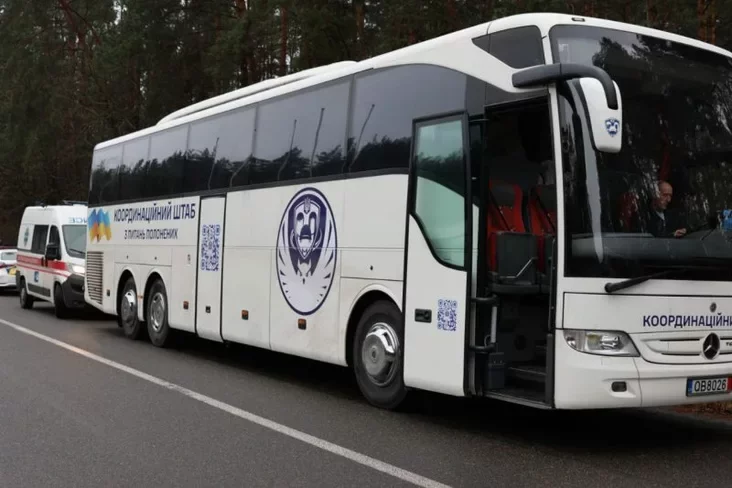
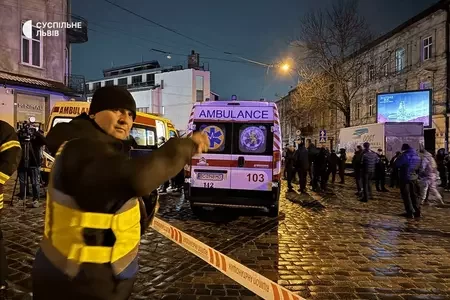
The bus that met political prisoners from Belarus. Photo: Ukrainian media
"I couldn't believe I was freed for a long time"
In late November, Volha was woken up at three in the morning and told to get ready. Downstairs, she was met by masked people who blindfolded her, handcuffed her, and put her in a minivan. The woman was driven for a long time in that state, and when the blindfold was removed, she saw a Ukrainian bus from the "Coordination Headquarters for the Treatment of Prisoners of War." The release was unexpected for Volha.
"I thought they were taking me to prison again, because that's what they had prepared me for. I understand we were exchanged for someone. We became commodities. I even asked them there: why do you, supposedly a neutral country, defend Russia's interests here? We are accused of working for Ukrainian special services. So, is this not an independent republic, but a very dependent one? Of course, I received no answer."
The journey took about five hours. Volha's passport was stamped with deportation from Belarus and a fifty-year entry ban.
"When the Ukrainian side picked us up, I couldn't believe I had been freed for a long time. I didn't even know that there were any exchanges happening. In the ITZ, they told me that Kyiv had already been bombed, half of Ukraine was gone, that Russia had captured it, but we were approaching Kyiv by bus, and I saw life bustling, people strolling, everything working."
During this time, Volha was not officially charged with anything, and she did not sign any documents. The woman only had papers regarding her detention in the ITZ.
"I only heard expressions from them: "They told me you were supposed to sponsor something," "you were given some instructions from abroad"... They said we were working either for foreign Ukrainian intelligence, or domestic, or we were taking photos, or transmitting geodata to Ukrainian territory. In short, complete delirium! They made up such terrible things! They told me to prepare myself, that I would be sentenced to 24 years, because I was going as my husband's accomplice."
A few weeks later, Mikalai was taken out of solitary confinement and driven to the Ukrainian border. He was released as part of 123 political prisoners and five citizens of Ukraine.
"They do such things to people there! I don't even know how to describe it all so that people read it and understand it... I go to the toilet, and they pour urine on me from above. During interrogation, they sat me on a chair with a hole in the middle, meant for disabled people. They sat me on this chair and hit me in the groin with their feet or sticks," the man recalls new facts of abuse.
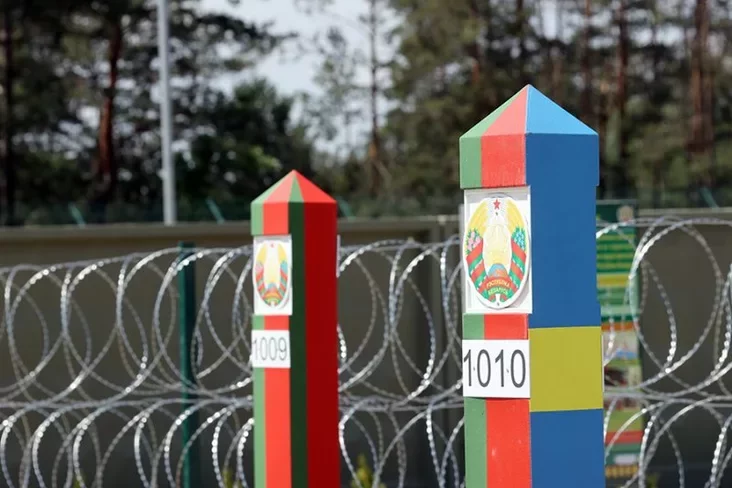
Illustrative photo
"Not a single person wrote that such things were happening there"
Currently, Volha and Mikalai are undergoing rehabilitation with the help of Ukrainian specialists.
"They are helping us a lot. I am very pleasantly surprised that so many people have shown us such care. For many, it's strange that we came from Belarusian captivity, but Ukraine and Russia are at war. This causes dissonance. People don't understand what Belarus has to do with it. But I don't understand it myself either," the woman says.
Volha and Mikalai say they insisted on the interview not for themselves — it's important to them that as many people as possible know what is really happening in Belarus.
"I want as many people as possible to understand what is truly happening in Belarus. Before going there, I communicated with Ukrainians living in Belarus; for some reason, not a single person wrote that such things were happening there. I didn't even suspect it. Everyone wrote how great it was there, that there was work, how good the people were and how they loved Ukrainians. Everyone wrote as if they were copying each other.
But, having faced what is happening there, seeing how the law is enforced, how much power the police and KGB have... This authority is unlimited — they do whatever they want! People are thrown into prisons simply on fabricated grounds. It's some kind of police state!" says Volha.
"I stutter, it's hard for me, but I still want to tell all of this," adds Mikalai.

























Comments