


Historic Turning Point. Wind and Solar Have Become the Main Sources of Electricity in the European Union
Just a few years ago, renewable energy was considered an addition to traditional sources, but in 2025, it changed the balance of power for the first time. This shift, which experts call a turning point, is important not only for the environment but also for the national security of the entire continent.
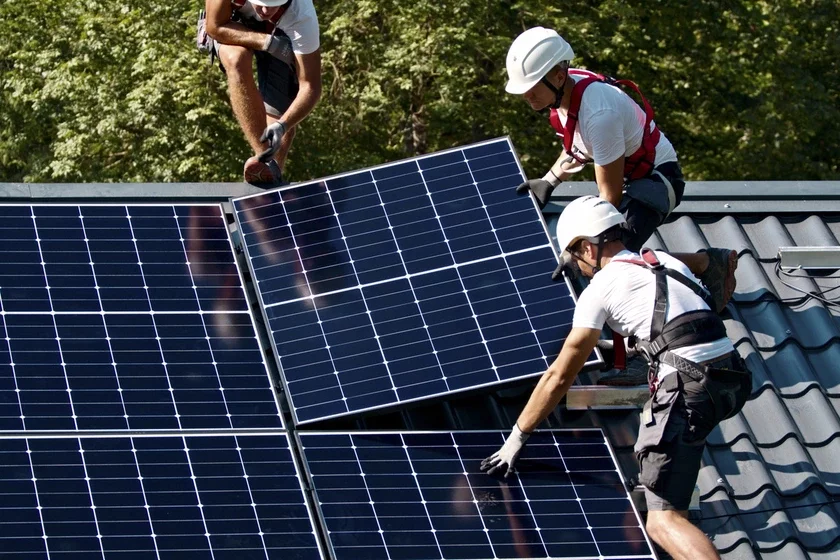
Workers install solar panels on a residential building. Photo: SimonSkafar / GettyImages
In 2025, wind turbines and solar panels provided 30% of the electricity in the EU, while power plants running on gas, coal, and oil supplied 29%. This was reported by the British publication The Guardian, citing a new annual report by the Ember think tank. Analysts speak of a profound change in the structure of the European energy system.
Beatriz Petrovich, the lead author of the study, emphasizes that this shift has not only ecological but also strategic significance. In an unstable geopolitical environment, excessive reliance on imported energy carriers becomes a source of danger. This is particularly relevant amidst tensions with the USA — the main supplier of liquefied natural gas to Europe.
An additional factor of pressure is criticism from American officials who warn Europe about the risk of falling into dependence on China due to the lack of its own battery production.

Electricity generation. The green color on the left graph indicates the share of solar and wind energy, brown indicates fossil fuels. Labels on the right graph from top to bottom: coal, gas, other fossil fuels, nuclear, bioenergy, other renewables, hydro, wind, solar. Source: ember-energy.org
The main driver of change was a real boom in solar energy, which provided a record 13% of generation in the EU. In five countries — including the Netherlands, which is not known for its sunny weather — solar panels accounted for more than 20% of all electricity. Wind turbines generated slightly less than the year before but remained the second-largest energy source, responsible for 17% of the European Union's capacity.
At the same time, electricity generation from gas increased by 8% in 2025. According to experts, this happened mainly due to a weather-related decrease in output from hydropower plants. However, this indicator remained significantly below the peak values of 2019. Meanwhile, coal use fell to a new historical low, accounting for less than 10% of all EU electricity, with most of this generation concentrated in Germany and Poland.
Experts note that after the rapid growth in renewable energy production, Europe faces a new challenge: adapting its infrastructure. Electricity grids, which have long evolved to meet the needs of large, centralized power plants, have proven not entirely adapted to the variable and decentralized generation from wind and solar.
This problem is particularly acute in the evenings: when electricity demand rises sharply, and solar generation is already falling, the shortfall was traditionally covered by gas power plants.
This is where energy storage systems begin to play an increasingly important role. Batteries allow excess electricity to be stored during periods of low demand and used in the evening, reducing the need for expensive gas generation.
The first examples of this approach already exist: in Italy, which has one of the largest industrial battery parks in the EU, stored electricity is increasingly replacing gas in the evening hours. Analysts compare this process to the situation in California, where batteries regularly cover 20% of evening demand peaks and displace gas.

This map shows key changes in electricity production in EU countries in 2025: the growth of wind and solar shares, the reduction in coal use, and the development of energy storage systems. Source: ember-energy.org
Such changes force investors and politicians to reconsider long-term plans. Analysts warn that further construction of new gas power plants could become economically unfeasible and burden taxpayers, as cheap renewable energy and its storage systems become the new foundation of the continent's energy system.
Now reading





















In Venezuela, there will not just be the release of political prisoners, but an amnesty, covering all years. And the local 'American prison' will be transformed into a public space







Comments