


Social media users met this idea with indignation and sarcasm, but experts believe that the carrier's advice should be heeded — at least by those who choose narrow models.
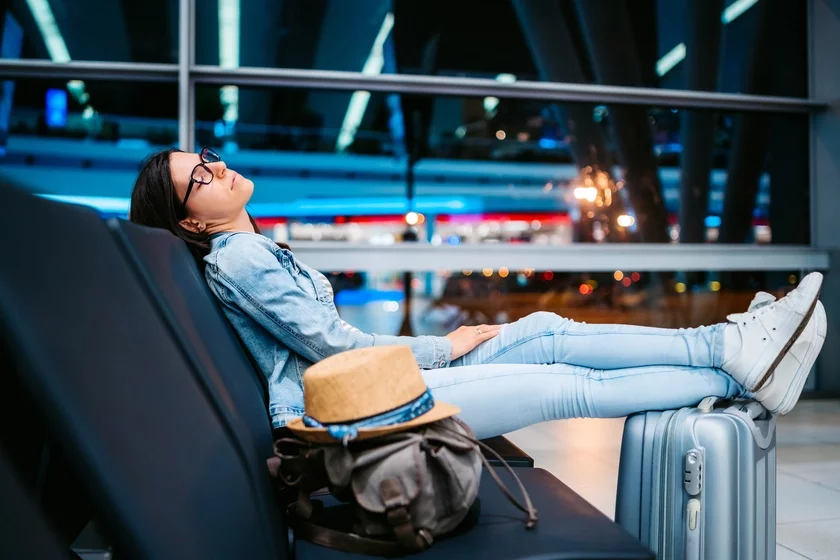
Illustrative photo: Getty Images
As Daily Mail writes, the Irish low-cost airline Ryanair, which regularly publishes tips and news on its social media, recently posted a video on TikTok with the caption: "Year 2026 — let's stop traveling in jeans." Like many other provocative posts by Ryanair, this message instantly sparked a wave of reactions.
Users ironized that the airline would soon start charging extra for wearing jeans, or demanded an increase in hand luggage allowance "to have somewhere to put these jeans." When one subscriber asked for an explanation of what was wrong with this clothing, Ryanair's account administrators replied: "What's good about them?"
As the publication notes, criticism of jeans during flights is not new, and some experts support this position. Phlebologists warn: what we wear on the plane directly affects blood circulation. Tight jeans (like leggings) are one of the worst options for prolonged sitting.
Too tight clothing hinders the normal flow of blood to and from the legs. During prolonged sitting, especially on an airplane, this contributes to blood stagnation in the lower extremities and increases the risk of deep vein thrombosis — a dangerous condition in which a blood clot forms in a vein.
In addition, tight clothing can severely compress muscles and nerves, leading to serious medical problems in some cases. As a result, passengers may experience pain, numbness, or tingling in their legs.
People with vascular diseases, overweight individuals, and those flying long distances are particularly vulnerable. And although the average passenger's risk of developing thrombosis or other serious complications remains relatively low, experts advise taking into account one's overall health during travel.
If it's important for you to wear jeans, doctors recommend choosing looser-fitting models — those that do not compress your legs and waist and do not hinder normal blood circulation.
How to save your legs from swelling during a flight
As a means to prevent swelling and circulatory problems, specialists often recommend compression hosiery — knee-highs, stockings, or tights. Unlike tight jeans and regular leggings, which constrict blood vessels in random places, medical compression works differently.
It creates graduated compression: the greatest pressure is at the ankle and gradually weaker higher up the leg. This helps blood and lymph move towards the heart and significantly reduces the risk of blood clot formation, especially in people prone to varicose veins.
Compression products vary in pressure level and purpose — from light prophylactic support to medical therapy.
Prophylactic knee-highs usually have a pressure of about 8—15 mmHg. This is an optimal option for healthy people: they help reduce fatigue and prevent minor swelling after several hours of flight. Such products can be purchased in regular stores or pharmacies without a prescription.
Medical compression hosiery creates higher pressure — approximately 20 to 30 mmHg and above. This is what specialists recommend for passengers with varicose veins or those at increased risk of thrombosis. This level of compression helps counteract the effects of reduced cabin pressure and prolonged sitting, improving blood flow from the lower extremities.
In addition to clothing, specialists remind about simple ways to help the body during a flight: drink more water and do not overuse salty foods, periodically move your feet and flex your calves, and if possible — get up and walk around the cabin once an hour.
Thus, although Ryanair's call seemed like a joke to many, it reminds us of an important thing: during a flight, comfort is not just a matter of fashion, but also of safety. Loose clothing made of natural fabrics combined with compression knee-highs or stockings can help you land without leg pain and with a good feeling.




































Comments