


New "Akrestsina" is being built in a secluded industrial zone in Minsk. What will happen to the old one?
A new complex for the Center for Isolation of Offenders (TsIP) is being built on the site of a former military town in Styapyanka. Today, it is located on Akrestsina Lane and, after the events of 2020, became a symbol of torture and unbearable detention conditions. However, the authorities also have plans for the old building: it is likely to close soon for major renovations.
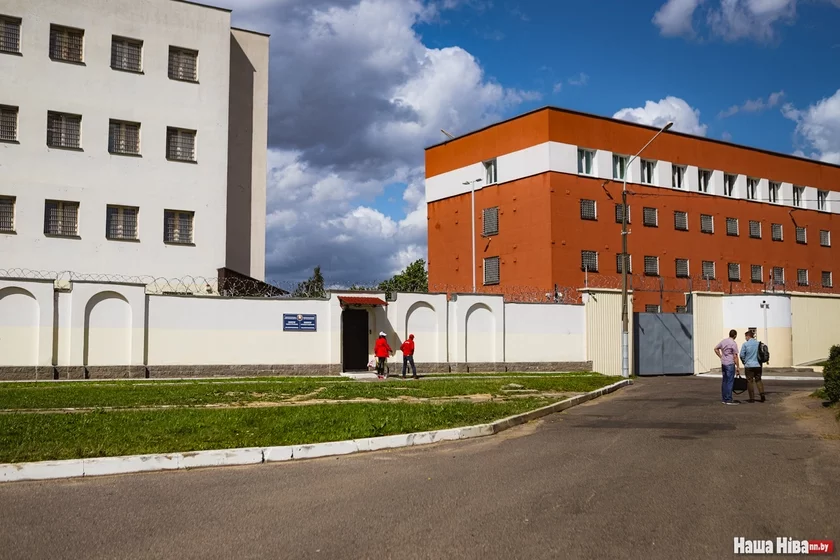
Center for Isolation of Offenders of the Main Department of Internal Affairs of the Minsk City Executive Committee on Akrestsina (right). Photo: Nasha Niva
According to the object's passport, located on the construction fence at Karvat Street, 74, the reconstruction of the building for the placement of the TsIP has been underway here since September 2025. The project was developed by the "Beldzyarzhpraekt" institute, the customer is the Capital Construction Department (UKB) of the Minsk City Executive Committee, and the contractor is Construction Department No. 94 of Budtrest No. 1. The construction is financed from the Minsk budget and is expected to be completed in a year, by January 2027.
Previously, this site housed a three-story building made of gray silicate brick, constructed in the late 1960s as a barracks for a separate training communications battalion of the Air Force (military unit 40858). In 1997, the unit was disbanded, and for the past years, the building stood abandoned, like many other objects of the former military town in Styapyanka.
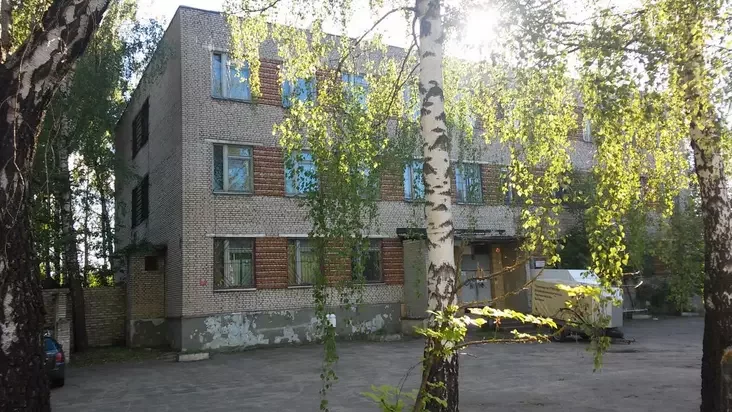
Building at Karvat Street, 74 before reconstruction began. Photo: Wikimapia

Object passport. Photo from social networks
Preparation for construction began back in the summer of 2023, and by June 2024, the project was ready. The latest changes based on state expert examination remarks were introduced in May 2025.
What will be inside the new detention center?

Main facade of the administrative building of the TsIP on Karvat St. Plan from project documentation.
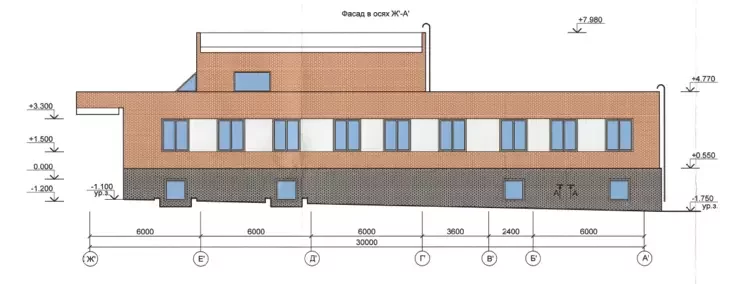
Courtyard facade of the administrative building of the TsIP on Karvat St. Plan from project documentation.
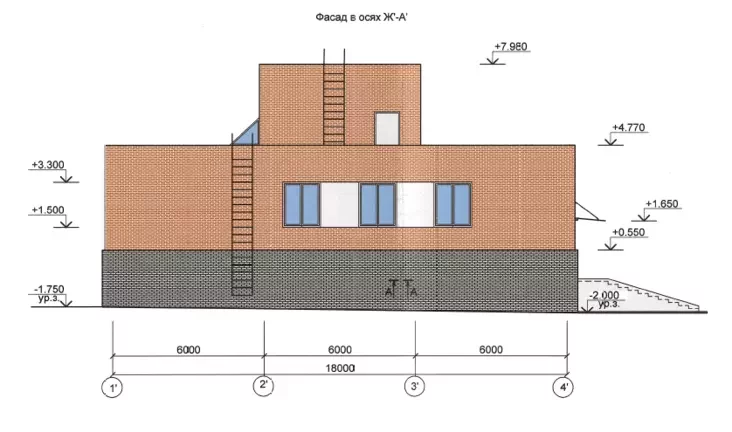
End facade of the administrative building of the TsIP on Karvat St. Plan from project documentation.
According to the project, the new TsIP of the Main Department of Internal Affairs of the Minsk City Executive Committee is a whole complex of buildings. Despite the work officially being called reconstruction, the old barracks are being demolished almost entirely, down to the foundation, on which a new two-story administrative building will be erected.
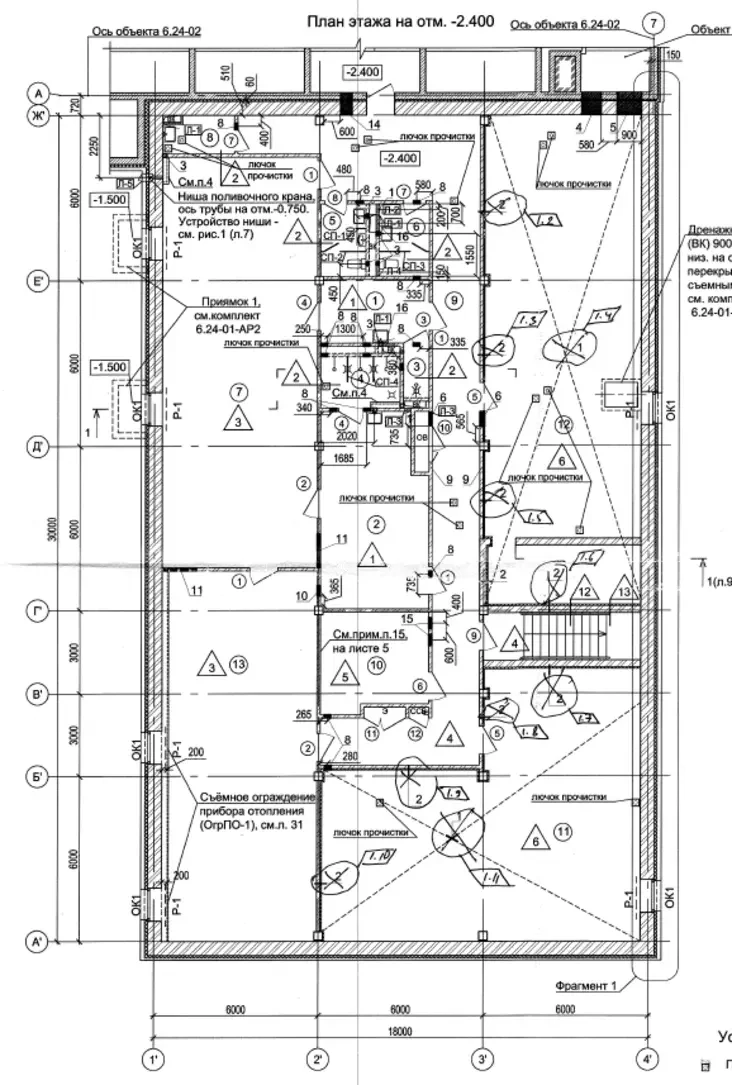
Ground floor of the administrative building of the TsIP on Karvat St. The two large rooms on the left, in axes 1'-2', are a gym and a hand-to-hand combat hall for TsIP employees. Plan from project documentation.
The ground floor of the administrative building is dedicated to sports: it will house a gym and a hand-to-hand combat hall. An interesting detail: judging by the size of the changing rooms, there will be three times more men than women among the staff.
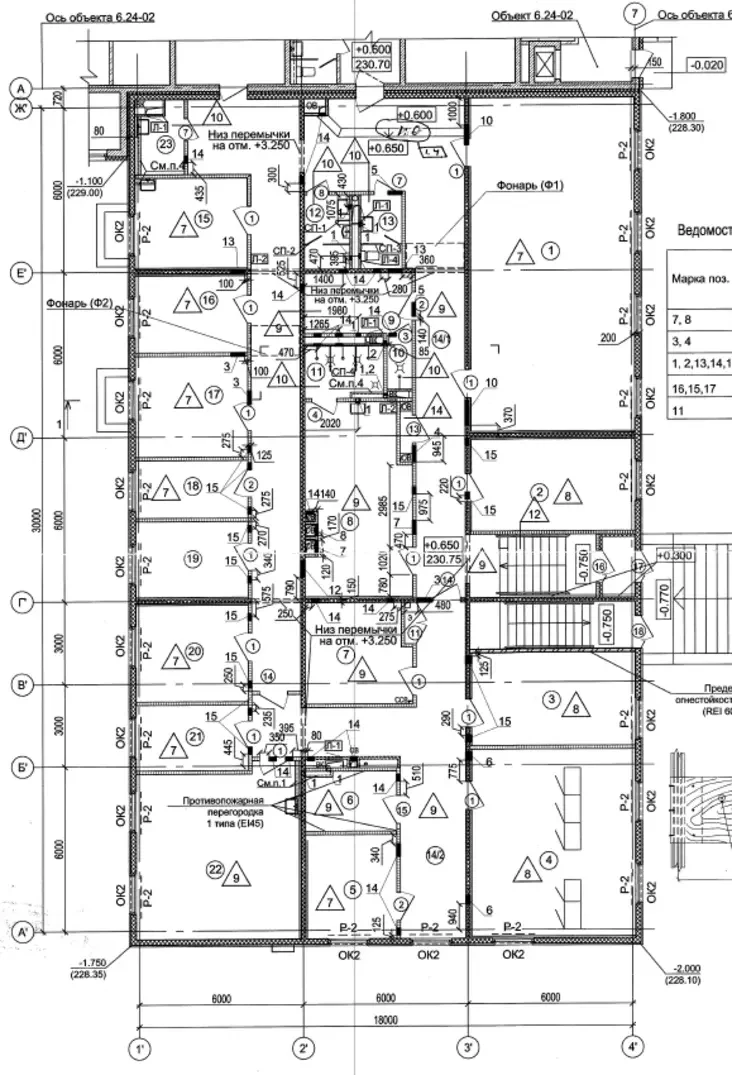
Second floor of the administrative building of the TsIP on Karvat St. Plan from project documentation.
The second floor will house offices for management with carpet flooring instead of the ceramic granite tiles used in other rooms, rest rooms, changing rooms, showers for employees, accounting, archives, and more.
Adjoining the northern end of the administrative building is the detention center itself — a three-story building with an underground level for archives and technical rooms.

First floor of the new TsIP building on Karvat St. Purple indicates the loading and unloading area for detainees, pink indicates the search room with "glasses" (cells), blue indicates showers, green indicates disinfection, light blue indicates exercise yards, red indicates cells. Plan from project documentation.
The logistics of receiving detainees have been thought out to the smallest detail. The police van drives directly into the building through a lifting gate. From there, the detainee enters a corridor, where a debriefing room and a search room with twelve "glasses" (narrow boxes measuring 1.3x1 m) await him. Next — either showers without clear gender separation, or disinfection.
The first floor also houses staff rest rooms, dining areas, storage for special equipment, a buffet, and technical rooms.

Layout of regular cells and solitary confinement. Plan from project documentation.
Cells for detainees also begin on the first floor. There are only six of them here: two cells for two people (each with an area of 15 m²), one cell for four people (18 m²), one for six people (26 m²), and one for eight people (34 m²), as well as a solitary confinement cell.
Solitary confinement cells are elongated rooms of 12 m² with a small window near the ceiling and a toilet without a partition.
Adjoining the building are four enclosed exercise yards, each 7x7 m.
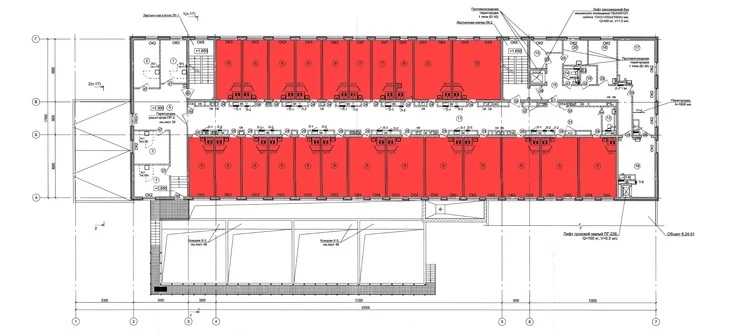
Second floor of the new TsIP building on Karvat St. Red indicates cells. Plan from project documentation.
The second floor houses four rooms for reviewing administrative materials, some utility rooms, as well as 16 cells: two for two people, eleven for four people, eight cells for six people, and one cell for eight people, as well as a solitary confinement cell (cell sizes are similar to those on the first floor).

Third floor of the new TsIP building on Karvat St. Red indicates cells. Plan from project documentation.
The third floor is generally similar to the second and has the same number of cells of the same size.
The cells on the first floor can accommodate 22 people, and on the second and third floors — 104 people each. The total capacity of the new detention center will be 230 people (with a minimum requirement of 221 places in the design brief). The total area of cells in the new detention center is about 1084 m².
The conditions can hardly be called comfortable: walls and ceilings will be painted with acrylic paint directly on concrete, walls will be a gloomy gray color (Grau 50), and partitions in the bathrooms will be made of metal profiled decking. However, the floors in the cells are promised to be wooden — meaning it will be slightly warmer.
Outside the cells, the atmosphere is much cozier: suspended ceilings and walls painted in light beige (Palazzo 55) in the corridors and caramel (Caramel 55) in the staff rooms.

Courtyard facade of the new TsIP building on Karvat Street. Plan from project documentation.
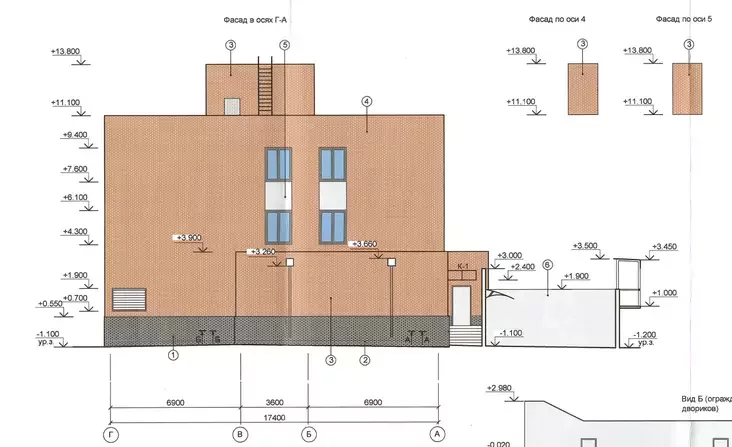
End facade of the new TsIP building on Karvat Street. Plan from project documentation.
Outwardly, the architects tried to make the building more modern and less gloomy: the ventilated facade will be decorated to resemble ceramic brick, black on the plinth and red on the other floors, using a "London brick" stencil applied to the plaster, reminiscent of the loft style in trendy residential areas.
The territory will be enclosed by a three-meter fence with three rows of "Gareza" (Yegoza) barbed wire.

TsIP fence on Karvat Street. Drawing from project documentation.
The territory will also house a checkpoint, a hangar for vehicle storage, a fire pumping station, a transformer substation, and a diesel generator set for backup power supply to the buildings.
Interestingly, elements of a barrier-free environment — tactile tiles and pictograms with Braille — were removed from the project. The management decided that visually impaired people would not end up in the TsIP, although practice shows the opposite: both disabled people and the elderly are thrown behind bars.

General plan of the new TsIP on Karvat Street. Numbers indicate: 1 — administrative building (reconstruction of existing building), 2 — TsIP building, 3 — checkpoint, 4 — hangar for vehicle storage, 5 — transformer substation, 6 — booster pumping station, 7 — diesel generator set, 8 — fire suppression pumping station (underground). Plan from project documentation.
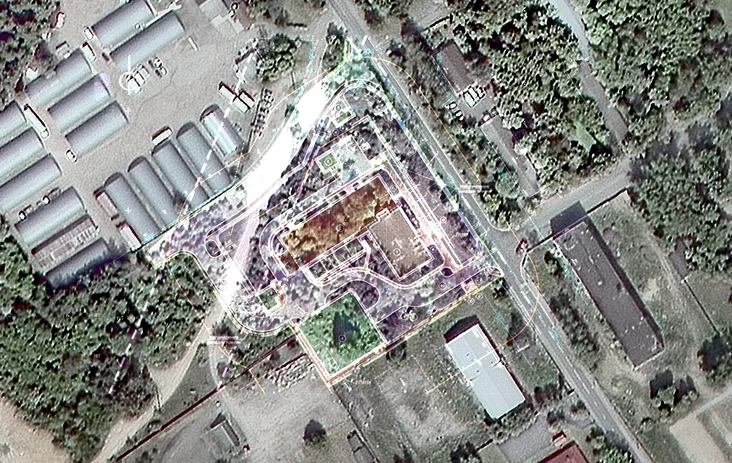
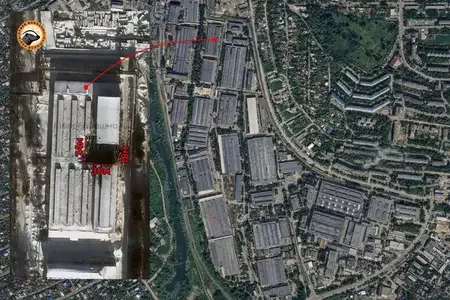
General plan superimposed on a satellite image.
It is worth noting that the new TsIP seems to be deliberately located in one of the most remote and hard-to-reach parts of the city, where there is no residential development, only an abandoned military town, an industrial zone, and a dense forest park on both sides. In August 2020, recordings from residential buildings of what was happening on the territory of Akrestsina and how people cried out behind its fence confirmed the brutal torture of protesters.
What awaits Akrestsina?
In parallel with the construction of the new complex, the authorities are preparing for large-scale work at the old location. According to the documentation, "current repairs" are planned for the TsIP building on 1st Akrestsina Lane from March 2 to June 30, 2026.
However, the list of works looks more than serious for a regular cosmetic repair. According to the estimate, 387 m² of wooden floors are planned to be dismantled in the cells.
It should be noted that we do not know the exact number of cells in the TsIP on Akrestsina. We can only infer that the repair will affect all or most cells from indirect data.
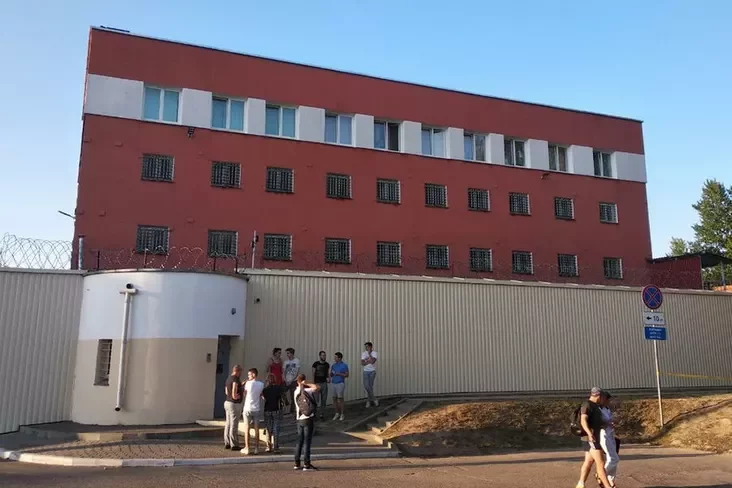
TsIP on Akrestsina. Photo: Reform.news
The building plan shows dimensions of approximately 33 m x 13.5 m, giving an approximate area of one floor of about 445 m². In the project for the new TsIP on Karvat Street, the area of all cells on one floor is about 60% of the total floor area; it can be assumed that the old building is arranged similarly. This would mean that floors will be replaced in cells on several floors.
Instead of planks, a polymer coating will be poured over the concrete. This means that conditions for "political prisoners," who often have to sleep on the floor in overcrowded cells, could become even harsher — lying on thin polymer will be colder and harder than on wood.
Also, the fact that the work will affect all cells may be indicated by the estimate stipulating the replacement of 100 m² of window openings and bars. Given the small size of prison windows (1.5-2.2 m² in the cells on Karvat St.), this could mean replacing double-glazed windows throughout almost the entire building.
Such work is impossible without the complete evacuation of detainees. Where people will be transferred during the renovation is currently unknown. The closure of the old detention center has not been officially announced.
«Nasha Niva» — the bastion of Belarus
SUPPORT US
































Comments