


In an attempt to halt the epidemic of violence sweeping the country, Swedish authorities are resorting to radical measures. From July 1, the age of criminal responsibility there will be lowered from 15 to 13 years old. Experts and law enforcement officials warn: the new policy might only worsen the situation.

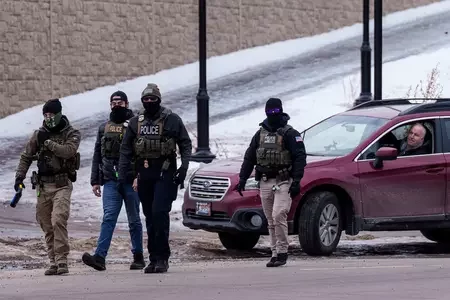
Police near a school in the Swedish city of Örebro, where eleven people died and five were injured. February 4, 2025. Photo: Nils Petter Nilsson / Getty Images
As reported by Le Monde, Sweden is preparing for a sharp reduction in the age of criminal responsibility. On January 26, the government announced its intention to lower it from 15 to 13 years for a period of five years, starting July 1. It is precisely such children, who until now were considered not liable to prosecution, that the ruling coalition proposes to isolate from society.
Under the new plans, 13-year-old children convicted of murder, explosions, or aggravated rape could receive one to three years of imprisonment. For 14-year-olds, the maximum term would be four years. In addition, the government wants to revise the system of sentence reductions for teenagers aged 15-17 and completely abolish it for young people aged 18-20.
The country is already re-equipping eight penitentiary institutions. From July 1, they will be able to accommodate about a hundred minors aged 15 to 17, convicted of criminal offenses. Previously, such individuals were cared for by social services, who directed them to specialized closed centers.
Although the prison administration is preparing to work with new groups of convicts, it opposes imprisonment for the youngest. In its conclusion, the department notes that it is "not prepared or equipped to work with children as young as 14, let alone 13-year-olds."
Police leadership is equally skeptical and worries that the changes will lead to even younger individuals being drawn into criminal networks. The public prosecutor's office holds a similar opinion.
"We fear (...), that 11 and 12-year-olds will be used as 'cannon fodder' in gang wars instead of 14-year-olds," Le Monde quotes prosecutor Lennart Gunne.
The almost unanimous rejection of the initiative by all relevant authorities changed nothing, nor did the fierce public debate that erupted in Sweden. During a press conference, Justice Minister Gunnar Strömmer assured that he "is perfectly aware" of the experts' position. At the same time, he emphasized the need to evaluate the innovations "in light of specific reality."
"The risks will be higher if we maintain the previous approach. (...) This is about protecting the nation," Strömmer insists.
Statistics show that over the past three years, the number of armed attacks recorded by law enforcement has decreased. Nevertheless, in 2025, 44 people died from bullets and 46 were injured. This crime is largely linked to groups that recruit minors to transport weapons, commit murders, or organize explosions.
Last year, Swedish courts heard 158 cases involving 88 children younger than 15, a quarter of whom were suspected of taking a life.
As the publication notes, even the Social Democrats, now in opposition and hoping to return to power after the parliamentary elections on September 13, have proposed introducing electronic bracelets for children aged 6 to 12 who are "on the path to criminality."
The center-right coalition is also consistently tightening legal norms. Since the beginning of the year, increased sanctions for fifty articles, doubling of sentences for organized activity, and the introduction of indefinite imprisonment for dangerous repeat offenders have been announced.
According to a report by an expert group at the Ministry of Finance, published on January 22, organized crime generates annual revenues of at least 185 billion kronor — about 17.4 billion euros.
It is on this argument that the government relies, justifying the most radical revision in decades of the approach to children's responsibility in one of the countries long considered a model in the field of protecting their rights.












"Teacher was washing the board while my son was being beaten." A third-grader had his teeth knocked out in a Minsk school; his mother went to court and won


















Comments
Але ані слова не напісалі, што праблема звязана з іх каханымі мігрантамі, пераважна не такімі белымі як мясцовыя і ісламістамі. На частыя і многія забойства еўрапейцаў іх пофіг.
Гэта нейкі чырвоны цырк на мульцікульці дроце.
Цікава, як збіраюцца вяртацца да ўлады, калі самі стварылі тую вялікую праблему, якую цяпер вырашаюць цэнтра-правыя, якіх не іранічна многія прыхільнікі тых сац-дэмаў абзывалі не тое, што крайнеправымі, але нават фашыстамі.