


Snowfalls and frosts have hit not only Belarusians but have also seriously affected the lives of urban birds. Right now, they particularly need our support. In winter, it is very difficult for feathered creatures to find food: insects disappear, seeds are hidden under snow and ice, and short daylight hours and severe frosts require a lot of energy expenditure.
In an interview with Onliner, ornithologist and director of the Center for Ecological Education and Development, Ruslan Shaikin, told which birds need help the most, what to feed them correctly, and where it is best to leave food.

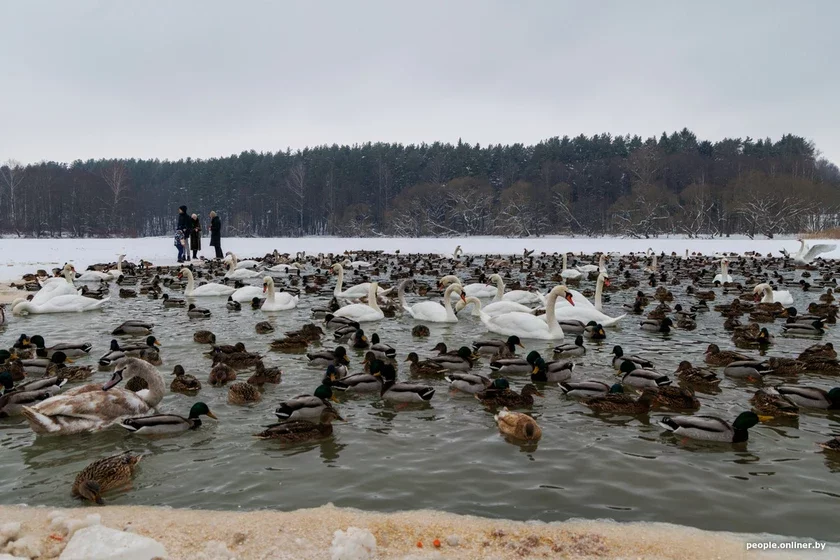
— Birds adapt to our weather conditions and frosts. Waterfowl were once migratory: they flew away or headed south to areas with open water. But over the past 10 years, winters have changed, warming is observed, so many species have started to stay for the winter. And in weather like now, it naturally becomes difficult for them, — says Ruslan Shaikin.
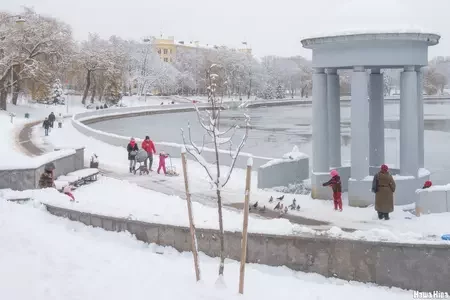
— Water freezes, open areas become fewer, and birds that have remained in the city gather in places where they can find food. Now they gather in small areas on the Chizhovskoye Reservoir near the eco-educational complex "Chomga-ostrov" (Great Crested Grebe Island), where mallards, swans, and herons live, on Komsomolskoye Lake, and the Krynica Reservoir. By the way, it's not cold for them in the water itself. The temperature there is higher than in the open air.
As for non-waterfowl birds, for example, passerines (magpies, jackdaws, gray crows) are considered one of the smartest birds that can always, even in winter, feed themselves. However, smaller birds find it difficult to cope on their own during snowfalls and frosts, and they also need our help.
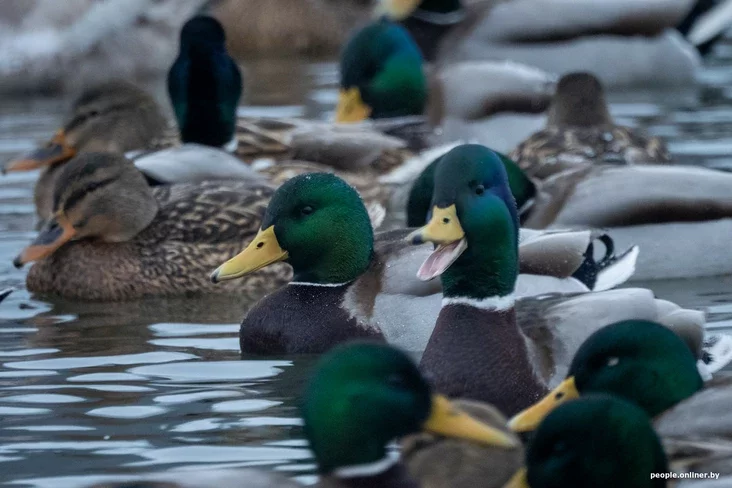
And which birds feel comfortable in winter?
The most famous Minsk predators that stay in the city for the winter are the Goshawk and the Eurasian Sparrowhawk.
As Ruslan Shaikin notes, these birds can feel relatively comfortable in winter: they hunt other winged creatures that weaken due to weather conditions and lose vigilance near feeders. At the same time, winter hunting remains an energy-intensive process for hawks, and the predators themselves also have a hard time.
But for the Long-eared Owl, a frosty and snowy winter is much more difficult. Due to the dense snow cover, it is difficult for it to hear voles — its main prey. Weakened and hungry owls often go without food and become victims of crows, rooks, and jackdaws.
How to feed birds properly in winter?


Ruslan recalls that it used to reach anecdotal situations when, after New Year, Minsk residents dumped salads and other food from the festive table onto the banks of reservoirs and ice. Over time, the situation changed and people started feeding feathered creatures correctly, but a reminder still wouldn't hurt:
— An important point: waterfowl can only be fed in winter and only when the temperature drops to -15 °C and below — during prolonged frosts and blizzards. Under other conditions, birds are able to take care of themselves. Under no circumstances should baked goods be used. Birds, of course, eat them and in cold weather can grab almost any food. But eating bread threatens them with gastrointestinal diseases. It is best to give a special mixture.
It includes cereals (wheat, oats, barley), oatmeal, and compound feed — all of this is mixed and poured onto the ice for the birds in a dry form. If the mixture is cooked, it quickly solidifies and becomes inconvenient to eat. In addition, you can give grated vegetables: carrots and cabbage.
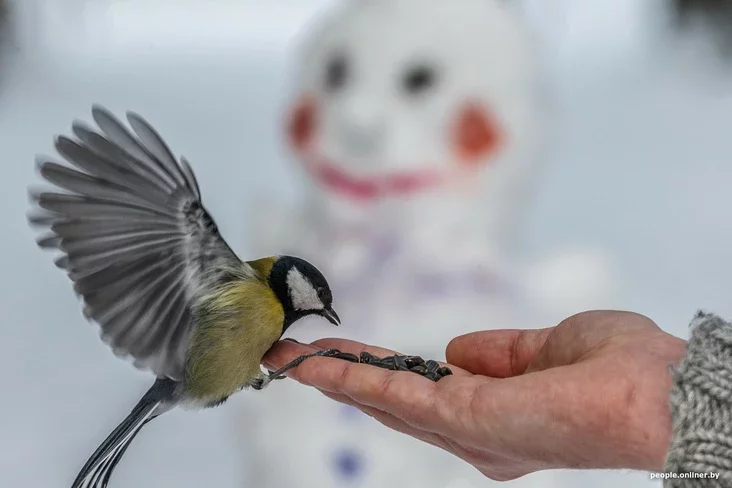

— But the basis of the diet for small birds consists of sunflower seeds. The smaller the seeds, the better. It is easier for them to extract the kernel in such a case. In addition, they can be given rapeseed and barley groats. All this is also mixed and placed in the feeder. Tits, greenfinches, hawfinches will appreciate this.
Birds should be fed often, but in small portions.

Interestingly, feeding birds this winter led Ruslan to an interesting observation: normally migratory starlings for our latitudes have increasingly begun to stay in Minsk for the winter.
— Due to climate change, the biology of some birds is changing. Robins and blackbirds are already wintering here in full swing, and this winter even a starling flew to my feeder. From the feed mixture, it chose rolled oats. Then I decided to make a separate mixture for starlings, as they cannot crush the seed coat with their beaks. I laid sunflower seeds on a cutting board and rolled a cup over them — they flattened. Then I crushed several nuts in the same way, turning them into crumbs. I mixed all this, added oatmeal, and put it in the feeder. And what do you think? By evening, four starlings were sitting there, and a couple of days later, thanks to correctly selected feed, I observed seven birds.



































Comments
Хлеб птушкам не даюць па той жа падставе. Чорны хлеб мае соль, а гэта небяспечна.
Вось белы сухі батон як раз для пярнатых бя печны, бо не мае солі.
Дзякуй за артыкул.
Дапамагаем пярнатым і іншым жывелам перажыць маразы. Ім зараз сапраўды цяжка.
Дзякуй ўсім добрым людзям.
Dziakuj.